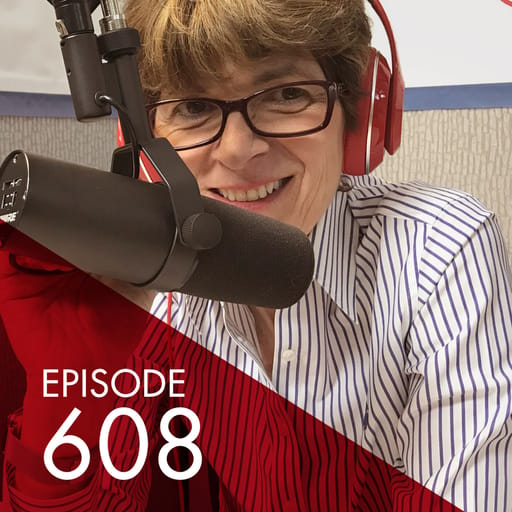
Transcript 0:00 [upbeat music] Welcome back to The Peggy Smedley Show, the podcasting voice of IoT and digital transformation. Hello, listeners, and welcome back to The Peggy Smedley Show. 0:15 My next guest today leads faculty, staff, adult, and community entrepreneurial leadership and problem-solving training and facilitation programs. He also is a certified trainer, facilitator, and consultant. 0:28 Please welcome Bob... Rob Matthews, I'm sorry, co-author of Entrepreneurship: The Disney Way. Rob, welcome to the show. Hi, Peggy. Thanks for having me. Hey, thank you for joining us today. 0:41 I, uh, I had, uh, some fun going through this book. You guys did a great job of really, uh, capturing, uh, Disney and, uh, a lot of the generations, I guess, of leadership there. So, uh, kudos to you guys for doing that. 0:54 It's, uh, really a very interesting book. Um- Thank you. So let's talk about that. 0:59 What are, in your opinion, when you talk about it, I think what I found most intriguing is the way you talk about how Disney would compliment people, or I should say not. The, the way he did it is going to others. 1:12 But I guess what I'm trying to-- I'm curious about is, in your mind, what's the most impactful advancements, uh, innovation, research, education? 1:22 I guess we should start there, but I am kind of curious on how you view entrepreneurship in general. But, uh, let's start with, uh, just, you know, what's, what's impactful advancements? 1:34 Uh, as in, in the field of entrepreneurship? Yeah. Yeah. Let's start with that 'cause, uh, I think that's a great way to get people to understand. 1:43 But, um, I think everybody has a unique way, which is what you, you guys touched on with Disney- Yeah... and the way he kind of viewed the way he would be a leader. 1:52 So I guess I was just curious in your ways, what-- how-- what's an, an impactful advancement in the way he was a leader and how he would kind of encourage in a subtle but direct way. 2:04 So I guess I'm kind of what you guys think is, is, is the way a practice should be done or the way someone should think about things. Well, I think first of all, uh, Walt Disney himself was very intense. 2:18 I mean, he, he was- [chuckles]... he was a front runner. He, he tried new things. He tried new technologies. 2:25 He, uh, he wanted to be on the cutting edge, and he, and he wasn't afraid to be told no or, uh, you know, "This, this may not work," or he heard that plenty. 2:35 But I think what he did is he humbled himself and he said, "I don't know everything there is to know about animation, but I will, I will put people around me, uh, who know the different nuances and can, can, uh, help me get there." 2:51 A-and a great example would be his, his own brother, who was really the f- the finance guy behind the operation and really, uh, m-made it a, a business model that would work. 3:04 And so Roy, uh, was instrumental in what they did and, and but Walt was humble enough to let him lead in that way and do his thing. It's interesting 'cause you guys have this quadrant thing. 3:17 You kind of remind me a lot about what Gardner does when he talks about quadrants. 3:20 But you guys talk about, you know, the evangelist, the artist, the builder, the scientist, and, um, kind of about Walt Disney, Disney being, in some ways, you know, whether he looks as the scientist or how he views things or however you wanna view that. 3:34 But do-- is that how a su-successful team should be? 3:38 You know, kind of looking at as, as an entrepreneur has to put together what you just described, this amazing team, because you're not gonna have all those key elements. You have to put the people together. 3:50 That's what you're just describing. Right. So we... I guess there's two layers to this. The first layer would be, 3:57 w-we view this as kind of your leadership style, so how you would approach a, a venture or a project or a, a new undertaking. Uh, so that's one side. 4:07 The other element to that would be, okay, if you-- if that's-- if your angle is a scientist, you're gonna get down to the details, the, the... 4:15 yeah, and make sure that the model is really proven or the, the, the business, the-- maybe the item is prototyped really well or the service is prototyped really well, uh, before you release it. 4:28 You're gonna need other people. You're gonna need an evangelist to, to sell this and to get people excited about it. 4:34 Um, you're gonna need the original idea from an artist, and you're gonna need a builder to turn it into a business model. So it's your style plus, yeah, what are the other tools you need to make the business go? 4:45 I think what was interesting is what comes to mind is I think we're in this digital age. 4:50 A lot of really great innovators fail in some ways to get their financial off the ground because they don't realize they're the great brains behind the technology, but they don't know how to run a business. 5:02 So I think that's where imagination and innovation coming together to run a business sometimes don't mesh. Right. 5:11 If you, if you think of a new venture as, as a process, the f- the first part is, is ideas and problem finding, opportunity finding. 5:21 The second part would be, uh, okay, we think we have something, so let's prototype it and kind of build the business model out. And then the, the third piece for sustainability is, is let's evangelize that. 5:33 Let's, let's keep it alive. Let's promote it. And so, yeah, the... where we see a lot of innovators go wrong is they can't turn it into a business model. You're right. 5:46 And, and when you look at this, are there-- what makes then, in your mind, is there a unique element that makes for a good leader? Is it leading new ventures different than established ones? 5:57 Is there something that you have? Is that key advice?There's definitely a difference in starting a new venture and leading it. Uh, you, you kind of need some quirkiness. 6:11 You need someone who's very patient and kind of allows for, uh, individual personalities to really, really shine and let the business go the way it will go. 6:24 Uh, as to where a more established business, you're gonna have more systems and processes in place and, uh... 6:31 But I think the key element a-among all of those, w-either of those, you know, something that's very established or something that's in startup mode, is you just need to listen. You need to listen to the customer. 6:42 You need to listen to your people. They have unique perspectives. No matter what their role is, all the roles are very important and-- but you need to listen. 6:51 You need to seek advice and feedback from them and listen to what they're telling you about what's working and what's not working and, uh, what's changing with the business. 7:01 So does innovation-- 'cause this is really what some companies are struggling with today, is that innovation has to co-constantly evolve. So is it large corporations really recognizing that, that disruption has to occur? 7:15 And when they hear the word disruption, it, it's a, it's a negative to a lot of companies. But should that be? 7:21 Is it l-- disruption happening with large corporations and advances or how, how do they have to look at innovation today? Well, I think the, the one thing that we are seeing with-- in the innovation space 7:37 is that most companies don't do it very well, especially established companies. And it-- and to a certain degree, this is why you see really good businesses come and go, like say Sears, Toys R Us, for example. Yeah. 7:51 Good, good point. Because they don't innovate. 7:52 And innovation is, is everything from highly disruptive, so something like Disney did, uh, with the My, My Magic Plus, uh, My Disney Experience system, uh, several years ago, where they really went to this 8:09 i-incredibly innovative, uh, disruptive system, uh, for booking everything at, at Walt Disney World, uh, to very small, 8:20 uh, process and, and system innovations, just small changes that, that can have-- collectively can have a big impact. 8:27 So most companies, what they do is they find themselves, "Ugh, the competition in the marketplace really caught up with us," and then it's too late. 8:38 Well, I tell you, Rob Matthews, co-author of The Entrepreneurship The Disney Way, thank you for your time today. Where can our listeners get your book? You guys did a great job. Kudos again. 8:47 Where can our listeners get it? Uh, the book is on Amazon, so Entrepreneurship The, The Disney Way, uh, by Mike Goldsby and Rob Matthews. 8:57 And, uh, if you would like to take our assessment tool, you can do that at www.elprofile.com. A-all right. And on social media, MindToMomentum. All right. 9:09 Well, thank you so much for being with us, and I wish you guys continued success. And, uh, uh, you, you'll have to come back. We'll have to talk some more about what you guys are suggesting- Yep. -uh, as you go on. 9:17 I'd love that. Absolutely. Thanks, Peggy. All right. All right, listeners. Remember, we are broadcast live every Tuesday, twelve PM Central. And check out our website at connectedworld.com or thepeggysmedley show.com. 9:31 [upbeat music] As always, you can share your thoughts with me on Twitter. Follow us at ConnectedWMag. This is The Peggy Smedley Show, the podcasting voice of IoT and digital transformation. 9:41 Remember, with great technology comes great responsibility. Have an awesome week. 9:45 [upbeat music] Constructek TV, your fierce advocates for construction. 10:03 Constructek TV digs into infrastructure, drills into global economic conditions. 10:09 It is changing the talent gap narrative, adopting a new vision and a voice to the new skilled worker in construction, all with the help of technology. 10:18 Constructek TV, everything you need for infrastructure, labor, and technology. Like, share, and subscribe to Constructek TV at youtube.com/constructektv. 10:34 [upbeat music] Besides the hard work of our incredible WS Radio staff that has decades of experience in the broadcast industry, one of the reasons WS Radio sounds so good is we use Orban technology. We are not alone. 10:46 Over fifty thousand professional broadcasters can't be wrong. From radio, TV, streaming to hardware and software, Orban has been supplying the broadcast industry for nearly thirty years. 10:56 Great customer service and continued R&D separates Orban from the rest. Learn more at orban.com. I've heard this is, like, one of the best pizza spots in town. Yes, it is. 11:07 I'll do a slice of pepperoni, slice of vegetarian. You got it. And I will pay for all of that in three days. In three days? [laughs] What's that mean? Well, wait, you accept credit cards. 11:16 That money's not gonna hit your account for three days anyway. I need my money quicker. At Chase, we hear you. With Express Funding, card payments are in your Chase account the next business day. 11:24 Go to chase.com/expressfunding. Chase for Business, so you can. Compensated participation. All businesses are subject to credit approval. 11:30 Not all clients are eligible for next business day funding, and additional terms, conditions, and restrictions apply. [upbeat music] IoT is here. 11:38 AI and machine learning are catching on, and they are all changing our world. But what's next? How will you be impacted? Let The Peggy Smedley Show keep you up to date and looking ahead for your business. 11:50 Tune in every Tuesday at noon Central Time at peggysmedleyshow.com. 11:57 [machine whirring] If you heard that sound, you probably are eligible for insurance from Navy Mutual, insuring the men and women of the Navy, Marines, and Coast Guard. 12:06 Here's what one policyholder, retired Navy commander Thomas Dane, had to say. "Navy Mutual is the best insurance decision I ever made. 12:13 I wish you had a savings plan available that earned the rates my Navy Mutual insurance has been earning." 12:18 Navy Mutual Aid Association, started by military members in eighteen seventy-nine, serves active, reserve, and retired military today. 12:26 Navy Mutual honors our military by providing them affordable life insurance with the features they need without fine print, sales fees, or military service restrictions. 12:35 Value, integrity, trust, and stability are the cornerstones on which our commitment to you and your loved ones are built. 12:43 Call Navy Mutual at one-eight hundred-six-two-eight-six-zero-one-one or navymutual.org for your personal life insurance plan consultation. One-eight hundred-six-two-eight-sixty-eleven or navymutual.org. 12:54 Navy Mutual, ensuring those who serve.