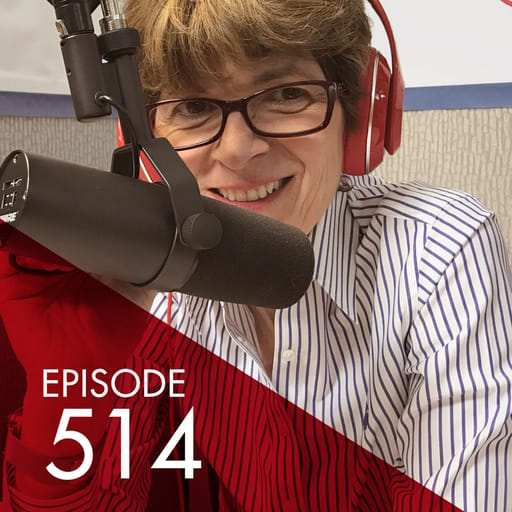
Transcript 0:00 [on-hold music] Talk to me. Information, news and entertainment on demand. WUS radio.com. 0:10 [on-hold music] Welcome to The Peggy Smedley Show, the voice of IoT in our connected world, with your host, Peggy Smedley. [on-hold music] Hello, listeners, and welcome back to The Peggy Smedley Show. 0:26 My next guest today has been in the construction industry for more than twelve years, specializing in machine optimization on the construction job site to unlock the value of equipment data and all that it is providing all of you contractors out there. 0:42 So please welcome Andrew Kahler, Product Marketing Manager of John Deere Worksite. Andrew, welcome to the show. Hello, Peggy. Thanks for having me. Hey, love to have you on the show today. 0:54 So let's get caught up for any of our listeners who might not know what John Deere is up to these days, especially in the IoT space. So give us a little update. Yeah. Yeah, absolutely. 1:07 Well, John Deere is transitioning from being a company that's primary fo-- primarily focused on iron solutions, on equipment, to focusing on, uh, on solutions, so technology solutions in particular. 1:19 Really focused on being our customers' partners and maximizing productivity, maximizing uptime, and lowering, lowering their, their daily operating costs. 1:28 And again, that transition i-is, uh, takes the form of a lot of different things, but one of the, the key elements to that is grade management. 1:35 So in the industry right now, we have a lot of grade control, grade guidance, and off-board equipment to allow our customers to take equipment to the job site and achieve the final grade very, very quickly. 1:47 We also have a suite of telematic solutions that, um, kind of bolster machine health. 1:51 They help our customers orchestrate their fleets of equipment and then provide, um, them with the access they need to manage maintenance as well. 1:59 We also have productivity solutions, uh, pertinent-- primarily at this point focused down around payload weighing, um, allowing the customers to manage the amount of productivity they're getting out of, uh, many of their pieces of equipment. 2:11 And then finally, another key element, uh, of how we're providing solutions to our customers is through remote diagnostics and programs. 2:18 Uh, so that allows not only John Deere corporate, but as well as our dealers to connect to our customers' machines, uh, diagnose machines when issues arise, and in some cases, able to, uh, uh, send solutions, software solutions to those customers, uh, via the cell network and provide those customers with a quick, quick resolution and opportunity to go right back to the job without a technician ever having to come to their job site. 2:41 And it was interesting, Andrew, when I had a chance to talk with you guys a couple of times now, we really talked about, which is the machine kind of diagnostic kind of things that I like, you know, machine health and remote diagnostics, 'cause that's really when you think about the Internet of things and being a-- to be more proactive instead of reactive, is how I like to think about it, is really the changing face of when we talk about assets in the field. 3:08 So walk us through a little bit about that because that really helps a construction company or anybody that's got a big piece of machinery getting the most out of that machine. 3:17 And that's where you and I have had several conversations about the real value for someone looking at how do they really look at that, how that dealer's helping, you know, construction companies maximize the life of what they've got. 3:29 And those are some heavy pieces of equipment we're talking about. Yeah. Yeah, absolutely. 3:35 Well, you know, if I, if I take a step back, if you were to look at the industry, uh, five to seven years ago, a lot of the manufacturers had telematics equipment on, uh, this heavy equipment, and it was providing data, but it was actually almost providing too much data and data that wasn't necessarily useful to customers. 3:51 Uh, I think that manufacturers, John Deere included, have gotten a lot better with that lately, but we've taken it one step further by actually engaging our dealers as well as staying engaged with it ourselves. 4:01 And so there's a, there's a couple key elements to this. The first I'll mention is what we call our Machine Health Monitoring Center, and that's a center that sits right at our factory in Dubuque, Iowa. 4:10 And we have a, a whole group of, of, um, uh, really intelligent folks that sit there right next to the design team, and they look at these streams of telematics information, these streams of data coming from heavy equipment all across the United States, and in some cases, all across the world. 4:25 And they're looking at all of this telematics information, and they're looking for trends of issues, um, that might arise. 4:32 And, you know, if you're looking in one specific area, you might only see one or two, but if you look across the country, you might see a handful. And when they see a handful, they identify a trend. 4:40 They immediately connect with the folks that are, uh, responsible for the technology solutions as well as the iron solutions right at the factory there, and they start, uh, evaluating if this is, um, something that needs, uh, attention, if this is something that could potentially result in downtime for customers. 4:56 And if that case arises, they're able then to connect with the dealer and connect with the customer, um, with that handful of cases and say, "This is, this is what we're seeing. 5:03 This is what your information is telling us, and this is what we should, uh, we should do at your next available opportunity to keep your machine up and running." So that's the Machine Health Monitoring Center. 5:13 Now, we also have a Machine Monitoring Center at each of our dealer locations, and our dealers do the same thing for their local customers, where they watch over their customers' machines, look for trends. 5:23 When diagnostic trouble codes come up, those dealers can be there, see them real-time, evaluate what needs to be done, and in many cases, uh, get a solution to the customer before downtime happens. 5:34 So this is, is kind of taking the telematics data to the next level by proactively looking for those opportunities to maximize uptime and keeping the machines up and going by s- by really evaluating and utilizing the stream of data that comes through, uh, the telematic systems. 5:49 When you kind of look at these machines today, it's kind of like, you know, the control room that manufacturers used to have that you guys have now, and it's kind of an interesting way to look at the way you guys have this giant data center that you talk about because it gives you this information that I thinkYou know, many kind of look at it, you're able to monitor, you know, that wheel load, the payload, the trip counts, and, and you said it earlier, there was so much data, and we say data for data sa-sake is a waste, but now you're able to give them this insight to be able to adjust things that... 6:21 and helps them become more competitive. And I think that's the insight, and dealers are really looking at that insight right now. 6:28 And, and y-you're giving them historical views that I think they weren't looking at before. Talk a little bit about that, 'cause I find that is where I think it really becomes in-insightful from job to job. 6:40 That's where I found a lot of the information that we talked about so valuable. Yeah. Yeah. Absolutely. So it's, uh, 6:47 i-in the, in the, the latest, uh, telematics strategy, it's not about giving individual data points, but it's about showing trends. 6:53 So what's happened with this machine not just right now, but what's happened over the last week, over the ma- last month, and over the last year. 7:00 And that not only gives insights into the health of the machine, but also gives insights into the productivity of the machine. 7:05 That way, when the customer goes to take the machine to the next job site or it's time to bid the next job, they have good insight into terms what the... 7:12 in terms of the, the daily, monthly, and yearly productivity of that individual machine because they've been able to, to track that trend of productivity and also, uh, maximize the uptime of the machine by, by tracking the trends of the key health, uh, items. 7:27 Now, you've also got some partnerships, drones now, we're bringing in other data points. Um, talk about that because I think that's also a key part of that, what you guys are doing with Kespry and things like that. 7:38 I think that gives a new insight because we talk about you've got to have a lot of different information when you're talking about data and, and capturing that information. Yeah. Yeah. Absolutely. 7:48 So John Deere has a strategic alliance with Kespry, aerial intelligence solution. The Kespry aerial intelligence solution is essentially a drone that flies over the job site. 7:56 It captures, um, images as it goes over the job site, and then it also, um, captures, uh, uh, GPS information as it flies the job site. 8:05 And ultimately, what it creates is a three-D model or three-D topography of the job site. 8:10 And it can do that on a weekly basis, it can do it on a monthly basis, or if the customer chooses to fly on a daily basis, it can even, um, uh, define that information on a daily basis. 8:18 And the way this is useful for our customers is, first of all, it can help the customers track their progress of the job site, tr-progress to the deadline, progress to the end goal. 8:27 Also, it helps them, um, track not only individual machine, but also the entire job site productivity. How much material is being moved per day? 8:34 How much ma-material is being moved per day by this particular machine on this, uh, spot of the job site? 8:39 Also, it's very useful in inventory tracking, inventory of gravel, aggregates, whatever material they might have on the job site that they need to keep track of and ensure they have the right amount of it. 8:48 And for those applications where they're selling it and the ma-- and the material is going outbound, there's an opportunity for them to manage cash flow and charge according to the amount of inventory or the progress of their job because of this insight that they're getting with the daily, the daily job site, um, tracking. 9:04 Also, in many cases, because of the images that are being captured by the drone, they're real-time, uh, photography images, they can also, um, orchestrate the assets on the job site, make sure they can track their assets, and they are on the job site where they need to be working, um, in the most efficient way possible. 9:20 So it is- So kind of essentially, as you said, Peggy, provides customers with kind of that important stream of information to help them manage their operations and ultimal-ma- ultimately manage their business. 9:29 So do you look at this, Andrew, as with John Deere i-is going to, you know, is into this future, looking at the way they see gathering all this data because we're gonna have information in a lot of different fronts coming in, and, and, and Deere wants to be this company that helps caps-capsulate all this information. 9:52 So you're getting all these different solutions, you're tying them together. So where, where is Deere going with all this technology, I guess is w- the question I want to ask. 10:01 Is there one set direction you wanna go in or you wanna say, "Look, we wanna help our dealers, we wanna help our partners maximize the information they're getting on the site"? Yeah, absolutely. 10:12 Well, I would, I would tell you that our... 10:14 You know, if you were to look at our, um, our equipment lineup ten to fifteen years ago, we were very much focused on making every excavator, every crawler, every backhoe absolutely as productive as it could be. 10:26 And we'd see, you know, sometimes double-digit gains in productivity. 10:29 But now we're in the era that we, uh, we know and we understand our customers, um, are driving us this way, that we know, uh, that the biggest gains in productivity aren't gonna come from individual machines, but the biggest gains in productivity are gonna come from the job site. 10:43 And when I men- when I say the job site, I mean, um, by using these streams of data that allow the job site managers to skillfully manage and execute jobs, and they depend on real-time data streams and technology solutions like grade control, uh, that help maximize that productivity. 11:00 And that is where John Deere is certainly focused to improve our customers', uh, bottom line, as well as make their job sites more productive and maximize the, the, um, the profit that they're able to, to gain from job sites. 11:13 So that, that's what I would tell you is kind of our future vision of taking all of these technology, all of these data streams, uh, and boiling it down to something that's very useful to our customers. 11:23 At the bottom line, uh, it's all about making them more productive. It's all about, um, increasing the uptime of their machines and lowering their operating costs. 11:31 [outro music] Well, Andrew, we appreciate you being with us. Thanks so much. Thank you. Have a great day. You too. All right, listeners, we're out of time for this segment, but stick around. We've got more to come. 11:42 We've got another great guest. We're gonna talk about safety on the job site, as always. So in the meantime, check out connectedworld.com. This is The Peggy Smedley Show, the voice of IoT. 11:52 With great technology comes great responsibility. 11:55 [outro music] Signal to Noise, an electronic term with new relevance on the internet.Connected World Media cuts through the noise of data overload and finds you the signal of important information, information that will keep you current and aware of context in the Internet of Things. 12:16 Peggy Smedley shares her insights on The Peggy Smedley Show and in Connected World magazine, all online at connectedworld.com. Stay current and competitive at connectedworld.com. 12:29 [jingle] Thank you for listening to WS Radio. Improve your business and your life with useful information from experts and thought leaders. WS Radio is radio with ROI. 12:45 [jingle] With great technology comes great responsibility. Follow Internet of Things tech expert and futurist Peggy Smedley, repeatedly ranked as a top IoT and M2M influencer. 12:57 Go to peggy_smedley on Twitter for her take on the latest tech news and lively interviews with other industry insiders on her weekly radio show. Visit twitter.com and search for peggy_smedley to follow her today. 13:12 [jingle] Video consumption is on the rise, so to reach this audience, Constructek Magazine created Constructek TV. Constructek TV helps construction professionals leverage emerging solutions to better their business. 13:29 Tune in to constructek.tv to catch the latest show on the first and third Tuesday of each month. Like, view, and subscribe to constructek.tv. Bringing dynamic video to construction. 13:44 [jingle] Did you know the majority of radio listeners are between the ages of thirty-five and fifty-four, have a household income of more than one hundred thousand dollars, are classified as executives or professionals, and share the show they listen to? 13:57 Become part of The Peggy Smedley Show to reach listeners looking for information on connected devices through cost-effective radio commercials or segment sponsorships. 14:05 Contact us at six three zero nine three three zero eight four four for more information, or visit peggysmedleyshow.com. [jingle] Small businesses are the lifeblood of America's economy. 14:17 Every Thursday, SBA Radio interviews industry professionals and is dedicated to provide small businesses with timely insights and innovations. Visit www.sbaradio.us for details. 14:29 [jingle] Education, industry experts, back to the basics. Is your company using the Internet of Things to its fullest potential? 14:36 Enlist the Peggy Smedley Institute and its team of experts to create a customized plan for how to apply the IoT to your specific needs. 14:44 Learn everything you need to know to achieve tangible business outcomes in today's digital economy. Contact us at six three zero nine three three zero eight four four. 14:53 That's six three zero nine three three zero eight four four, or visit learnatiot.com.