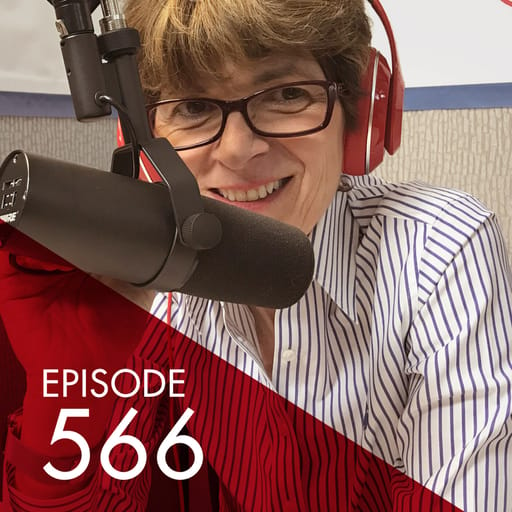
Transcript 0:00 Talk to me. Information, news, and entertainment on demand. WSradio.com. 0:12 [on-hold music] Welcome to The Peggy Smedley Show, the voice of IoT in our connected world, with your host, Peggy Smedley. Hello, listeners, and welcome back to The Peggy Smedley Show. 0:26 My first guest has a unique perspective and a hands-on approach. She believes in work that is meaningful and rewarding. She's also looking to challenge herself and believes in endless possibilities. 0:38 I had the pleasure of meeting her at our Women of MtoM's Gala as one of this year's Women of IoT. Please welcome Colleen Egan, Director of People, Culture, and Endless Possibilities at Clarity Partners LLC. 0:54 Colleen, welcome to the show. Hi. Thanks, Peggy. Thanks so much for having me. So Colleen, it's-- I'm thrilled to have you here. First of all, congratulations on being named a Woman of MtoM IoT. 1:07 Uh, it was great, uh, and you earned that honor, and it was really thrilling to, uh, hand you the award this year. Thank you. I loved being at the event. I was so humbled and honored to receive that. 1:18 Um, through twenty years of work, you know, it's really nice to get those recognitions. Well, it was nice to give it to you, and it was also thrilled-- thrilling to meet your daughter. 1:27 So I always love when I do those awards and also to meet family members, especially other daughters who, who get a chance to see that. So that was fun. That was really truly fun. 1:36 So let's talk a little bit about your journey in the space, because I think that's the fun part when someone tells me they've been in the space for twenty years like me, you know, uh, we've been doing it and in, in getting there. 1:49 And then, you know, you had a chance to bring your daughter. That's the fun part. Talk a little bit about that. Yeah, um, my career has probably been a little bit longer than twenty years, but I started as a nurse. 1:59 Um, graduated from college. I went to work in oncology and hematology, and, um, even though I loved nursing, I soon discovered that I was really good at leading people in large initiatives, so I became an administrator. 2:13 Um, but I was always really frustrated by the slow lack of adoption of tech in healthcare. So I thought I'd leave, learn what I could, come back and save healthcare, right? 2:21 This huge, you know, lofty, um, mission for myself. But I had an opportunity to go to a public, um, digital marketing company in the late nineties as their director of operations. 2:32 You know, it was the beginning of Amazon and Google and Facebook, and I was just obsessed with technology. Um, I stayed there for a year. I learned, I grew. Um, 2:43 most importantly, I was able to work with Fortune One Thousand companies in multiple industries. 2:49 Um, and so I took that and seven of us left that company, and we founded a digital technology company, um, called Two Hundred and Twelve Degrees. Two twelve is the, um, degree of transition. It's the boiling point. 3:01 Um, and we were really fortunate. We were in business for about two months, and we landed Orbitz.com as our first client. You know, that was back in nineteen ninety-nine. 3:12 Um, they had a hundred and forty-five million invested to start, and we launched the site in two thousand and one. And at that time, it was the biggest e-commerce launch ever. 3:22 So that really was the impetus for me staying in tech. I could just see how powerful it could be. 3:29 Um, with my time during-- uh, during my time at Two Twelve, we worked on a lot of pro bono clients, and one of those was Zula. 3:37 And Zula was, um, developing out a threeD CGI space and science, um, TV series for kids, three to eight. You know, this was before STEM was a household word. 3:51 So I was offered the COO position, um, and the head of production in Zula, so I moved to LA. I ran that for a couple of years. We were on PBS, and then we were worldwide. We won a lot of awards. 4:02 Um, and it was just a really important, another important time in my life for learning. I could take all that back. I came back to Chicago. 4:10 I became the, um, COO of AKU, which was the, uh, a digital out-of-home network, and in eighteen months, uh, we built the largest digital out-of-home network in the country. 4:23 Um, what's been great about my career is I've stepped into industries that I knew nothing about, and I had CEOs that really believed in me, and they just let me go. And, you know, together, we found this great success. 4:39 Both of those companies were bought, um, and then I took some time off. I wasn't really sure what I wanted to do next. So I started consulting for startups. 4:47 Um, I worked in everything from edtech, big data, AI, SaaS solutions, and I spent those two years working for those companies, um, and could see what an impact I was having on them. 4:59 More importantly, I was having an impact on their culture and hiring strategies, and I developed this great reputation as being a people leader. Um, 5:08 so Clarity Partners, when they needed someone to lead people, it was a perfect transition for me. 5:14 I'd worked in, you know, the back end of technology for so long and building out these companies, but always knew that the people were the most important part of that. 5:24 And so having the ability to focus just on people was really exciting for me, and I've been here for a little over a year. So you can see it's been this kind of wild rollercoaster ride, but it's made me who I am today. 5:38 So who inspired you on this journey? Because you can get there, but you had to have somebody who inspired you. Yeah. You know what? I do a lot of speeches and lectures on this, and I always start with my dad. 5:50 My dad was a feminist before he even knew what that was. 5:54 Um, he lost his mom really young, raised in an orphanage in Ireland, you know, left at sixteen, worked as a shoemaker.He, his American dream, you know, come to the United States and make his fortune. 6:07 Um, he wasn't here two months when he got drafted to the Korean War. So he spent three years in Korea and then came back, worked in the trucking industry. 6:15 But he was a big union man, and so my formative years were spent at union halls, you know, learning from just diverse groups of people and watching social change in action. 6:25 You know, it was the late '60s, early '70s, and the Civil Rights movement was strong, the women's movement, Title IX went into effect in '72, and my dad let me experience all of that and learn from it. 6:39 And what really helped me in technology was the way he taught me to be adaptable in life, to be resilient, and the power of believing yourself and the power of yes. 6:50 Um, there wasn't anything he didn't think I couldn't do, and, uh, he was right. 6:56 And when I was little, it was really exciting because he would introduce my sister and I as his children, not as his daughters, and I would ask him why, and he said because he wanted people to see us more than cute and sweet. 7:08 He didn't want people to limit us by being girls, and so I always thought, like, he's my hero. He's the guy that inspired me. Um, he didn't know he was a feminist. 7:17 He didn't really even know what that was, but he taught me to fish and hunt and box. Um, [laughs] he a- but he also taught me to appreciate great music and poetry, right? 7:27 And so, um, this is a guy who worked from the docks but loved life, and, uh, he inspired me to do the same and just to experience everything I could. So what do you think is needed? 'Cause that's really cool. 7:39 I mean, you know, you don't see a lot of that, you know, especially when you think about, you know, where you are today and, and in your age, and the daughter that you have. How do you get- Yep... 7:49 other women involved in technology? Because when we look, when we go to events, when we go in the industry we are, there's not a lot of women still today in the industry- Yep... that we are. 8:02 And what we do in, in covering IoT, you know, there's a few of us and there's more, but there's still not enough to get interested in the STEMs even, you know? 8:12 When we talk, you know, science, technology, engineering, and math, how do we get that next generation to feel that they should stay in it and get in it and wanna be excited about it? 8:25 You know, you bring up a great point, right? So women make up 50% of, 57% of the workforce, but only 25% of the tech industry. 8:34 There's been such a shift in the industry from when I started, um, and it's been accelerated in these last few years just because I think there's been so much focus on it. 8:43 Um, you know, there was always such a cultural definition of what it is to be a woman or a woman's work. That still exists, but it's really changing. 8:52 You know, um, not, even up to 10 years ago when we looked at the number of women in med schools, it was low, and now there's more women in med school. 9:02 There's more women in STEM, um, and tech programs starting in grade school, high school, college. It is catching up. But, you know, girls need supportive parents and educators. 9:12 They also need other parents and educators to get past a lot of the gender bias we see and stop being roadblocks. 9:20 Um, you know, I know so many of my male friends who have been in tech with me for a very long time, and they really never thought until they started having daughters themselves. 9:30 Now they're out there as allies on the front line fighting for their daughters as hard as they are their sons. 9:36 So I think this is really important in how we get not even women to stay, but how we even get young girls to, you know, even start their careers in tech. Um, there's been a lot of, um... 9:49 Have you heard about pro-social theories when it comes to tech? No. Why don't you... Well, why don't you tell the audience a little bit about that? Sure. 9:57 So pro-social theories, it's always been, you know, women excel at communication skills, social relationships. They're more invested in social causes than men at an earlier age. They just mature here earlier. 10:09 Um, so I think for women too, they need to know that the work they're doing is making a difference in people's lives, and it's having an impact, that social impact. 10:18 Um, tech has also always been seen as this very solitary, geeky, kind of nonsocial work, right? Um, and be it biology or upbringing, like I said earlier, women are just more mature at social engagement at younger ages. 10:34 So I think companies not only need to hire more qualified women, but set them up for success in the beginning with buddy and mentor programs, um, you know, social events, and training for the guys that it's okay to talk to the women in the room, to ask them questions, to form teams with women, um, a- and actually to form teams with people that are different from themselves. 10:57 Um, women also need to see other women leaders. 11:00 They need to know that one day they can get a seat at the table, you know, the leadership table, not just a job or a desk, but that they really have those leaders there that, you know, are the impetus for change. 11:13 But I think you said an interesting point that I think requires being r- you know, reiterated, is that many of the men didn't know their own biases until they had their own daughters. Yep. 11:25 I think to their defense, they don't realize that they're, what they're doing themselves in the work environment until they have a daughter and they see themselves acting a certain way, and they don't even know they're doing it in the work environment themselves until they want their daughter to achieve something, and they don't realize how they're act- and their behavior. 11:45 They just don't see it. Right. But it's like our politicians sometimes too, right? They don't really understand a cause until it happens to them or, you know, some social change that needs to happen. 11:57 And so unless you experience it yourself, you really don't understand it. I think that goes across the board for everybody. 12:03 But yeah, it's been really wonderful for me to see those, you know, dads becoming just these lightning rods of change for their daughters.Well, it's like distracted driving. 12:13 You know, people won't put down their devices until they're in an accident, right? They don't realize that, you know, they think, "Oh, I, I can do it. 12:19 I can multitask," until it comes a little too close to them and they realize, "Oh my gosh, I can't drive distracted anymore." 12:25 I mean, it's just sometimes it gets a little too close to home and then they realize it, right? So what advice now would you- Those are life-changing moments. Yeah, absolutely. What are... 12:34 You know, when we think about it, y- we're trying to get these... We've been trying to overcome these things. We're getting better, but we are far from where we need to be. 12:44 So what else do we need to do to overcome some of these challenges? 'Cause we still see a lot of women saying, "Even though I'm in the office, I'm still afraid to go for that promotion. 12:54 I don't have the confidence to go for that." Yeah. And that's still disturbing. It is. I think, you know, people starting, women starting out in their careers, I think it's most important to believe in yourself. 13:09 And you said, you know, sometimes that's hard. And for me, that's taken a lifetime, right? Um, I've had a great ego since I was little because I think I had parents who just said I could do anything. 13:22 Um, and I believed them. Um, but a- again, believing in yourself, your talents, and the impact you can have, and just to practice adaptability and resiliency. 13:33 You know, aligning yourself with men and women who believe in you and who will support you. Um, a lot of women think failure is, like, the worst thing that can happen, but failure is just a part of learning. 13:45 So don't be afraid to fail. And yes, women are still judged harder than men in the space, but know that those guys are failing, too. So I've always learned to embrace failure, to learn from it, and then just move on. 13:57 Don't even think about it. Um, also never-- we've talked about this, um, earlier, about the, um, power of yes, right? Never being afraid to say yes. 14:06 I've been in so many leadership positions with new industries to me, but I always believed I could do that job, and I've had CEOs that believed that I could do it, and they trusted me. 14:16 And so I think aligning yourself with those kinds of companies, um, it takes a lot of research, and sometimes we just take jobs to take jobs, especially when we're early in our career, but I think we're getting better at researching those companies, finding, you know, those, um, values that align with ours. 14:33 Um, and then, you know, working together with companies like that, both of us, it's a win-win. We accomplish great things. So find those people. Find other women to learn from. 14:43 Find other men who are allies to learn from. Um, yeah, and just be your biggest advocate. 14:51 Is it wrong for women-- 'cause some women, that, that point you say, are afraid to say within a company, "That role is not for me, but another role that I want is." 15:01 They're afraid that if they say, "No, I know that job isn't for me, but I know there's another one," where men will say, "No, I don't want that position. I want this one within that company." Yep. 15:09 Women are afraid to communicate that. How do we get them to understand, "No, that's not the job I want, but I really am-- my eye is on that one"? 15:17 How do we get them to understand, go for what they want, and don't worry about not taking the job that is not the direction you wanna go in? I know women are the worst. 15:26 I've interviewed, you know, probably 1,000 people in my career, and men will be the first ones to ask me for exactly what they want. Women are really bad. I shouldn't say all women. I've never been like that. Um, 15:41 but y- in negotiating from the very beginning. So it's like how do we teach, you know, our young women, even as early as, you know, grade school, high school, in negotiation skills? Um, 15:55 you know, I don't know what it's gonna take, but I think it's broadening the ce- or, uh, the way we impact young people's lives through education. Um... Is it a level of- Yeah, sorry. 16:11 [laughs] I- I was gonna say, is it a level of respect that has to be given in this community, or are we getting there? 16:17 Is it just because there's just not been-- they haven't gone for those right interviews, and then it's the way, it's the demeanor, it's how they carry themselves. 16:26 If they don't have the confidence, the people they're interviewing with are not gonna have the confidence. So it's w- how, you know, you get what you project. Is it part of that as well? Yeah. 16:37 And you just brought up a good point. I was giving a lecture not that long ago, and, um, we were talking about the fake it till you make it, right? And the power of yes. 16:46 And I had also talked about being your authentic self. Like, you, you don't have to fake, you know, who you are. Be who you are. 16:54 And then someone said, "Well, but Colleen, you just said fake it till you make it, but be authentic." And I was like, "There is no difference. There's no lie there." 17:02 Being your authentic yourself and faking it till you make it are two totally different things. Um, being your authentic self is being true to yourself. 17:09 Faking it till you make it is really just believing in your, you know, the capabilities and the, um, attributes that you have and digging down deep and just doing the research and doing the job until you do make it. 17:23 Um, I-- You also mentioned about taking the job you don't want. 17:28 Sometimes I have taken on jobs or projects that I really didn't want, and I was amazed at how much I learned from that and how much I could use that to get the job I wanted. 17:39 Um, so I think the journey sometimes is more important than just getting what you want immediately. Is it always, though, like sometimes you do, you have to go and you have to grin and bear it. 17:52 So, um, you know, that whole idea, you know, you say, "All right. I know this isn't what I want." But are we sometimes worried we're taking on too much, you know? Because sometimes that's the other spectrum. We do. 18:04 We take on too much and we realize, and then we say, "Okay, I can't do it anymore," and now what happens? 18:09 So is there a balance of understanding when you've taken on too much and you say, "Well, now I wanna quit because now look what's happened," and we just, we didn't- Yeah... 18:17 you know, balancing that work and family life kind of scenario?Women always, you know, um, struggle with that. You know, they really wanna succeed at everything they do. 18:29 They wanna be great at work, great at parents, and there is a little give and take. Um, but I think more dads-- I find more dads staying home. Their wives have some really good jobs, um, and they're staying home. 18:41 So there is this cultural shift going on, but women really need to, um, learn. 18:47 Here's me, I'm a real advocate for the power of saying yes, um, but that's usually for new opportunity, um, and to challenge yourself, but you also too need to know when to say no, when to say, "That's just too much. 19:00 I can't do it all." Because then you start spreading yourself thin, and you can't do it all well. Um, so you really wanna focus on what you do well. 19:10 Let's talk about, shift gears a little bit, Chicago right now, the Chicago tech community. Yep. Chicago wants to be this next Silicon Valley, you know? They wanna really boom in technology. 19:22 How are you seeing that growth right now? Are you seeing a lot of exciting things in Chicago and technology? Oh, yeah. I think about when I started in technology in nineteen ninety-eight, ninety-nine, 19:36 there was so much going on in Silicon Valley and really not too much going on here. 19:40 Even though we've been the healthcare and the, you know, um, financial hub for technology for a long time, we weren't seeing the exciting things that were going on, right? Like Amazon or Facebook or, you know, PayPal. 19:55 Um, but things have really changed. Um, Orbitz was the big first player here in Chicago. Um, then I look at, uh, PayPal. PayPal, um, and Braintree. 20:09 Um, Braintree, I think, was bought by PayPal for, you know, close to a billion dollars. There's so much excitement going on with data here. Um, uptake is growing. 20:20 I mean, they went from a hundred to eight hundred, like, in a year and a half. Um, we've got so many great incubators here. I look at 1871. I mentor over there. 20:31 Um, there's the, uh, you know, Matter is the health incubator that stemmed from 1871. There's so many incubators for women. You know, it is huge. So many companies are moving into Chicago. 20:46 FTD is a, you know, one point five billion dollar company. They're out in, uh, Downers Grove. They're moving to Chicago in August. 20:54 Um, and people think of them as, you know, this old school hundred and fifty-year-old company, but they've been, um, on the cutting edge of technology and, you know, changing their story every ten, twenty years, and they're still around. 21:07 Um, there's just so much going on right now. It's really exciting. People talk about the exodus out of Chicago as well. You know, our taxes are high. 21:17 Um, but I see more and more companies moving in, and I think more younger people will be moving in and will really transform the city. 21:26 How in general we talk about-- One of the things we're talking about the whole month of June is going to be this, this changing of guard, the changing of baby boomers wanting to s- live at home- [chuckles]... 21:36 you know, as they age in place, and we're going to see that whole healthcare revolution kinda ta- change- taking place. What do you see- Oh, yes... 21:45 you know, because that's gonna change the whole way we've seen because it's gonna be the first time our elderly is going to surpass our younger generation. So it's the first time in history we're going to see that. 21:57 How do you think that's going to change the whole healthcare role? What, what are you, what are you seeing in that? I, I was listening to you earlier talking just about wearables. 22:07 Um, you know, when we were younger, my mom in particular, you know, she had multiple illnesses. She would, you know, listen to her doctor and just do everything that he wanted her to do. She never asked questions. 22:23 And then when I graduated from nursing school, we didn't have patients. We had clients. They were paying for a service, and we were there to educate them and service them. 22:33 Now, that's going back, uh, quite a long time ago, and we've even moved on now because more and more people, um, I won't even say older, uh, forty, fifty and up are just so technologically savvy that they can go to WebMD and, you know, figure things out. 22:52 They can, um, like you talked about earlier, wearables, um, just making them-- their lives more fit, eating better, you know, tracking their steps. It's an amazing time. 23:06 But more important than that is just the data that we're using and collecting. 23:10 Um, I belonged to 23andMe at the very beginning before the FDA had, um, you know, put the kibosh on them for a while until they could get, um, back up and running. 23:22 And I think about all the data that's being collected and all the illnesses that we may be able to see trends or cure. Um, there's a woman here in Chicago, uh, Kristi Zulkey. 23:33 I became really excited about what she was doing years ago with a app called Mole Detective, and it was just something simple. You take a picture of your mole. 23:42 Um, you know, someone can analyze it, let you know what they think. Um, you know, there's snoring apps right now to help people. Um, there's just so much going on in healthcare when it comes to, um, 23:55 us as, you know, individuals being proactive in our health and then on the opposite, using that data to, you know, cure cancer. 24:04 I mean, we've got, uh, Tempus in town that is using big data to hopefully cure cancer at some point. 24:12 So do you see now if we can encourage the younger millennials that we talked about, women, men, to get them involved to bring this next e- evolution of big data, you know, AI, machine learning? 24:24 I mean, really, they're going to be the ones that are gonna change our lives and what we have- Yep... 24:30 and, and the next generation to all this new technology and what we haven't even begun to think about.It's so second nature to them. I look at, you know, my nieces, um, my own grandson. 24:41 I mean, he's a year, and he's using his telephone. He knows how to open apps. I mean, it's incredible that you remember when technology, every ten years there'd be something exciting. Well, now it's like every week. 24:55 Um- [laughs] Yeah, the youth. 24:57 I'm very involved in the, uh, a lot of youth organizations here in Chicago, either mentoring or helping them get internships, um, because I truly believe that, you know, that's, that's where the power lies, that's where our future lies, and we need to invest in them. 25:14 You know, you bring up a good point, too, about, um, the youth being the leaders of tomorrow, but that only comes with access. And I think about CPS. 25:24 Um, we do a lot of work here at Clariti for cities, states, municipalities, counties, whatever that is. We do a lot of public sector work. 25:32 Um, and I look at Chicago Public Schools, and there's many of them that are in really, um, you know, at-risk neighborhoods, and they don't have, um, access to either technology or just, um, equal education. 25:48 So for me, the focus is really gonna be a lot on, um, not the kids who have, you know, um, all the tools they need, or it's the schools and the kids that don't have what they need, and how do we get them that? 26:00 You know, there's so much going on in the city right now when it comes to, um, uh, city digital movements. You know, um, Brenna Berman was a MtoM winner a couple years ago, I think maybe last year. 26:13 Um, and she right now is over at UI Labs. Uh, she was the ex-CIO for the city, and they're doing some remarkable things about being true partners in solutions when it comes to cities. Hey, Colleen, we're out of time. 26:28 And, uh, you know- But I wanna... Colleen, we're out of time, but I want to thank you for being with us, and congratulations on being named a Women of IoT and MtoM. [upbeat music] Thank you so much, Peggy. 26:39 All right, listeners, stick around. We've got more to come right here on The Peggy Smedley Show, the podcasting voice of IoT and relevant technology. Remember, with great technology comes great responsibility. 26:50 We'll be right back right after this commercial break. [upbeat music] Signal to noise, an electronic term with new relevance on the internet. 27:07 Connected World Media cuts through the noise of data overload and finds you the signal of important information, information that will keep you current and aware of context in the Internet of Things. 27:18 Peggy Smedley shares her insights on The Peggy Smedley Show and in Connected World magazine, all online at connectedworld.com. Stay current and competitive at connectedworld.com. Thank you for listening to WS Radio. 27:35 Improve your business and your life with useful information from experts and thought leaders. WS Radio is radio with ROI. [upbeat music] With great technology comes great responsibility. 27:52 Follow Internet of Things tech expert and futurist Peggy Smedley, repeatedly ranked as a top IoT and M2M influencer. 28:00 Go to peggy_smedley on Twitter for her take on the latest tech news and lively interviews with other industry insiders on her weekly radio show. Visit twitter.com and search for peggy_smedley to follow her today. 28:14 [upbeat music] Video consumption is on the rise, so to reach this audience, Constructek Magazine created Constructek TV. 28:26 Constructek TV helps construction professionals leverage emerging solutions to better their business. Tune in to constructek.tv to catch the latest show on the first and third Tuesday of each month. 28:37 Like, view, and subscribe to constructek.tv, bringing dynamic video to construction. 28:45 [upbeat music] Did you know the majority of radio listeners are between the ages of thirty-five and fifty-four, have a household income of more than one hundred thousand dollars, are classified as executives or professionals, and share the show they listen to? 28:59 Become part of The Peggy Smedley Show to reach listeners looking for information on connected devices through cost-effective radio commercials or segment sponsorships. 29:08 Contact us at six three three nine three three zero eight four four for more information, or visit peggysmedleyshow.com. [upbeat music] Small businesses are the lifeblood of America's economy. 29:19 Every Thursday, SBA Radio interviews industry professionals and is dedicated to provide small businesses with timely insights and innovations. Visit www.sbaradio.us for details. 29:31 [upbeat music] Education, industry experts, back to the basics. Is your company using the Internet of Things to its fullest potential? 29:38 Enlist the Peggy Smedley Institute and its team of experts to create a customized plan for how to apply the IoT to your specific needs. 29:46 Learn everything you need to know to achieve tangible business outcomes in today's digital economy. Contact us at six three zero nine three three zero eight four four. 29:55 That's six three zero nine three three zero eight four four, or visit learnatiot.com.