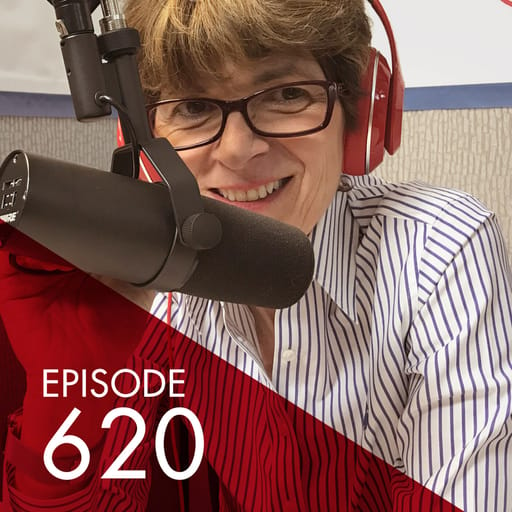
Transcript 0:00 [on-hold music] Welcome back to The Peggy Smedley Show, the podcasting voice of IoT and digital transformation. [on-hold music] Hello, listeners, and welcome back to The Peggy Smedley Show. I'm your host, Peggy Smedley. 0:16 My second guest today serves as the director of Autonomous Systems Lab and has always loved to build cool tool-- toys that fly. 0:26 She has worked with NASA on a variety of projects over the years and has published more than twenty academic papers throughout her career. 0:34 Please welcome Ella Atkins, IEEE member, senior member, and professor of aerospace engineering at the University of Michigan. I think we're having a little trouble getting Ella on the phone here. 0:46 We had her, and then we just lost her. See, we love technology here at the Peggy Smedley Show. 0:51 So in the meantime, what I'm gonna do is, uh, kind of tell you a little bit about, uh, some of the kind of things we've been talking about today. 0:59 We've been talking about all the kind of things that have been happening in, uh, technology right now. 1:04 And one of the really cool things that I like about that we've had our guests all month long is we've been talking about women in technology, women in IoT, and I think what's really great is we are advancing what's happening, and it's a great opportunity right now to be in the IoT space 'cause we've been talking a little bit about IoT. 1:23 We've been talking a lot about how, uh, things have been happening in, uh, what's really been happening in, uh, AR and VR, uh, digital twin, and there's so much more going on in this advanced technology space. 1:39 And I think what you think about right now with the fiftieth anniversary of the Apollo lunar landing only a f-few weeks away, I think it really tells us that there's so much more happening. 1:51 And I think when we think about what's happening here on Earth, what's been happening in space, there's so many ways for all of us to be involved in technology, and I think that's what we were hoping to get Ella to talk about. 2:02 But I think if you're out there, you're-- whether you're young or old, there's always ways to contribute to what we do. 2:11 And I get excited because I've been doing this for a really long time, probably more years than w-- I want to admit. But the Internet of things is really advancing so much, and now with 5G. 2:23 And I've been getting a lot of questions about how is 5G gonna change things, and what is it going to do? 2:28 And I spend a lot of time talking with a lot of really smart people, way smarter than myself, but when I get this chance to interview people, they give me an opportunity to understand where things are headed, and I just get this great opportunity to understand where things and the market's going. 2:47 And the amazing part of all of this is I'm understanding. 2:51 And last week, two weeks ago, I should say, when I was at PTC, I really got a wonderful opportunity to understand about the digital twin and all these other things. And I think we've got Ella on now. Ella, are you there? 3:04 Yes. Ah, great to have you on. 3:06 I was just talking about the amazing things that are happening and, and in-- with you understanding the fiftieth anniversary of the Apollo lunar landing and just saying all of the amazing things, whether we could do things here on Earth and, uh, in the sky, I guess I should say, and anywhere else. 3:22 But I guess I would love for you to tell everyone, you know, what's inspired you to be so excited to be involved in all of this amazing technology and I guess to become an engineer, to be a woman in technology. 3:35 It's gotta be great and fun and exciting. Sure. 3:39 So just to give my age right away, I'm just barely over fifty years old, so I was alive, and our black and white TV was on when this Apollo mission happened, um, nearly fifty years ago, and I remember... 3:53 I didn't know much about it, but I remember it being exciting. 3:56 I also remember looking up at the sky and seeing airplanes and being fascinated by the fact that you could get off the ground and go wherever you want in such a short amount of time. 4:04 So when I was choosing a career and knew that I was pretty good at math, I wanted to do real things that engineers do, and so aerospace made a lot of sense. 4:14 So when we think about technology today and you think about aerospace and... I, I guess my question is: What inspires you now today? You, you can say your age or we look at the next generation. 4:25 What really gets you excited? Can you explain that? Sure. Uh, my PhD was actually in artificial intelligence, which at the time maybe was not quite as sophisticated as it is becoming now. 4:39 We now have the ability to put adaptive learning systems that can become better in their behavior over time in air and space vehicles to have them do new things that we could never do before. 4:53 They can do new missions, be safer, make decisions based on the data that they get while they're there. 4:59 A lot of our deep space probes, for example, have several minutes to even hours of delay between when data is collected on board and when a human on Earth is able to see that data. 5:11 If decisions could be made with more intelligence on board, it means that that spacecraft could do a lot more science, collect more useful data for us. 5:22 We're beginning to also see that as we prepare for manned missions to Moon and Mars with the rovers. 5:28 The entry, descent, and landing platforms are beginning to take that data that they're collecting and make decisions that make them more efficient and more capable than they ever have been before. 5:38 So that's some of the things that I like to be part of and that I think is really exciting for the younger generation to jump into as well. 5:47 In your opinion, what technologies will help kind of propel ma-maybe humanity further into space and maybe ever before? Is there any? 5:59 So I'm really excited about the possibility of robots that can do a lot of the more mundane tasks that humans have been responsible for in past missions.So if an astronaut doesn't have to spend as much time making sure that there's no problem that needs to be maintained on their space habitat or space station-like vehicle, then they can be doing more fun things, more exploration activities, getting a lot more kind of not only personal excitement from being there, but also productivity in whatever their mission is. 6:33 That's gonna be really, really important if we go as far as Mars, because the people will be up there for a long, long time. There's no way to get to Mars instantly and back with current technology. 6:44 So we're gonna have to have these robots with redundancy, with resiliency, with more intelligence, 6:51 with edge computing right there, so that an astronaut or a robot doesn't have to wait for a long time to deal with computations, so that we actually are able to not only take the data, but understand what it means as a collaboration between a human and a robot that might be supporting each other. 7:10 The robot at that point will be not only making the science better, but making sure that the human companion stays alive. I love that you talk about the human side of, of robots because I think that's im-- so important. 7:24 Let me ask you another side of the human side of things that we talked. What about the future of STEM, particularly as we talk about diversity and we talk about, you know, women and people of color, you know? 7:37 How do we kind of look at that as we continue to advance, let's say, the future of exploration, the discovery of the world and beyond? How do you, how do you envision that? 7:46 Because I think that's such an important conversation today. I think the first important thing for people to recognize is that gender and race 7:58 don't matter with respect to the level of excitement that humans have to explore space. 8:06 So these things should be taken off the table, and what we should instead consider are people's STEM backgrounds, their willingness to do risky things like become astronauts that go to different planets, 8:22 uh, and kind of how everybody gets along as a group. 8:26 Because the reality is when we send people into space, when we put people even into mission control stations on Earth for really high-pressure missions, one of the most important things is that people can function as a social team, uh, with each other, not just the robots and the people in other locations. 8:44 And I think that's where we're headed, is to have a future where no one is looked at with prejudgment based on their race or their gender. 8:58 And I think we're getting a little bit closer to that each year because in the end, your qualifications are based on what you're able to demonstrate and how hard you work, not the gender and race. 9:11 I'll tell you, Ella Atkins, IEEE senior member and professor of aerospace engineering at the University of Michigan, I'm sorry that we didn't have more time. 9:19 I hope you'll come back, and we can continue this conversation. Can we do that again? Of course. Thank you very much. All right. Hey, where can our listeners go quickly? 9:28 Well, we're out of time, but we'll, we'll put that up on the web. All right, listeners, we are out of time. Okay. Remember, we're broadcast live every Tuesday, twelve PM Central. 9:36 Check out our website at connectedworld.com or thepeggyסmedleyshow.com. Please tweet at us at ConnectedWMag. Remember, this is The Peggy Smedley Show, the podcasting voice of IoT and digital transformation. 9:48 Remember, with great technology comes great responsibility. Have a great week. [upbeat music] Constructek TV, your fierce advocates for construction. 10:03 Constructek TV digs into infrastructure, drills into global economic conditions. 10:09 It is changing the talent gap narrative, adopting a new vision and a voice to the new skilled worker in construction, all with the help of technology. 10:19 Constructek TV, everything you need for infrastructure, labor, and technology. Like, share, and subscribe to Constructek TV at youtube.com/constructektv. 10:33 [upbeat music] Besides the hard work of our incredible WS Radio staff that has decades of experience in the broadcast industry, one of the reasons WS Radio sounds so good is we use Orban technology. We are not alone. 10:46 Over fifty thousand professional broadcasters can't be wrong. From radio, TV, streaming to hardware and software, Orban has been supplying the broadcast industry for nearly thirty years. 10:57 Great customer service and continued R&D separates Orban from the rest. Learn more at orban.com. I've heard this is, like, one of the best pizza spots in town. Yes, it is. 11:08 I'll do a slice of pepperoni, slice of vegetarian. You got it. And I will pay for all of that in three days. In three days? [laughs] What's up, baby? Wait, you accept credit cards. 11:17 That money's not gonna hit your account for three days anyway. I need my money quicker. [upbeat music] At Chase, we hear you. With Express Funding, card payments are in your Chase account the next business day. 11:25 Go to chase.com/expressfunding. Chase for Business, so you can. Compensated participation. All businesses are subject to credit approval. 11:31 Not all clients are eligible for next business day funding, and additional terms, conditions, and restrictions apply. [upbeat music] IoT is here. 11:38 AI and machine learning are catching on, and they are all changing our world. But what's next? How will you be impacted? Let The Peggy Smedley Show keep you up to date and looking ahead for your business. 11:51 Tune in every Tuesday at noon Central Time at peggysmedleyshow.com. 11:57 [engine revving] If you heard that sound, you probably are eligible for insurance from Navy Mutual, insuring the men and women of the Navy, Marines, and Coast Guard. 12:06 Here's what one policyholder, retired Navy commander Thomas Dade, had to say. [upbeat music] Navy Mutual is the best insurance decision I ever made. 12:14 I wish you had a savings plan available that are in the rates my Navy Mutual insurance has been earning. 12:19 Navy Mutual Aid Association, started by military members in eighteen seventy-nine, serves active, reserve, and retired military today. 12:27 Navy Mutual honors our military by providing them affordable life insurance with the features they need without fine print, sales fees, or military service restrictions. 12:36 Value, integrity, trust, and stability are the cornerstones in which our commitment to you and your loved ones are built. 12:43 Call Navy Mutual at one-eight hundred-six-two-eight-six-zero-one-one or navymutual.org for your personal life insurance plan consultation. One-eight hundred-six-two-eight-sixty-eleven or navymutual.org. 12:55 Navy Mutual, ensuring those who serve.