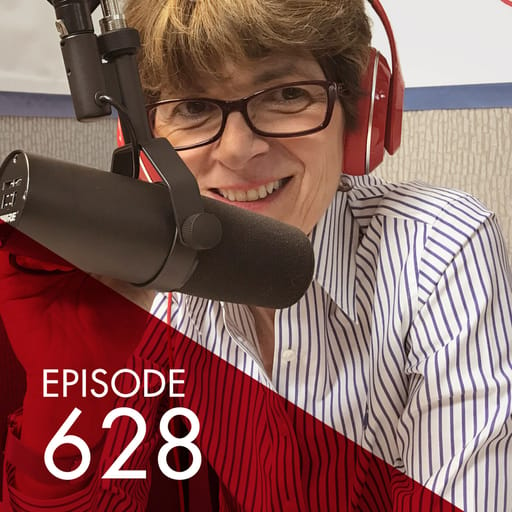
Transcript 0:00 Welcome back to the Peggy Smedley Show, the podcasting voice of IoT and digital transformation. [upbeat music] Hello, listeners, and welcome back to the Peggy Smedley Show. 0:11 My next guest is, is the only senior executive service female and has led the Product and Services Delivery Management Office since March of twenty seventeen. 0:23 She began her thirty-five-plus year career as a systems engineer on the surface, launched cruise missile projects for BAE Systems, and also provided expert counseling services on behalf of IBM for twelve years prior to entering the federal government. 0:42 She has three basic beliefs: accountability, respect for the individual, and integrity. 0:49 Please welcome Carlene Ilito, Executive Director, Products and Services Delivery Management Office for the US Department of Homeland Security. Carlene, welcome to the show. Thank you so much. 1:03 I really appreciate you inviting me. You know what? I'm really excited because, you know, when we talk about your journey, we talk about the next generation and all the things that we have to do. 1:16 You've led a wonderful career so far, and it's exciting to get women and young-- the next generation, men and women, into the excitement about STEM and all these things. 1:28 Talk about that because it's, it's not everybody wants to get into IT and understand it, but you love what you do. I absolutely do love what I do. 1:40 Um, one of the things about IT, and, and let me just give you a little bit of my background, um, a-and that you've already shared a little bit of, but math is my major, and my minor is computer science. 1:53 So I have always loved that, that, uh, scientific area, um, mainly because, uh, it was intriguing to me. It was something that I really, um, got excited about. 2:05 Uh, w-well, I don't believe I was very similar to any of my, my classmates, uh, who loved sports, who loved, um, more of the arts or business. I was certainly into technology and trying to be innovative. 2:21 And I will tell you, for young women who are coming up the ranks or even young g-girls who are going through school, if they truly have a knack for, um, really wanting to be a part of information technology, I take my hat off to them because I really think that this is something that not many women are in. 2:45 Um, they feel, um, as though this is not the field for them because it is always being ster-stereotyped as something for men to do. Systems engineering, uh, is so e-exciting. 3:01 Building systems for this country is even more exciting. Or you're building systems for, um, other citizens or other companies. 3:10 This is what makes us great, and we have such great innovators that we have had in our history as a country. And to now have women come in and do so much to impact the lives of this country is so important. 3:24 So I want to inspire them. I want them to see that there are women out here that can do this-- that can do these things, and they can do it well. 3:34 Can I ask you, do you think part of the stereotype goes back to when, and I'm gonna date myself and help you along with me in dating ourselves together- [laughs]...that, you know, you have these stereotypes when we show a Barbie doll, you know, that says, "Math is hard." 3:49 You know [laughs] you said you were a math major. Yeah. That it does that. You know, that, you know, so what? Math is hard, but something that's hard is worth having, and failure is okay, you know. 4:00 And, and look at what you're focusing on today. You're focusing on continuous diagnostics and mitigation and security. Though-- That's hard. 4:08 I mean, those are the kind of things CDM, you know, when you look at things like that. That is not easy to look at, right? I mean, those things are tough. And it is tough. 4:18 I mean, but this is-- if you have a, a, a desire to do this, if you have a knack for it, if you really feel passionate about it, which I do, I mean, these things are not a hard job to us. 4:31 They become a way of life for us. We're always looking for new things to improve what we do today. I mean, you think about Alexander, uh, Graham and the telephone. I'm gonna date myself now. 4:45 Think about the fact that we had rotaries. We had phone booths out here on the sidewalk. We now have cell phones, and we can not only use the cell phones and go anywhere we want to, but we can actually text. 5:01 We can actually look at our email because now we have iPhones. We have come a long way from a twenty-five or ten-cent, um, telephone booth to what we have today. And believe me, not one man did that. 5:18 There were many people, and that includes women, that have come up with great ideas to get us from point A to where we are today. And there's still more to come. 5:29 And there are smart people, smart women out there, who are gonna make this happen. And so I'm excited to know. And I want them to understand also that, you know, failure is all right. 5:42 I mean, there are great people like Thomas Edison who have failed and multiple times, but yet he invented that light bulb, and after an estimated time of twenty-five failures, he was successful. 5:56 So we learn from those failures, um, just so that we can make sure that we don't repeat that again. 6:03 You know, in my mind, failure is a pivotalPivotal, uh, moment in time that forces you and I to take a different path, a path to a better place. 6:14 And I always hold on to that because we have to remember that life's failures are, you know, many of life's failures are people who did not realize how close they were to success when they gave up. 6:27 So- So Carly- If there is nothing else, remember that quitters never win. So let's go back to your rotary. No, no, no. Let's go back to your rotary point. 6:37 For those who are younger who are listening, who are inspired by you right now, a rotary is a phone that you put your finger in and you dialed it, right? So they might not know. 6:45 When I said a Barbie dial, they might not know. One number at a time. One number at a time. Yes. But look at, look at Steve Jobs. He-- How many failures did he have? He failed when he created Macintosh. 6:56 There were so many things that he- Yeah. The Lisa. The Lisa was his first failure before he became and was successful with Macintosh. 7:04 So now we think about those pivotal mistakes that come up before we have these pivotal successes, right? Because they are. They're pivotal mistakes to make pivotal successes. 7:15 So when you look at those in your career and you say, look, we all have them. Some of them we want to admit, some we don't, but they, they propel us forward. 7:23 When you look at all of these things right now, are there initiatives right now that you say to yourself, I'm working on things that have led to where I am today, that these are initiatives that we are particularly proud of, that we want this next generation or, you know, older generation, younger generation to see, look, it takes failures to get us and to get you where you are today. 7:51 Thirty-five years into your career now, and you say, "Look, I'm proud of what maybe I didn't succeed in the past, but now I'm very pleased in the projects I'm working on today." 8:03 And I can tell you a couple of those, um, both at IRS and at DHS. So let me start with IRS. 8:10 Um, I became, uh, one of, let's say, many, uh, program managers or program support managers, uh, for the electronic filing. 8:22 I love to be on big programs that impact this nation, and it changes the way we do business. 8:30 And if we look at the many paper, um, forms that we have had to use in the past, you would go to the post office and you would get a booklet on IRS guidelines on how you're supposed to fill out your taxes and so forth. 8:48 Now, you can get online if you have a computer, and if you don't, there are cafe shops that will get you a computer so that you can log on and do your taxes. 9:01 And when you do your taxes now, it's all asking you questions specifically, and it calculates everything for you. So you don't have to sit there and think, "Oh, did I add this right? I need to go to a CPA." 9:16 You don't have to worry about the service centers getting any of your information incorrect. They don't have buckets of paper all over the service centers now to address your tax returns. 9:28 And think of the millions of people we have here and the service centers that have to take care and process those taxes because we had paper returns. 9:39 So the efforts of reducing paper was a major effort at the IRS and electronic filing. And I know people don't care for the IRS. Who does? No one pretty much likes them. 9:52 And I, I could feel the tension when I would go out to visit some of our taxpayers. But I will tell you, it made a difference when this bus conductor and a train conductor 10:05 came up to me and said, "Ma'am, I think you're new in Boston." I was visiting a service center, and I said, "Yes, I am." And he says, "Where are you going?" And I told him I was going to one of the IRS service centers. 10:16 And he turned around and looked at me and said, "Thank you. Thank you to all of IRS for creating electronic filing." That made the difference right there for me. 10:27 And I couldn't be more proud of that situation of what we did to make electronic filing successful. CDM and, um, and, uh, uh, DHS is also a key program. 10:41 We haven't even finished it yet, but the, the possibilities of that program is gonna touch the entire United States because it's gonna protect all of our government systems that we have here now. We have been breached. 10:57 The private industry, look at Citibank, breached. Every time you turn around, there is a breach somewhere. 11:05 And, uh, the one that is more prevalent in my mind is OPM and when they got breached and all of that employee private data that was exposed as a result of this breach. We're now putting something in to protect us. 11:22 Never have we ever even thought about cybersecurity. I don't even think people could spell cybersecurity, not to mention know what it really was. 11:31 Now it's the hottest thing out there because we have advanced so much in information technology that we need somebody to oversee and protect us and our data. It's almost like the, the, uh, FAA. 11:48 We can't-- We don't have stop signs in the air. We don't have red lights in the air. So they have no-- so they need the FAA, um, 11:58 uh, uh, g-guys that, you know, actually tell them what they need to do to say, "You move in this airspace now or move in this quadrant of the airspace so that we can get you landed at this particular airport." 12:14 We need somebody overseeing our information technology the same way so that we can protect ourselves and we can protect our data.So what you're doing right now, as I, as I hear you, Carlene, is you want to inspire because I have to think you're passionate about this, and your passion comes through. 12:33 I am. And I love to hear that. 12:35 But when I look at that, that passion isn't just something you had to have, and that's why you were named a Woman of MT/IoT because you have this passion, this drive, and you wanna leave, I, I would assume, a legacy of getting the next generation eager then. 12:48 So I have to s-think that y-you must do admire people, somebody who inspired you. 12:54 You must have had some mentors along your journey because that's what I'm hoping here when I hear you, that your l-listeners now are saying, "I wanna be like her. I want to do something." 13:06 So that somebody listening says, "Now, how do I wanna be? I wanna be a part of the, the CDM initiative. I wanna do it." 13:13 But somebody had to encourage you along the way, and you said, "I had great mentors, and that's why I'm inspired to keep doing what I do." Are there those that did that for you? A-absolutely. Absolutely. 13:25 And I've had a mentor in every job that I have had, whether it be in IRS, um, IBM, or even DHS. 13:36 And I will tell you, um, they have inspired me so much as to where I want to go next. And to do that, I had to have some type of idea of where I wanted to go and what I wanted to do. 13:53 What was my end state gonna look like? And I haven't gotten there yet. I'm still working towards that. But my end state is really to be a CIO of some department. I really want that. 14:09 And to do that, I had a plan, and I had mentors who led me. They, they, they knew I had a plan. 14:16 I shared that with them, and they inspired me, and they, um, motivated and encouraged me to do just that, to d- to start looking at areas that would lead me to or field a study that led me to, uh, where I want to be in the future. 14:37 So if you look at it, the CIO needs to know about core requirements, requirements management. 14:42 They need to know strategically how they're gonna do their information technology, what's coming up next, stay abreast on the new technology. 14:49 They have to understand operations, development, and testing, um, and they have to understand all of the new guidelines and legislation that's gonna come out from the different, um, from the different governments that we have, and I would say OMB and, and others. 15:05 And so when I look at that, I have d-- I started my career at IBM focused on requirements management and strategic planning. And that's what I knew, and I w-- I could plan like no other. Could I implement? 15:21 I wasn't quite sure because I have never had an opportunity to do that. But as I got into IRS, and I stayed there for twelve years at IBM. 15:29 But I stayed with IRS for fifteen years, and I had the opportunity to be exposed to, um, software development, to testing and become a test manager, um, of different systems and then become a program manager. And I... 15:45 That was a new field for me to really and truly understand what program management and project management was all about and to really show ownership. And this is where I just soared. I, I really... 15:58 I took that to heart to the point where I was taking it home. And if I had projects at home, I was using those same skill sets to deliver projects such as I am going to redo my bedroom. 16:12 I'm going to remodel my bathroom, something like that. But it was always like a major thing for me. And I took in cost and, and schedule and making sure I had the appropriate funds. 16:25 I also looked at the skill sets that I was looking for to actually get the job done. So it was really exciting for me when I got into that piece of it or that field of study. 16:37 And it just, um, it soared for me mainly because I became so good at it, I could do it with my eyes closed. And I started d-- I started delivering systems at IRS like you wouldn't believe. 16:49 Filing and payment compliance where they had, um, uh, people that were delinquent in paying their taxes, and they had so many that they had to get debt collectors to come in and start calling folk. 17:02 And to set up that, that, that situation and making sure that no privacy was, um, breached as a result of having these debt collectors call, um, was really key. 17:14 And then, and then communicating this to the citizens of the United States was even more important. 17:20 Um, and then understanding their situation so that we can accommodate every citizen that w- m- that may be in that situation. Um, I delivered the, the accounts management system up at IRS. 17:32 So it-- To me, delivering a system that's gonna impact this country is so key for me. And it, and it makes me feel like, "Oh my goodness, I have value. 17:44 I have contributed to the, to the success and to, to, to the progression of this country." And that's what's important to me as a public servant of the United States, being a federal employee. 17:59 So- So- I, I would say to... I'm sorry. Go ahead. No, I was gonna say, so if I... 18:03 It was kinda summering, and I didn't mean to interrupt, but I was saying if you were trying to summarize in or I, I am right now to, to help the next generation because some things that you said resonated with me or maybe to others might not, is you had some longevity with some of your jobs, and that's something the younger generation might not know. 18:21 They job hop. You were with some of your jobs for more than a decade. So if you think about it, you know, you had your eye on the prize. You know, you worked at home, that longevity I just- Yeah. -described. 18:32 You applied things that you learned to other things, and then you, you created these tasks. 18:37 So I guess my question to you would be, you learn from things, and you said, "How do I apply them to others and then bring them backTo whether I'm doing it at, at DHS or whatever I'm-- the task that I'm doing at hand, and how can I then contribute so that now the next job I'm looking for, whether it's in my current employment or where I wanna be as the CIO, whatever my next eye on that prize is, I can apply it. 19:04 Is that the- Exactly. -advice then you give that next generation? Definitely. If they have their eye on that prize that you call it, and I, I just say know where you want to be, what your end state looks like to you. 19:18 And nobody can define that but you, the individual. Okay, and then, I-- you know, you talked about my basic beliefs. 19:27 To have some principles so that that carries you through because there are gonna be days where this is not gonna be easy. 19:34 You're gonna feel, like, so discouraged, and you're gonna feel as though things your back is up against the wall and things are just not going right. There's never going to be a perfect day. 19:44 But when you have those moral values and those beliefs holding on to, you can elevate and empower yourself to be anything and to do anything you want. Kerlene, how do we do that in a climate today when we can't... 20:00 A-and I'm-- And, and, and I know you work for the federal government, but I'm gonna ask you this question. When we see our politicians can't seem to get along, are-- and that's that end state that you described. 20:11 Do we just gotta say, "Look, we're not gonna listen to the noise. We just have to do the job at hand. Forget about all the other noise- That's exactly right. -just do the job," right? Just do the job at hand. 20:21 Focus on that because that's what you're hired to do. That's what you've been asked to do. So focus on that and deliver. They can't knock you for doing what you've been asked to do. 20:35 So the-- I would say keep your eyes on the prize and move forward. Do what you've been asked to do. 20:40 Even though they have no sense of understanding, um, the direction in which they're going, yes, we're all over the place now, and I'm, I'm really hoping that we will pull it back in and get a direction of where this country wants to go. 20:57 But in the mean time, we know things that need to be done, and we know the right things that need to be done to make this country better. 21:05 Let us do the things that we know we can do, the things that we can control, the things that we know will impact positively, impact the lives of others. Is it hard... 21:18 And when you say that when we look at these things right now, the younger generation needs to see that, look, we've got nefarious characters constantly trying to penetrate and, and get data, create havoc on all of us. 21:31 And it's hard because you know what? You're trying to say, "Oh my gosh, I'm doing my job," and, and, and corporations are saying, "You're not doing it well enough." 21:38 And, and it's just so much, and you see all negative press, and you see or all these negative things, and y-you, you hear all these things. 21:46 How do you close that all out and say, "Look, my job is just to do what I gotta do. I gotta focus on making sure those nefarious guys stay home, and I just do my thing"? Well, you don't wanna actually do that. 22:00 You don't wanna close that off. [laughs] You wanna listen because you, you need to be aware of your surroundings. 22:07 You need to know what's happening because what is possibly happening could impact what you are trying to do. So you don't wanna close that off. 22:16 You wanna always keep an ear to the ground to hear what else is going on around you. 22:21 As I tell my kids, you know, be aware of your environment because that could possibly prevent you from that, that point and where you want or that, that end state in which you want to get to. 22:35 But I'm gonna tell you, this is, this is all about courageous people. And I have-- I know so many women who have started things, done things, and then they pull back, and they've stopped and said, "No, it's not working." 22:51 And sometimes it's the time and place in which we do it. The timing is not right. The place is not right. 22:58 But I will tell you, courageous people, to me, move forward no matter what, and they have to strategically do that. They have to be aware of what's going on. 23:10 They have to know how their-- based on their plan, whether they can still maneuver appropriately. And you don't get from point A to point B by yourself. There's always somebody. 23:23 There's always someone that is helping you, and this is why mentorship is so important. So don't, don't have a blind eye to what's happening outside. 23:34 Don't put on blinders where you're only focused on what you need to do. Because when you get to that end state, that may have already been, uh, null and void, or it may be that somebody's already done it. 23:48 Keep your ear to the ground and continuously be innovative and creative so that what you do at your end state is so much better and so much more powerful than what you had anticipated it to be. So women face hurdles. 24:04 They have to just say, look, they can overcome the hurdles, and that's the idea. 24:07 They over-- They can overcome the hurdles in technology, whatever industry they are in, because the end state that you describe, there's great opportunities for them. Absolutely. And, and men as well, 24:19 as long as they want them. Yeah. Right. Exactly. 24:22 So when you look at this, in summary, we've got about two minutes, what's your best advice looking forward and, and seeing where the opportunities are in this wonderful world to which we live in? 24:34 Well, I will tell you that many of our opportunities now, and I think from an IT perspective, is in cybersecurity. 24:43 Uh, with all the things that are happening, it's so important that we secure this country and we secure the people and the data that we have.Um, and I can share so many examples of where we have dodged that bullet of not being secure so many times, um, 25:03 that it, it really is probably one of the most important things that we need to focus on. But also we need to look at our, our generation, our next generation, and how we innovate them and how we keep them... 25:18 how we, how we help them to innovate and to get rid of the bad guys and, and what they're doing and how we make our lives a lot better, how we make, um, our, um, our living in this country a lot better. 25:33 So if I look at any advice to any young or new generation on their careers, I, I have to say my advice to them is to stay focused on the end goal, stay strong and stay fearless. 25:49 I underst- Trust in your instincts and believe in yourself, for nothing worth having is ever gained easily. 25:59 Carlina Alito, Executive Director of Products and Services Dir-Delivery for the Management Office of the US Department of Homeland Security, thank you for spending time with us. 26:08 Congratulations again on being a woman of MtoM and IoT. I love the conversation today. Thank you again. Thank you so much. All right, listeners, we are out of time for this segment. Tweet at us at ConnectedWMag. 26:21 We'd love to hear your thoughts on this amazing conversation and so much more. Again, check out our website at connectedworld.com or thepeggySmedleyShow.com. 26:31 Remember, this is The Peggy Smedley Show, the podcasting voice of IoT and digital transformation. And remember, with great technology comes great responsibility. 26:40 Stick around, we've got more to come right after this quick commercial break. 26:45 [upbeat music] Everyone is constantly on the go, and relying on technology can help keep us in the know. 27:00 Use your voice-activated service to connect to the most influential Internet of Things podcast. It's as simple as, "Alexa, play The Peggy Smedley Show podcast." 27:11 Listen to current and archive shows or let Alexa assist you in subscribing. Never miss an episode. Alexa, play The Peggy Smedley Show podcast. [gentle music] Do you want to be a professional coach? 27:26 Are you in business trying to make a real difference with people you manage or work with? Have you started a coaching practice that isn't quite getting off the ground? 27:35 Get the skills you need to be a successful coach today with the Coaches Training Program from Accomplishment Coaching. The Coaches Training Program will show you how to help others focus and be more fulfilled. 27:47 Whether you want to improve your company's bottom line or create a thriving coaching practice, Accomplishment Coaching can give you the distinctions and practices you need to coach others effectively today. 27:59 Accomplishment Coaching has spent six years developing a cutting-edge coaches training program that will have you ready to coach people professionally in just twelve months, and you don't have to take time off work to do it. 28:11 To find out more about the Coaches Training Program, just call one eight eight eight five four eight six eight one three. That's one eight eight eight five four eight six eight one three. 28:23 [upbeat music] Peggy is taking it on the road in twenty nineteen with live audio, video and onsite appearances. 28:31 The Peggy Smedley Show will be live at Internet of Manufacturing Midwest, IFT nineteen, Liveworx, and Construct Tech Technology Days, covering the IoT, AI, machine learning and other emerging trends in the markets that touch your businesses. 28:45 To learn more about upcoming tour dates, visit peggysmedleyshow.com or connectedworld.com. [upbeat music] Looking to be a successful entrepreneur? 28:57 The virtual assistant industry continues to be a top choice for those looking to start their own business. The problem can be how to become a virtual assistant. 29:05 Many turn to the bible of the VA industry, the book Virtual Assistant: The Series, and it's the perfect guide for office managers, executive assistants and other administrative professionals looking to make the transition from employee to successful business owner. 29:20 Go to vatheseries.com to get your copy today. [upbeat music] I've heard this is, like, one of the best pizza spots in town. Yes, it is. I'll do a slice of pepperoni, slice of vegetarian. You got it. 29:30 And I will pay for all of that in three days. In three days? [laughs] What's that mean? Well, wait, you accept credit cards. That money's not gonna hit your account for three days anyway. I need my money quicker. 29:39 At Chase, we hear you. With Express Funding, card payments are in your Chase account the next business day. Go to chase.com/expressfunding. Chase for Business, so you can. Compensated participation. 29:49 All businesses are subject to credit approval. Not all clients are eligible for next business day funding and additional terms, conditions and restrictions apply.