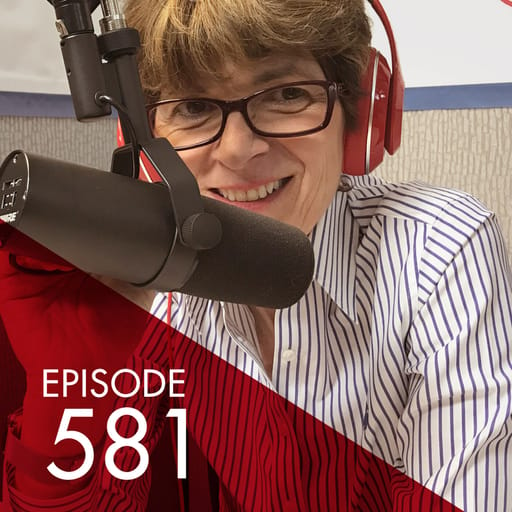
Transcript 0:00 [on-hold music] Talk to me. Information, news and entertainment on demand. WUS radio.com. 0:10 [on-hold music] Welcome to the Peggy Smedley Show, the voice of IoT in our connected world with your host, Peggy Smedley. Hello, listeners, and welcome back to the Peggy Smedley Show. I'm your host, Peggy Smedley. 0:27 My next guest is building a high-performing commercial development and market intelligence practice. 0:34 She is focusing on scaling commercial impact through ecosystem development, partnerships, strategic planning, and programs. She also has been honored as a woman of MTEM in IoT in twenty sixteen. 0:46 Please join me in welcoming back to the show, Kiva Allgood, chief commercial development officer at GE Ventures. Kiva, welcome back to the show. Thank you, Peggy. It's awesome to be here. Appreciate it. 1:00 So Kiva, it's been a while since you've been back on the show, and I love having you back. Let's talk a little bit about what it's been going on and the things you've been doing. 1:08 Give our listeners a little bit of an update on what you've been doing as of late. Oh, you bet. Uh, really focused on everything industrial. 1:15 So, um, GE, as you know, has, uh, a hundred and twenty-six-year-old history and very, very focused on helping them reimagine the infrastructure of the future. So, um, anything that moves. 1:27 Um, GE produces about thirty percent of the energy in the world, and, uh, I have been partnering with the different business units on really figuring out how do they tap into the early-stage ecosystem to help bring the future forward faster. 1:41 And it's exciting time right now, right? I mean, there's so much going on, and I always tell people that the pace of change is never gonna be any slower than it is right now. 1:49 We're gonna keep up this pace of change, and it's gonna continue to be this way, right? A hundred percent. That's actually one of our favorite statements by our CEO, Sue Siegel. 1:59 Um, it is especially in the industrial space where I think, I wouldn't say it's been ignored, um, but it definitely hasn't moved at the same pace as some of the other industries like financial systems or, um, even telecommunications and entertainment. 2:14 So talk about that. Talk about industrial innovation and how right now we need to drive, or it is driving some of, or is at the forefront of driving some of this digital transformation, and why we need to start doing... 2:28 'cause like right now, we're talking about edge computing and edge compute that we see it, and why the industrial environment really needs to start engaging in it and has been, and there's so much more opportunities for them. 2:42 Yeah. I mean, we've been reimagining personal devices for really the last ten, fifteen years if you think about the, the transformation we've seen in, in telecommunications, for example. 2:52 Um, you know, I grew up on a farm. I had a landline, [chuckles] it was a party line. That phone did one thing, and now I, I carry around something that serves as a calculator, as my reminder. 3:02 Um, in the consumer space, almost everything serves multiple purposes. 3:07 Now we're starting to see that same type of digitization and digital transformation in the industrial sectors in energy, aviation, transportation, healthcare. 3:16 Um, and as we start to bring those new technologies in, we really have to also reimagine how can these things be and serve and do more than just one thing. And that relies a lot on data. 3:26 So in the consumer space, that-that's a little bit of data. If you're talking about a wind farm or a manufacturing plant, you're talking about terabytes of data. 3:35 So we're starting to really see the transformation and the compute capabilities match up with the impact that that analysis and that information can have on, in those environments as well. 3:46 And when we look at data right now for what we're seeing and we look at all of the information that these different industries are seeing, they're f-they're, they're challenged with how to understand the data. 3:58 They're challenged with understanding not only what to do with all of them. They're challenged with making their workforces understand how to manage that data. 4:06 They're challenged with how to leverage digitization with w-at what levels they actually embrace it. 4:13 So in manufacturing Industry 4.0 and what that means, and how do they advance it to do services and, and optimization and supply chains. 4:23 When you talk about farming, they're actually using it to, for weather and sensors and crops and all of these things that you described. 4:31 Each industry has to understand digitization a little differently with their workforces and who's gonna take the lead, correct? Oh, a hundred percent. You know, every industry has its own unique type of data. 4:44 I think there's a misunderstanding the fact that, um, you know, build it and they will come. 4:50 A, a lot of these things aren't connected today, and then collecting that information is a little more difficult than I think people anticipated. But the beauty is now the technology is catching up. 5:00 Um, you also have, I would say, a change in the workforce. Um, if you go to a plant manager and say, "You're now gonna take instructions from the cloud," he'll look at you like, "There's no way. 5:09 I gotta produce a billion units by the end of the day, or that's gonna cost me half a million dollars." 5:14 So the impact, um, of a false positive or a recommendation or taking action from a machine learning AI or edge compute capabilities is a lot, uh, has a bigger impact. 5:26 Um, it's millions of dollars instead of, you know, if, if it... 5:29 If you get a recommendation off your phone to go left or right and you're off and you, you're fifteen minutes late, that's okay, but it's not how you run a business. 5:37 So I think now that we're starting to collect enough information and the analytics are there, we can reduce the false positives and really create, I'd say, recommendations and recommendation engines that have impact for each of those different industries. 5:51 But they're very, very specialized, just like the people who work in them. And for us, that's critical because we're starting to see an aging workforce. 5:59 Finding someone who wants to work on top of a flare stack and inspect it, um, which still has to be done no matter what, is, is becoming more and more difficult. 6:06 Um, so we're trying to really apply new technologies in those spaces while we have the people who can really teachThe machines how to, how to understand what they're seeing. 6:17 Um, and then that way we'll, we'll hopefully cross the chasm and be able to have a, a nice blend of both human intelligence and artificial intelligence. So we talk about this, this... 6:28 We're at this stage, uh, you know, it's like say, you know, as we get older, we're at an age and stage, but that's where we are when we talk about digitization. 6:36 We're at an age and stage of that, where we need humans, we need the, the technology, and yet we need to understand how much of it is accurate and how much it still doesn't have enough of the information to make those false positives actually be correct positives right now, you know. 6:52 And so we have to balance that. And at what point will we actually cross over that chasm and say, "Okay, now we're there, and that, you know, that retirement is okay." 'Cause we're not a hundred percent there yet. 7:04 Is there a timeline that we say, you know, 'cause we keep saying here that technology's a destination, not, you know... It's, it's not a... It's a journey, not a destination. So I think it... 7:14 That's the s-the same thing that we're talking about here. But do we have... We don't know when each industry is different, right? Yeah. Each industry is in a different state of maturity. 7:24 And, um, obviously, when you're talking about, uh, jet engines and, and nuclear plants and energy plants, if you get it wrong, it has a much bigger impact, um, than if you are applying it to, say, a simple manufacturing process. 7:38 Uh, and that's where we're really starting to see, um, the impact is if you think about how you operationalize and integrate technology into your day-to-day activities, we're really starting to see the benefits there. 7:50 And I think with that, that'll be the first place that we're really able to think about repair services, predictive maintenance. What's the asset, um, health? How long has it been running? 8:01 Manufacturing processes and operational processes. Um, I think we're, we're there. 8:05 The technology exists today to implement those, and now it's a matter of changing some human behavior, getting them to really think through how can they use some of this new technology. 8:14 I'm on my way to Mobile World Congress, and if you think about 5G and low latency and what it can actually provide to a real-time manufacturing facility, that means you could basically move the equipment around on a daily basis and, and produce different things. 8:29 Um, and I am super excited about the fact that it... Right now, it's, the technology exists. 8:34 I think we just have to find some of those champions and people who can really rethink how it can be applied in an industrial environment. 8:40 I think that's where the t-the, the chasm is gonna occur, not so much on the technology side, but on the changing the behavior side. 8:49 When we look at that, are we still at a point, though, that some of this technology is still priced too high for some companies to be able to afford it, to do it, to really say, "I can take that leap and that faith." 9:04 You know, years ago, we used to say we took technology, and we put it on the shelf, and we didn't really use it. We thought we'd try it, but we just organizationally can't really do this. 9:13 Are we there now to say it's, it's, it's a matter of we have to do it, but the price tag to do it is still not comfortable where we can all really do it and say it's, it's, it's afford-- W- it's, it's the right time? 9:27 Yeah. I think that's dependent on the industry and the state in which, um, where they're at. Uh, you know, again, each, each market, as you had highlighted earlier, Peggy, is different. 9:36 Uh, agricultural is different than where your, your new high tech or in manufacturing. Um, what I would say is we can't afford not to change. 9:44 So if you think about the fact that we're having a difficult time, um, hiring the right resources, getting welders, getting people who can-- who are in the trades, um, to build these large industrial pieces of equipment, we're transitioning to three-D printing, but that's not-- That transition isn't gonna occur fast enough. 10:01 So in my view, we're gonna have to embrace this change and really think through how do we, um, integrate these new technologies and digitization into our practices on a daily basis because we're not gonna have a choice. 10:13 Uh, and I think that realization's coming. 10:16 Um, but the companies that do it faster are gonna be the ones that are more profitable and the ones that can start to transition into new business models, start to think about services, start to think about, um, other areas where they can play out of s-outside of just hardware and, and manufacturing. 10:32 I think that's the biggest transition is we're not just talking about industry transition or technology. We're truly asking people to embrace potentially a different business model. 10:41 That, and to your point, it's not pricing it on the, the initial cost. 10:45 It's looking at it as a potential service that they can provide to their customers as well, and that transition, I think, is gonna, is gonna take a little bit longer. 10:54 And looking at that, that's a really great way of looking at, because when you think about predictive analytics and you look at, you know, artificial intelligence or machine learning, you know, all of these things give real tangible ROI at the end of the day because they could see what it's actually doing for them because it's giving them information that maybe they didn't have before, and we're seeing things we didn't see before. 11:16 Is that what actually pushed us forward a little bit faster? Because AI adoption seemed to leapfrog us when we were looking at IoT. All of a sudden, we could see things that we didn't really understand. 11:29 And now with AI machine learning, now we've really are progressing at a much faster rate. Definitely in the industrial space because the, the impact is so much larger. 11:39 So just for some context, if you think about, um, doing an inspection on a, an oil and gas line, uh, and trying to find a defect there, that, that equates to trying to find a single blade of grass on seven football fields. 11:52 Um, and the human eye is great. 11:54 It, it, it's good, but we can definitely use other technologies such as crawlers from, uh, Sarcos or, uh, a, a drone and, um, image a-analytics and algorithms and have a single person who can really perfect that, so we can find that single blade of grass a lot faster and a lot more economically, um, and actually be able to rin-rinse and repeat on an ongoing basis. 12:19 That same type ofUm, technology has been used. I mean, NASA and DARPA has perfected them in other applications, but how do we apply them to every day? 12:29 Um, and I think that's where we're super excited, and I'm super excited as, as a technologist. 12:35 Um, I share the passion that if you can reimagine almost every single process and every single technology in the industrial space, imagine the impact it can have on people. 12:44 Um, to me, that's the most exciting benefit, is because when you think about large industrial equipment, the people it impacts the most, it impacts GDP, it impacts people ability to get to work. 12:55 Um, that to me, is transformational. 12:58 When we connect these things in manufacturing and we try to get the information that we want to make better decisions, are we then now looking at how we're going to do from an automation perspective of looking at what's real information and the automation systems that are being updated and using information from... 13:20 in ways we never used before i-in connecting these to our supply chains and to our partners? 13:26 Because there's never one partner in any of this, whether we, whether we do it to the edge or the, to the cloud, and, and that's different from what manufacturing when they hear the word internet. 13:37 Edge, and cloud, and the internet are all different pieces of the puzzle, and that all has to come together in a different way for manufacturers to be able to monetize all of this and to get those services that makes their customers get the products. 13:53 And now mass customization, which is something we've never really done, and mass personalization, actually is what I should say. Not even mass customization. Mass personalization is really the word I wanna say. 14:05 Is that gonna change the game for what we do in manufacturing? 14:09 Excellent point, Peggy, 'cause I, I think that a lot of times people underestimate the complexity of running a, a, a manufacturing, uh, facility, 'cause it is about the partners in the supply chain, both upstream and downstream. 14:23 Um, and that complexity and how integrated it is to the, the, the IT systems that live on that platfor-- pla-plant floor. 14:32 Um, getting a plant manager to, to take direction from someplace else is just not something that comes natural to them, right? 14:39 So I think hundred percent agree with you that, um, understanding how all of those things integrate, and the definitions are different. 14:46 Um, edge in a plant factory could be that you, you get updates from the cloud every once in a while, but it's computing and it's, it's compressing and it's doing everything it needs to do to send a signal to that PLO, the, the, the manufacturing system real-time, and it-- then it never goes anywhere else. 15:03 So I think closely looking at the marriage between IT, um, you know, infrastructure and operational infrastructure and how those things are slowly starting to converge is a critical component to actually seeing changes on the manufacturing floor, where we're actuating. 15:19 So it's not just updating maintenance schedules, but you're actually impacting production. Um, you're actually changing how the manufacturing floor is going to, you know, act that day. 15:30 That still hasn't necessarily happened. I think that's gonna be a transition, really, where now we've got low latency technology that's secure. We've got the ability to update equipment. 15:39 A lot of the complaints, um, from hardcore technologists and IT professionals, uh, on the factory floor, or I was just at a Onlink support, um, facility. 15:51 They don't even have Wi-Fi in their, in their distribution facilities. So we're talking some basic fundamentals that still have to be solved in order to get to kind of that grand vision. 16:01 Are we still talking the traditional ways of programmable logic controllers, PLCs, and the batch systems that we've always had? 16:08 So you're still talking the same traditional, you know, Honeywells and, and Rockwells all having to work together and figuring this out because those kind of... and Rosemonts, those guys didn't work together years ago. 16:20 They always wanted to keep things closed. They never even thought about interoperability. 16:25 I mean, the things that we talk about, trying to integrate things, they have to think and operate different than they ever did, and they've started to understand that. 16:34 And now when we talk at the enterprise level, and we start saying, "Well, now we have to integrate, and we still don't have interoperability, now we're going down in manufacturing and all this distribution all the way across. 16:47 You've got to have IT talking to engineering, and now we're opening up, you know, our kimono to everybody." It's a whole different system and communication. That's a trust level that never existed before. 16:59 Now you're saying, "Now let's open it up to the Internet. Now we've [chuckles] got to do a whole lot of things, the cloud, the edge." This is a whole new world for manufacturing. A whole new world. 17:08 And, and you really nailed it there because the business model has to change. Um, if you think about those systems aren't gonna go anywhere. 17:15 I mean, if you've got a billion dollars worth of assets, and we kind of call it brownfield, sitting in a manufacturing plant, producing value for org-- a company today, that's how they're driving their revenue. 17:25 They're not gonna rip it all out and start over again. But they have gotten extremely, um, I would say, progressive with regard to no longer closing down and buying proprietary things. 17:37 Um, ins-ins-- And, and really ensuring that from a data management and data policy perspective, that they can get access to the data and not be beholden or kept captive from the hardware manufacturers. 17:48 So you start-- you've started to see that transition. 17:51 I think that's where, um, if you think about the success of the Internet and even wireless technologies, you had standard bodies that were saying, you know, in order for this phone to work globally, this is how we're gonna, uh, make the network work. 18:05 We don't have that same type of, uh, drive and direction necessarily in the industrial space. There's some great, um, 18:13 I'd say, standards being thought about, but it's gonna have to really start to evolve in order to get true interoperability, which to me is how you're gonna get sustainability and scalability. 18:24 Without the interoperability is that first component, you can't scale, um, a-and then you're not gonna become profitable. 18:30 So I think that's a-- that's something that as an industry, we have to make sure that we're talking about and then looking at the different business models in conjunction to the technology.What are the biggest trends you're seeing right now? 18:43 You know, you've talked about what we're seeing in manufacturing on the industrial side. 18:46 Are there other things that you're seeing that you say are a bright light that is really gonna propel what we're doing as, as industries, you know, certain industries or even just the manufacturing that you're describing that says, "Look, we're gonna see more of these leapfrog moments or just some really nice incremental ones because we're seeing adoption, we're seeing understanding of what's happening, and the data insights now are really opening up greater awareness of what can be done, you know, because of IoT and, and more, you know, AI and machine learning and, and the such." 19:21 Yeah, I definitely think the advancement in image recognition and analytics, the ability to apply those to different, um, spaces and places has been, uh, transformative. 19:32 That's allowing for inspection as a service, allowing for real-time repair and maintenance. Um, and that, that, that's I'd say, you know, you're really starting to see the financial benefit of that. 19:43 The next one is definitely on additive manufacturing. So how do you really integrate real-time additive components? Um, how do you, how do you manage that ecosystem, um, so that you protect people's IP? 19:55 Uh, to me, that, that's, that's at the cusp, and that's definitely a space and place where I, I think that's going to transform how that final factory floor and the f-final assembly and the supply chain works. 20:08 I also think- Do we-... connectivity technology too. Um, you know, I'm really bullish on 5G as well. But when you talk about that connectivity, ta-explain that to me because that's gonna be... 20:19 Why, why are you saying that's gonna be so-- Why are you bullish on that? 20:22 On the connectivity side, I really think now that you've got the low latency, the ability, uh, you know, uh, for, uh, manufacturers potentially to even embed connectivity when they 3D print something so that they can track it, so they can look at the genealogy of something over time. 20:36 It really allows an usage over time 'cause in the industrial space, uh, a lot of times you're not talking about billions of units, you're talking about hundreds and thousands of units. 20:46 So the business model's gonna be a little bit different. So how do you use technology and kinda reimagine its place in that ecosystem? 20:55 Um, and to me, that's where it's starting to really get exciting around i-a share private, you know, private public buildouts of things. You've got, uh, new type of energy providers. 21:07 Um, does a tel-telco now become the energy supplier as well? 21:11 Um, I think there's a lot of really interesting things happening on the business model, which is gonna be supported by that kinda last mile connectivity that doesn't exist today. 21:21 So we're gonna see changing of business models because of what we can do and, and we're gonna see companies changing, reshaping themselves, almost like what IBM did. 21:30 Instead of being a computer company, they became a services company. 21:34 So new companies are gonna see differences, but you just said like in connectivity, we're gonna see them providing new services that they never thought possible because of that extra mile that, you know, what's needs to be done. 21:46 A hundred percent. 21:47 So looking at that, because you just described that, are we gonna see other things, other use cases and scenarios that, you know, it's gonna be these new startups, or it'll be the traditional, you know, conglomerates, the traditional companies like you're talking about, the service providers that are out there that are gonna be doing these things? 22:08 I wish I had a crystal ball. I wish I could predict that. [laughs] I think it- So it could be anybody. It could be. I think it's the ecosystem startup that challenges the larger corporations to go, aha. 22:20 Um, I do think, you know, again, 22:23 internal innovation and, uh, entrepreneurship, um, is gonna have to kind of feed the beast a little bit, but I do think that typically, you know, you've got the, the startup ecosystem that challenges the status quo. 22:35 Uh, and I think that's gonna continue. And that's the-- that to me is why it's important for corporations to keep a pulse on that and really understand what's happening in their ecosystem. 22:46 I mean, if we talk about six point two billion hours of worker productivity regained as a result of AI adoption, imagine what is out there. 22:57 I mean, if that's the numbers that are being put out there, it's, it's an incredible statistic to think about what we could do on, on the other end of this. 23:06 So do you really think that when we look at technology, I always tell people we're only limited by our imagination, that there's so much more that not only the service providers can do that are out there that, you know, because of what the edge enables, there's so many things we just, is what you're saying, is we haven't thought about as we continue to discover what the data is telling us. 23:28 A hundred percent. We're only bound by what we, what we, you know, um, like you said, your, what your imagination can see. 23:35 And, and I can guarantee you, if you rewind in the transformation of how we communicate today, um, people wouldn't have predicted that. 23:42 They wouldn't have predicted that you can take a single device and travel the world and stay connected to your family, uh, or predicted that you can do inspection of a, a service with a drone and a crawler and have a professional sitting three thousand miles away. 23:56 Um, and I think it's that continuing to challenge ourselves to reimagine how that same service or same product can be designed. Imagine a state where there is no currency. Africa is a great example. 24:09 Currency, they pay for things, um, on their phone. And so imagine a state where the village becomes the, the internet provider and the telecommunications provider. Um, there's so many what-ifs, but the technology exists. 24:23 Now it's just a matter of kind of moving mountains as far as how do you make money. 24:28 Um, I always say if you-- if, if someone can't articulate how they make money, how they save money, um, or how they solve a cust-customer problem, then it's not particularly interesting. So we've got about a minute left. 24:41 How do we then keep the bad guys at bay? Because as much as we're advancing, they're also trying to, you know, enter into everything we're doing and, and to do something, you know, 24:52 nefarious.Yeah, that's a, that's a question we have to address on a daily basis. 24:57 I'd say for a lot of the, the industrial space, uh, you're talking about [chuckles] equipment that's been there for thirty years, and it's, it's, it's not necessarily secure today. 25:06 Um, so I think we also have to be honest, uh, with regard to what's the current state and is this putting us in, in more harm or less harm. 25:15 Um, and then really challenging on an ongoing basis of en-ensuring that we, I, you know... Again, I think you get, um, security on the silicon itself. 25:26 I think that's a huge-- that could potentially be a huge improvement, a lot more difficult to, um, you know, break into. But I think we're gonna have to continually watch that. 25:36 But I do think today, uh, we create some issues where there aren't, and we need to be honest with ourselves with regard to what are the security risks that exist, uh, in current state. 25:49 Well, Kiva Allgood, Chief Commercial Development Officer for GE Ventures, thank you so much for spending time with us and, and talking to us again today. I appreciate it. Have a great day. All right, you too. Thank you. 26:00 All right, listeners, we are out of time for today. We're gonna take a quick commercial break. 26:05 But in the meantime, if you wanna go up to our website at connectedworld.com, or you can go and check out our past archives at thepeggySmedleyShow.com, in any of these kind of discussions, you could say, as Eva just talked-- uh, Kiva just talked about, there's great discussions on things like this and what we could do. 26:22 And I'm telling you, as AI and machine learning continue to grow, you're gonna see it's gonna be a great s- time for us to see so many other things. 26:29 But you could tweet at me at ConnectedWMag, and we could keep this discussion going. All right, we're out of time. As always, this is The Peggy Smedley Show, the podcasting voice of IoT and relevant technology. 26:42 Remember, with great technology comes great responsibility. We'll be right back after this commercial break. 26:53 [upbeat music] Signal to noise, an electronic term with new relevance on the internet. Connected World Media cuts through the noise of data overload and finds you the signal of important information. 27:10 Information that will keep you current and aware of context in the Internet of Things. Peggy Smedley shares her insights on The Peggy Smedley Show and in Connected World magazine, all online at connectedworld.com. 27:22 Stay current and competitive at connectedworld.com. [upbeat music] Thank you for listening to WS Radio. Improve your business and your life with useful information from experts and thought leaders. 27:37 WS Radio is radio with ROI. [upbeat music] With great technology comes great responsibility. 27:48 Follow Internet of Things tech expert and futurist Peggy Smedley, repeatedly ranked as a top IoT and M2M influencer. 27:56 Go to Peggy_Smedley on Twitter for her take on the latest tech news and lively interviews with other industry insiders on her weekly radio show. Visit twitter.com and search for Peggy_Smedley to follow her today. 28:11 [upbeat music] Video consumption is on the rise. So to reach this audience, Constructek magazine created Constructek TV. 28:23 Constructek TV helps construction professionals leverage emerging solutions to better their business. Tune in to constructek.tv to catch the latest show on the first and third Tuesday of each month. 28:34 Like, view, and subscribe to constructek.tv, bringing dynamic video to construction. 28:43 [upbeat music] Did you know the majority of radio listeners are between the ages of thirty-five and fifty-four, have a household income of more than one hundred thousand dollars, are classified as executives or professionals, and share the show they listen to? 28:56 Become part of The Peggy Smedley Show to reach listeners looking for information on connected devices through cost-effective radio commercials or segment sponsorships. 29:04 Contact us at six, three, zero, nine, three, three, zero, eight, four, four for more information, or visit peggysmedley show.com. [upbeat music] Small businesses are the lifeblood of America's economy. 29:16 Every Thursday, SBA Radio interviews industry professionals and is dedicated to provide small businesses with timely insights and innovations. Visit www.sbaradio.us for details. Education. Industry experts. 29:30 Back to the basics. Is your company using the Internet of Things to its fullest potential? 29:34 Enlist the Peggy Smedley Institute and its team of experts to create a customized plan for how to apply the IoT to your specific needs. 29:43 Learn everything you need to know to achieve tangible business outcomes in today's digital economy. 29:48 Contact us at six, three, zero, nine, three, three, zero, eight, four, four, at six, three, zero, nine, three, three, zero, eight, four, four, or visit learnatiot.com.