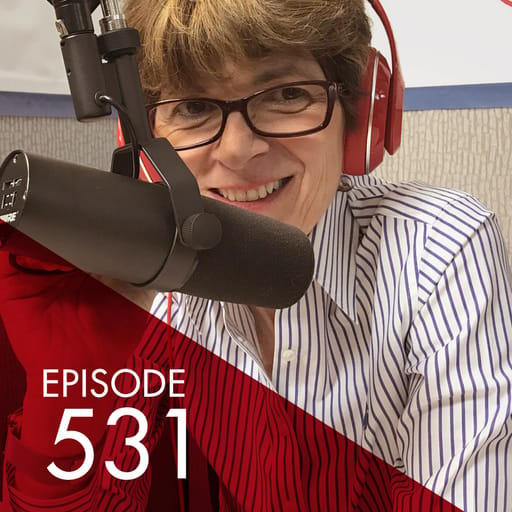
Transcript 0:00 Talk to me. Information, news, and entertainment on demand. WS Radio.com. 0:11 [upbeat music] Welcome to The Peggy Smedley Show, the voice of IoT in our connected world, with your host, Peggy Smedley. [upbeat music] Hello, listeners, and welcome back to The Peggy Smedley Show. 0:26 I've had some great discussions with my next guest on how smart cities are rethinking water and energy systems, and I'm excited to have him join me again, but this time to look at how robotics and other things are kind of fitting into the IoT and how the IoT is actually fitting into our utilities, and it goes on and on and on. 0:46 But his research work focuses on developing new technologies and interconnected systems for more sustainable agriculture in urban environments. 0:56 So please welcome back Joshua Peschel, who is the Professor of Agriculture and Biosystems Engineering at Iowa State University. Joshua, welcome back. Hi, Peggy. It's good to be with you again today. 1:11 Joshua, it's so excited-- I'm, I'm excited to have you back because when we talked last time, time seemed to go by so quickly. 1:17 But today I wanna kind of not so much talk about the agricultural side of things a little bit, but more about the robotics technologies that you've been doing and how that's gonna fit into the infrastructure and, you know, utilities and all of those things that you've been talk-- that we've talked about. 1:33 Let's, let's kind of focus on that a little bit. Sure. 1:38 So we're heavily invested in, in my research group in looking at the different kinds of, of robots that you really see, you know, coming out in the news every day, and there's, there's really four categories. 1:50 We've got, uh, we've got the ground vehicles, which we call rovers. We've got the aerial vehicles, which you hear a lot about. Those are called oftentimes drones. We've got our small robot boats, our surface vehicles. 2:00 And then we've even got underwater vehicles which allow us to look around in, uh, uh, subsurface environments. 2:08 And the exciting thing about working with robotics is it, it allows us to get into places that we couldn't normally go to collect information that many times we've not had before. 2:19 So it's really putting a set of eyes on infrastructure, um, in new and different ways. So why all of a sudden are we hearing and seeing so much more about robotics technologies now? 2:32 I mean, it's not like robots or when we see... You talked about ground and aerial, surface, underwater. I mean, it's not like this is all super new. 2:40 I mean, maybe it's advancing, but why all of a sudden are we seeing it when we talk about utilities or we talk about infrastructure? Why all of a sudden is it just booming right now? 2:50 Are we seeing so much excitement for it? Well, I think there's a, there's a couple reasons for that. So I think that the two big things when we talk about robots, um, are size and, most importantly, cost. 3:03 Both have been reducing over time, and I think that that's why you're seeing it, uh, a lot more these days. 3:09 And then I think an additional thing, and one which we do some work with, is human-robot interaction, allowing it, uh, easier situations in which to work, uh, through the robot or with the robot, um, in different types of application areas. 3:24 And I, I, I really think that in, in the big picture, I'd, I'd say it's really just time. We're, we're pretty much on our, our third technological advancement wave, if you will, in, in modern history. 3:36 We had, uh, computing that came up in the, in the nineteen forties to the nineteen sixties. That allowed us, allowed us to do calculations. 3:44 We had the personal computer revolution back in the seventies, eighties, and nineties. 3:49 And it's really time for robots, and I think that we're, we're seeing that a lot more, uh, because we're, we're a bit in the middle of that. 3:56 Robots have been around for, you know, like you mentioned, maybe ten, fifteen years. 4:00 But it's the reduction in size and cost and usability that are really creating the opportunities, uh, for people to use them, and that's why we're seeing them more. 4:10 So as, as you talked about those costs then, so do you see more m-municipalities or utilities adopting them because you see, one, that, you know, is that human kind of robot interaction, people are more accepting of them now, and will we see more of that? 4:26 Will there be a real value proposition to all of this? Well, I think trust is a big factor, and we've actually taken a look at that. 4:34 It's, it's important for people to, uh, trust the robots in the same way they might trust a, a hammer or a wrench. It just really needs to go out and, and work. 4:43 So as far as, um, applications in municipal areas, I wouldn't say it's, it's widespread, but I'd say we're turning the corner as, uh, it's demonstrated to the municipalities that the technology is reliable, that the interfaces, uh, can allow, uh, what we call an ad hoc user or a novice user to go out there and collect the information that they need. 5:03 And as we continue to work on that and make those situations better, make robots work, um, like appliances, if you will, then, uh, we, we'll see more ubiquity in the marketplace. 5:14 But I think that the availability of robots is there, and, uh, it's just a, it's really just a matter of time. How do you, how do you then kind of think about this? 5:22 Because we, we talk about the Internet of things and connecting with IoT, but then we have this discussion about autonomous vehicles, and the consuming public seems to be at odds. We-- It's about fifty/fifty. 5:34 It might be a little less than that if you look at some of the research, but that peop-- the consuming public is not at, at comfortable yet with self-driving cars, you know, that autonomous vehicle, right? 5:45 So now we're talking about robots. Do we have a society that's going to embrace that right now? 5:50 That they say, "Well, my car can maybe or maybe not drive itself, but yet I'm okay with a robot because I'm secure that someone's not gonna hack a robot. But I'm not comfortable to have someone else drive my car." 6:03 Are we there yet, or are we still not sure? I mean, is that... Where's that mindset in the world right now?Well, I think it really depends on the application. 6:12 So you mentioned an autonomous vehicle, and there's a, there's a huge amount of safety and interaction with the environment that is very different than if you're using a personal robot. 6:21 So we're, we're really in the, in the middle of the personal robotics revolution, a personal drone or a personal, uh, ground vehicle robot, a Roomba to vacuum your house, something like that. 6:32 So cost of errors are a lot lower when we start talking about personal robots. It's a lot higher when we start talking about a-automobiles. 6:42 But truth be told, we've been doing it with trains and other larger scale applications in transportation for a while in terms of the automation. 6:50 And, and, uh, and I, and I think that really it's just a, a time and an experience factor that play into the adoption of robots by the general public. But it... 7:02 I, I think that, uh, with regard to autonomous vehicles, that's, that's something that's just gonna take a little bit of time and experience, people seeing that, uh, in the same way that when automobiles came out in, in the beginning, uh, it was a very strange thing to somebody who owned a horse, right? 7:18 So it's just gonna take a little time for that. So do you think like on our infrastructure, we're, we're gonna be comfortable with that idea of having, you know... 7:27 Is there some kind of an emerging application that you're talking about that we'll be able to adopt robots for? Or have you, have you kind of contemplated that yet? 7:36 Well, if, if we're talking about, uh, municipal managers or construction folks or anybody in that space, I mean, there are, there are robots that people are, are using right now, um, and for many different reasons. 7:51 Uh, safety is a factor. Not being able... not having to put somebody in harm's way to inspect a bridge or a road, let's say. Um, and this is getting us data, which of course is, in the big picture, a commodity. 8:04 And, and, and all of that really gives us a, uh, a better understanding. 8:08 And, and when individuals and, and entities see that they can measure and manage the infrastructure in different and better ways using robots, that's where we're gonna see those differences in adoption for roads, bridges, waterways with regard to that technology. 8:25 In the transportation space, I'd say it's a, it's a little bit different with regard to public safety, but that'll just be something that's, that's demonstrated over time. So we've got about thirty seconds left. 8:36 Do we see our society where we're gonna be walking side by side in robots, and when will that time be, humans and robots, you know, sharing the streets with us? Well, that, that's a good question. 8:48 [laughs] Uh, I think, uh, when we talk about robots, there's two different sides of the house. There's the folks that work with, uh, behind the robot and in front of the robot. 8:57 We're a whole lot closer on the behind the robot, going out and doing inspection, visualization, reconnaissance, things like that. 9:03 With regard to walking side by side and cooperating and working next to robots, we're doing that too. There's a little bit higher cost associated with it. 9:11 But, um, in both cases, as the technology matures, people get more comfortable with it. 9:16 Um, while I do see the social robotics aspect, um, a l- a little bit longer term, uh, I think again, it just is a trust and a, and a comfort level that's gonna come up- Joshua, we're- -with regard to human-robot interaction. 9:30 Joshua, we're out of time. Thank you so much. Professor of Agriculture and Biosystems at Iowa State University, thank you so much. Remember, listeners, we're broadcast live every Tuesday, twelve PM C- Central. 9:40 Thanks for listening. As always, this is The Peggy Smedley Show, the voice of IoT. And remember, with great technology comes great responsibility. Have a great week. 9:49 [upbeat music] With great technology comes great responsibility. Follow Internet of Things tech expert and futurist Peggy Smedley, repeatedly ranked as a top IoT and M2M influencer. 10:05 Go to peggy_smedley on Twitter for her take on the latest tech news and lively interviews with other industry insiders on her weekly radio show. Visit twitter.com and search for peggy_smedley to follow her today. 10:20 [upbeat music] Video consumption is on the rise. So to reach this audience, Constructek Magazine created Constructek TV. 10:31 Constructek TV helps construction professionals leverage emerging solutions to better their business. Tune in to constructek.tv to catch the latest show on the first and third Tuesday of each month. 10:42 Like, view, and subscribe to constructek.tv, bringing dynamic video to construction. [upbeat music] Signal to noise, an electronic term with new relevance on the internet. 10:57 Connected World Media cuts through the noise of data overload and finds you the signal of important information, information that will keep you current and aware of context in the Internet of Things. 11:08 Peggy Smedley shares her insights on The Peggy Smedley Show and in Connected World Magazine, all online at connectedworld.com. Stay current and competitive at connectedworld.com. 11:21 I've been bragging about Progressive Medical Center to you guys for years, and I'm so excited to have Dr. Agoli with us because, Dr. 11:27 Agoli, a lot of people walk through your doors, and some of their biggest problems are they're just fatigued. They're tired all the time. And even though they're dieting and exercising, they cannot get the weight off. 11:35 Why is that? It's a combination of poor metabolism, inappropriate eating, but, but more importantly, it's due to a lack of education and really doing the right testing. 11:44 A lot of our patients are metabolically compromised. What does that mean? Their metabolism is not functioning. 11:48 The metabolism is responsible for all physical and chemical processes necessary to sustain life, and that includes energy. And without cellular energy, your body is not gonna be a burning machine. Mm. 11:58 Let's get back and teach our listeners to be a fat-burning machine. 12:02 It's been a lot easier to maintain my weight since Progressive Medical Center started treating me with all-natural supplements, learning proper nutrition. And that can be you today. 12:10 No more frustrations about being tired or overweight. So why don't you get ahold of Progressive Medical Center today through progressivemedicalcenter.com. [upbeat music] This is your life. Live it well. 12:21 Education, industry experts, back to the basics. Is your company using the Internet of Things to its fullest potential? 12:28 Enlist the Peggy Smedley Institute and its team of experts to create a customized plan for how to apply the IoT to your specific needs. 12:36 Learn everything you need to know to achieve tangible business outcomes in today's digital economy. 12:41 Contact us at six three nine three three zero eight four four, at six three zero nine three three zero eight four four, or visit learniot.com.