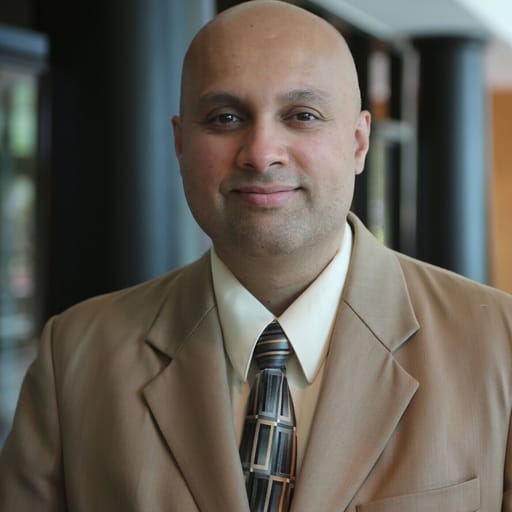
Transcript 0:00 [upbeat music] Welcome back to The Peggy Smedley Show, the podcasting voice of IoT and digital transformation. Hello, listeners, um, welcome back to The Peggy Sledley Show. 0:13 My next guest is responsible for corporate development in the automotive and ground transportation industry sector. 0:20 His functions include market insights, strategy, partnerships, acquisitions, and sales and demand enablement. He is also an expert thought leader in autonomous vehicle simulation. 0:30 Please welcome Sandeep Sawhney, Global Director of Automotive and Ground Transportation at Ansys. Sandeep, welcome to the show. Peggy, thank you for having me. Uh, I'm delighted. So let's talk about this. 0:45 You guys just introduced, uh... Well, first let's do this. Why don't you give our... 0:50 for our listeners, why don't you tell them a little bit about Ansys, so any of my listeners who don't know, uh, what you guys do and the role you guys play in the auto- the autonomous vehicles market, 'cause, uh, I'm not sure that I've had you guys on the show as of late. 1:05 Yes, yeah. So Ansys is the world's largest engineering simulation software company, 1:12 and pretty much any company that does any sort of engineering around the world has a need for our software, whether the company is, is making chips for computers or smartphones or, or making rocket ships to, uh, send spacecraft out into space or, or anything in between, autonomous vehicles, IoT devices. 1:31 Any, any company doing any sort of engineering has a need for simulation software, and the need is for, uh, testing their products virtually inside of simulation before actually taking them out into production. 1:47 So, uh, if someone has an idea for a new product, they can make a computer model of that, put that model into our software, and our software will tell how the, uh, product is going to perform even before the first physical prototype is made. 2:01 So, um, you can make models of autonomous vehicles and run them in simulations to see whether they're going to make the right decisions, um, in, in the real-world environments. 2:10 And, and that saves the, uh, product development process a lot of time and cost. That's, that's the reason why all engineering companies, uh, have a need for this type of simulation software. 2:23 And, and times are really interesting when we look about what's happening in the autonomous market, which is why I wanted to talk to you today is because you guys introduced some interesting software at the-- um, software-- uh, survey at the beginning of the month that I found really interesting about consumers' perceptions, all of our perceptions about autonomous cars. 2:44 And I think I'm kind of curious, uh, in your opinion, what sta- kind of statistic stood out to you because I was interested in, you know, what consumers are thinking where the market's headed because we all talk about autonomous vehicles, and everybody's been saying, "Well, you know, there's a lot of hesitation." 3:02 But this survey was, uh, really kind of interesting what the numbers kind of told. Let's talk about that. Yeah. Yeah. 3:09 So the, the number one thing that strikes out to me for coming from this survey is the optimism that people have about autonomous vehicles. And, and th-this survey was done all across the world. 3:21 We interviewed about twenty-two thousand people all around the world. It was a significant survey. And there are regional differences in, in data, into some interesting regional differences. But overall, 3:33 seventy-seven percent of respondents say that they will feel comfortable in riding in an autonomous vehicle in sometime in their lifetimes, which is quite a high percentage. 3:42 I'm, I'm-- Um, I see a lot of optimism out there. Of course, the people have some concerns about safety, et cetera, but the number one statistic that stands out is, um, is, is this optimism. 3:54 And then there are a lot of detailed statistics. We can go into that, um, how, uh, how people's opinions differ by age or by region and, and what types of vehicles and that sort of thing. 4:05 But the optimism is, is the number one thing that, that stands out to me. So i- the optimism, though, is a little bit in stark c- contrast to what we've been hearing. Wouldn't you agree? 4:15 I mean, up to this point, there's been a lot of commentary that most people are reticent. 4:22 Did we have this all of a sudden shift because now we're seeing, you know, this big movement toward autonomous, that we're starting to see the car companies, startups, you know, what you guys are doing? 4:34 Everybody's really saying, "Look, we can get there. We've just all got to come together on all these strategic partnerships, big, small, in between. 4:42 If everybody works towards it and we get our governments to understand it, we maybe can do this faster than any of us even maybe thought." Yes. 4:52 I think as the technology is maturing, the p- public opinion about it is also maturing. Um, that's one factor. Uh, the other factor is about, uh, the different things that are asked in surveys. 5:04 So if you ask, uh, about whether autonomous vehicles are ready right now, then you might get a pessimistic answer from people. [laughs] Yes. 5:12 But if you ask people whether they are ready to ride in an autonomous vehicle sometime in y- in, in your lifetime or if, you know, give them different five years, ten years horizons, then you can see that there is optimism that during the lifetimes of people or within the next five or ten years, people trust that this technology will be ready and, and available for them. 5:32 So what we were really seeing is that they're saying they're ready to do it, but not just yet. So sometime in their lifetime. So what does that mean? 5:40 Are we saying that it's in their lifetime within the next, you know, that, that majority of people that you talk about, that seventy-seven percent that said sometime during their lifetime, so to speak, we're looking at people saying- Yeah... 5:53 I feel comfortable, I'm going to do it, but I'm not just ready just yet. That's correct. 6:00 So if, if we see kind of in, in terms we have asked questions about the timelines, and we see that, uh, th-th-this, this-Uh, peak is around five years. 6:09 People think that this technology is going to be ready in five years. And then the, uh, kind of a second, uh, uh, peak is, is at ten years. So people do think that this technology... 6:21 Meaning even if you say lifetime, it, it doesn't mean fifty years from now. 6:25 People do think that within five years or ten years this technology is, is going to be ready and, and they feel confident enough to ride in autonomous vehicles in that timeframe. 6:35 Is it really about the technology, or is it about things like you, what you guys are doing? You know, I mean, you guys have some interesting partnerships in place. Do we get past the anxiety? 6:46 Like, I, I know when I look at the report, I think respondents, you know, said something about their top concerns in riding them were, you know, was technology failure. 6:56 I think it was close to sixty percent, something like that, correct me if I'm wrong, was about technology failure. 7:01 So is it really that once you show them that, "Look, we're doing some great things with great partners," and that... 7:08 Will that eventually go away, but right now it's they're just unsure about what the, what the technology's gonna mean, because we've heard some failures from some of the best companies. That's true. That's true. 7:19 So, uh, the number one concern for, uh, th-the general public is that what, what if the technology fails? And if the technology fails, the car would crash. 7:29 Um, that's the main concern about getting into autonomous vehicles today and in, in, in the foreseeable future. 7:36 There is another angle, which is people also feel that autonomous cars are unsafe from a hacking perspective, and they could get hacked into, but that's a kind of a lower concern. 7:45 The bigger concern is technology, uh, doesn't seem to be ready, um, and if it fails, the vehicle will, will crash, leading to harm. Now, 7:56 um, therefore, it's incumbent on the autonomous vehicle manufacturers to demonstrate that their vehicles are safe, and how to, how to demonstrate that they are safe. 8:06 To demonstrate that they are safe, uh, one would need to show that the vehicle makes a safe decision under all sorts of circumstances that it is likely to encounter during, um, its, uh, typical drive. 8:20 So now, if you think of the types of situations that a vehicle is likely to encounter, there are literally millions and millions of different types of situations created by combinations of various parameters: timing of day, weather patterns, uh, uh, quality of road surface, the visibility of signs. 8:37 You know, if you look at these, uh, thousands of parameters, they multiply into literally millions and millions of different cases, uh, under which the vehicle would have to operate safely. 8:48 Now, humans do that because our, um, our perception is, uh, incredibly powerful, uh, compared to artificial intelligence. So humans are able to na- uh, safely navigate many of these situations. 9:00 But to show that the autonomous vehicles are able to successfully navigate these situations, one would actually need to drive a prototype autonomous vehicle through all those situations and show that it's successfully navigating all of that. 9:12 And, uh, the... so there are some statistics out there that- Sandeep... have suggested that to do that. Yeah? Sandeep, we're out of time. I'll have to have you come back. Yeah. Sandeep Sowani- Yeah... 9:22 Global Director of Automotive and Ground Transportation at ANSYS. Thank you so much for being with us, but we'll have to have you come back and continue our conversation. [upbeat music] Thanks so much. 9:31 All right, listeners, we're out of time. Remember, we are broadcast live every Tuesday at twelve PM Central. Check out our website at connectedworld.com or thepeggySMEDLEYshow.com, or share your thoughts with me at... 9:43 by tweeting @connectedWMAG. All right. This is Peggy Smedley Show, the podcasting voice of IoT and digital transformation. Have a great week. Remember, great technology comes great responsibility. 9:57 Constructek TV, your fierce advocates for construction. Constructek TV digs into infrastructure, drills into global economic conditions. 10:08 It is changing the talent gap narrative, adopting a new vision and a voice to the new skilled worker in construction, all with the help of technology. 10:18 Constructek TV, everything you need for infrastructure, labor, and technology. Like, share, and subscribe to Constructek TV at youtube.com/constructektv. 10:32 [upbeat music] Besides the hard work of our incredible WS Radio staff that has decades of experience in the broadcast industry, one of the reasons WS Radio sounds so good is we use Orban technology. We are not alone. 10:45 Over fifty thousand professional broadcasters can't be wrong. From radio, TV, streaming to hardware and software, Orban has been supplying the broadcast industry for nearly thirty years. 10:56 Great customer service and continued R&D separates Orban from the rest. Learn more at orban.com. I've heard this is, like, one of the best pizza spots in town. Yes, it is. 11:06 I'll do a slice of pepperoni, slice of vegetarian. You got it. And I will pay for all of that in three days. In three days? [laughs] What's up, man? Wait, you accept credit cards. 11:15 That money's not gonna hit your account for three days anyway. I need my money quicker. At Chase, we hear you. With Express Funding, card payments are in your Chase account the next business day. 11:23 Go to chase.com/expressfunding. Chase for Business, so you can. Compensated participation. All businesses are subject to credit approval. 11:29 Not all clients are eligible for next business day funding, and additional terms, conditions, and restrictions apply. [upbeat music] IoT is here. 11:37 AI and machine learning are catching on, and they are all changing our world. But what's next? How will you be impacted? Let The Peggy Smedley Show keep you up to date and looking ahead for your business. 11:49 Tune in every Tuesday at noon Central Time at peggysmedley show.com. 11:55 [machine whirring] If you heard that sound, you probably are eligible for insurance from Navy Mutual, insuring the men and women of the Navy, Marines, and Coast Guard. 12:05 Here's what one policyholder, retired Navy commander Thomas Dane, had to say. Navy Mutual is the best insurance decision I ever made. 12:12 I wish you had a savings plan available that earned the rates my Navy Mutual insurance has been earning. 12:17 Navy Mutual Aid Association, started by military members in 1879, serves active, reserve, and retired military today. 12:25 Navy Mutual honors our military by providing them affordable life insurance with the features they need without fine print, sales fees, or military service restrictions. 12:35 Value, integrity, trust, and stability are the cornerstones on which our commitment to you and your loved ones are built. 12:42 Call Navy Mutual at one-eight hundred-six-two-eight-six-zero-one-one or navymutual.org for your personal life insurance plan consultation. One-eight hundred-six-two-eight-sixty-eleven or navymutual.org. 12:53 Navy Mutual, ensuring those who serve.