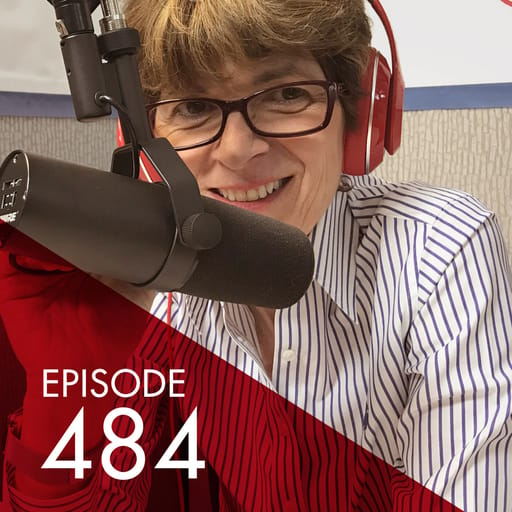
Transcript 0:00 Talk to me. Information, news, and entertainment on demand. WUSradio.com. 0:11 [on-hold music] Welcome to The Peggy Smedley Show, the voice of IoT in our connected world, with your host, Peggy Smedley. Welcome back to The Peggy Sledley Show. My first guest oversees a very dynamic team. 0:28 It is collectively responsible for developing a world-class online learning program, recruiting and enrolling studies, developing and delivering cutting-edge curriculum in integrated care interventions and healthcare entrepreneurialship, and advocating for healthcare aimed at improving the quality of patient care. 0:49 Please welcome Kara English, CEO of the Cummings Graduate- Graduate Institute for Behavioral Health Studies. Kara, welcome to the show. Thank you, Peggy. Glad to be here. So I'm delighted to have you on the show. 1:04 So let's talk about what you've created here, because you've created this virtual reality kind of impact for helping students- Yes. -really help the healthcare environment. 1:15 And I'm really kind of interested in how you've done that because we know that there's a, a great need for that, and this is something that you founded in twenty-fifteen, and I think it's really int-interesting that you've done that. 1:27 So t-walk me through that a little bit, why you did it and the importance- Sure. -of what you're doing right now. Sure. Absolutely. 1:34 It really started, uh, with an article from TechCrunch, uh, that I read about virtual reality therapy as a treatment for the global mental health crisis. 1:45 We all hear in the news each day about the, the crisis of, um, a problem accessing adequate mental health care, and we see tragedies in the news from people clearly suffering from mental health issues, and we know that our veterans are not receiving the mental health care and support. 2:05 We're aware of the suicide rate among our, um, veteran and active duty service members, and we all wanna do more about that as the mental health community. 2:17 And being an online school and, uh, having completed my own doctoral program online, uh, the idea of using virtual reality, which is becoming more and more accessible due to the new technology of headsets that are becoming more and more affordable, just really struck a chord with me. 2:36 So I had read this wonderful article from TechCrunch and happened to be at the local mall with my son when he dragged me into a sh- a storefront called Stax 3D. 2:49 And they are a technology organization that, uh, specializes in three-D printing, and they're also in the business of developing virtual reality and augmented reality apps. 3:01 Um, they, in fact, were chosen, uh, to work with Microsoft's new HoloLens on their fifth wave of development. 3:08 And so when I walked into the store, my brain just made an immediate connection, and I asked to speak with their CEO about a potential partnership between our institution, which really focuses on innovating in healthcare to remove access barriers for the many populations who are looking for better and more accessible treatment and, um, you know, to be able to do that in an innovative, cost-effective, and efficient manner. 3:36 So Stax 3D was excited about the partnership, and we got to work immediately on creating a new, uh, relaxation app to treat, uh, individuals with anxiety disorders and, uh, specific phobias as well as post-traumatic stress. 3:51 So help me un- So we're really excited about the partnership. So help me understand, how does VR help with mental health dis-disorders? How are you actually doing that? 4:01 Well, right now, virtual reality is largely used for exposure therapy, which is gradually exposing people to the situation that triggers their anxiety or post-traumatic stress disorder, um, because exposure is one of the best treatments that we have right now for PTSD and, and anxiety disorders and specific phobias. 4:21 And so what happens in the virtual reality environment is that an individual is, um, exposed to the situation that, uh, basically triggers their anxiety response or their debilitating fear, and they are paired with a therapist who provides the effective exposure therapy and cognitive behavioral therapy that reduces those symptoms in a safe, controllable way. 4:47 So w- in this virtual world, are, are they f- are, are they faced with the, a path for recovery? Are they, are they experiencing what triggers the PTSD? I'm, I'm, I'm trying to understand it because, you know- Sure. 5:01 -I'm, I'm feeling like doors are open. I'm, I'm trying to take myself through a virtual reality experience. Mm-hmm. And help me understand that, how you're doing that a little bit. Sure. Sure. 5:11 Well, uh, there is a, a company that is working on a virtual reality device that, um, specifically is aimed at-- It's actually the University of Southern California. 5:21 They've developed a product that uses VR, um, where a clinician can recreate a scene that triggers fear or anxiety in a veteran, um, so someone who has been in a combat zone. 5:34 And so it, uh, the virtual environment recreates that scene for them and puts them virtually on a, on, um, you know, in a battlefield setting. 5:43 Um, and then they also use in the environment, um, certain scents to, you know, um, like the smell of oil, um, or gasoline or burning or, um, you know, also, obviously, audio is a large part of it, so that it really creates virtually the, the same scene that they were in when their initial trauma was experienced.Um, for another patient, so maybe somebody suffering from arachnophobia, which is the fear of spiders, uh, the, the clinician might use a program that specifically exposes the patient to, um, you know, seeing spiders, um, and, you know, allows the patient to reduce their fear of that to the point where they can virtually interact with a spider that, you know, bears no danger, but definitely, um, neurologically elicits the same kind of response that being in the real world with a spider would. 6:33 And the therapist can safely and effectively lower their anxiety response to that trigger. 6:38 So Kara, I have to ask, how effective is VR in treatment compared to, like, traditional treatment or medicine that, you know, somebody with PTSD or has some of these e-enormous fears, you know, like you described- Mm-hmm. 6:52 -arachnophobia or things like that? Well, actually, the clinical use for virtual reality as a therapy has been generating a really rich scientific literature for the past twenty years. 7:02 Um, and so what, what I actually had seen pr-prior to the TechCrunch, um, article that I read was a really interesting article about using avatar therapy with patients with schizophrenia, uh, to recreate the, uh, hallucination of a person who hears voices or, you know, sometimes is seeing, uh, delusions of individuals who are not in their reality. 7:26 And, uh, through use of this avatar therapy, they were able to recreate the, the individual's description of this, um, denigrating and, and negative voice or this, you know, super critical voice, and they were able to transform that voice from a critical, um, you know, abusive kind of a voice or, or an influence to a supportive friend through the use of the, the therapist's own voice and, and the virtual avatar. 7:54 And so, you know, the evidence is there. 7:56 It's been there for the last twenty or so years, but, um, not until now, until the, uh, the new Oculus Rift and some of the other, the HoloLens, and even Google's, um, uh, Cardboard, uh, headsets have been coming out, uh, were patients able to really afford this kind of therapy or really were clinicians able to afford the, the opportunity to test it out with their patients. 8:21 Um, so thanks to advancing technology, we're now able to test it out and, and really be able to apply the evidence that's already there. And, and what have the results been that you've been applying? 8:31 What have you been seeing from this from the patients that are-- Because I would imagine some are seeing positive results, not always. I mean, just like in, in any type of treatment that you're seeing. Mm-hmm. 8:44 That's true. Not everyone responds, and it's, it's certainly not for everyone. 8:48 But what we have seen is a real increase in the ability of a patient to feel more in control, um, because they have a headset, and they have the ability to, um, participate in the therapy in between sessions with the clinician in a controllable way. 9:04 And so, um, for the app that we-- Our initial app that we created is a relaxation app for people with anxiety disorders. 9:10 And what we found is that whereas many people with anxiety disorders really hesitate to leave the house, um, because of their many, many fears about being in the real world, they will absolutely use a headset with a guided meditation or even a specific hypnosis app, um, that is running in the background so that they're in a very relaxing, uh, virtual world. 9:32 Um, so they have the sensation of being in a very peaceful environment while listening to soothing sounds, um, including this trained hypnosis therapist reading a relaxation script that they wouldn't be able to access if they had to go out and find it in the real world. 9:46 So patients are reporting that they find it both very therapeutic and also more accessible and affordable than going out into the real world and being able to, you know, find a good trained clinician who can provide this type of therapy and then also afford it. 10:01 You know, many people do not have the insurance benefits that they would need to, um, include this in a, in a regular part of their life. 10:08 And so, you know, having access to these headsets and, and virtual reality in general is, is really filling a gap. And, and what are we seeing now going forward? 10:18 Do you mean you're now seeing some positive results as you describe for those? 10:21 Are we going to see more apps and things come out that are going to help, uh, with soldiers and others who are, are struggling that have not been able to leave their homes because they do have this fear? 10:32 Because we're seeing more and more as they come back and are finding that, you know, they've been struggling. Mm-hmm. Absolutely. 10:39 Um, the Brave Mind VR ex-exposure therapy software was created at the University of Southern California. 10:45 Um, their Institute for Creative Technologies is really working on expanding, um, the different kinds of virtual reality and even augmented reality that, um, is offered specifically for military, um, uh, service members. 11:00 And I think we're going to definitely see an increase in, in that as we move forward with the advancing technology and the lowered cost of accessing that technology. It just makes sense. 11:11 Um, we are also seeing a huge expansion of telemental health services. 11:15 Many healthcare organizations are using telemental health services to expand access to folks in rural areas or areas where there just aren't enough therapists to, uh, be able to provide for the population need. 11:27 And so it just makes sense for us to be able to think or future forward to virtual reality as an- Kara, we're out of time, but thank you for being with us. 11:37 We wish you continued success, and thank you for all that you shared. All right, listeners, we're out of time. Check out the Cummings In-- Graduate Institute for Behavioral Health Sciences. 11:46 We've got more to come right here on The Peggy Smedley Show. With great technology comes great responsibility. We'll be right back right after this commercial break.Education. Industry experts. Back to the basics. 12:00 Is your company using the Internet of Things to its fullest potential? Enlist the Peggy Smedley Institute and its team of experts to create a customized plan for how to apply the IoT to your specific needs. 12:11 Learn everything you need to know to achieve tangible business outcomes in today's digital economy. Contact us at six three zero nine three three zero eight four four. 12:21 That's six three zero nine three three zero eight four four, or visit learnitIoT.com. [upbeat music] Hi, this is Rob Barnett, CM founder of VinVillage.com and the Wine and Dine Show on VinVillage Radio. 12:34 Do you have a wine, event, product, or service to promote? Then contact VinVillage.com to reach thousands of wine lovers across the country. 12:43 VinVillage connects like-minded wine enthusiasts with unique and exclusive wines, events, products, and services. To learn more, contact us on VinVillage.com. VinVillage is where wine lovers connect. 12:57 [upbeat music] Come join over one hundred thirty thousand construction industry professionals in March twenty seventeen. CONEXPO-CON/AGG twenty seventeen is North America's largest construction show. 13:12 Explore over two and a half million square feet and imagine what's next with over twenty-five hundred exhibitors. Get the details at conexpo-conagg.com/future and join us as we take this to the next level. 13:25 [upbeat music] Has your business been app-ified? Are you tired of doing marketing that doesn't deliver results? Mobile apps build loyalty and quality retention. 13:36 Your app from UPG Mobile puts your business on their mind and at their fingertips. UPG Mobile will give you a custom app highlighting how you are unique, targeting your message, and improving your open rates. 13:49 App-ify your business and amplify your presence with your customers at upgmobilemarketinggroup.com. [upbeat music] With great technology comes great responsibility. 14:02 Follow Internet of Things tech expert and futurist Peggy Smedley, repeatedly ranked as a top IoT and M2M influencer. 14:10 Go to Peggy_Smedley on Twitter for her take on the latest tech news and lively interviews with other industry insiders on her weekly radio show. Visit twitter.com and search for Peggy_Smedley to follow her today. 14:28 Did you know the majority of radio listeners are between the ages of thirty-five and fifty-four, have a household income of more than one hundred thousand dollars, are classified as executives or professionals, and share the show they listen to? 14:40 Become part of The Peggy Smedley Show to reach listeners looking for information on connected devices through cost-effective radio commercials or segment sponsorships. 14:49 Contact us at six three zero nine three three zero eight four four for more information, or visit peggysmedleyshow.com. [upbeat music]