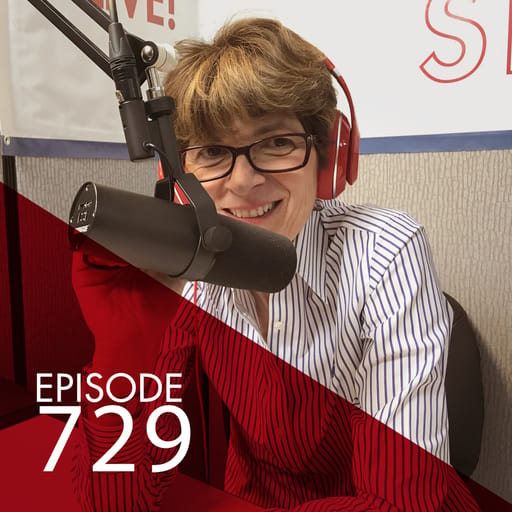
Transcript 0:00 [gentle music] We need to be smart about how we approach our sustainable cities of the future. We all need to think about great ideas. 0:11 We need to tap into technologies like digital twins, artificial intelligence, the Internet of things more all facets of our cities to make them more sustainable. 0:27 [upbeat music] Welcome to The Peggy Smedley Show, the podcasting voice of IoT and digital transformation with your host, Peggy Smedley. 0:45 Hello, listeners, and welcome to today's edition of The Peggy Smedley Show. As always, I'm your host, Peggy Smedley. This month on The Peggy Smedley Show, I want to talk about sustainable cities. Why? 0:58 Finally, cities are opening back up, and now an age-old question returns. What will the city of the future look like? I know that's on your mind, right? In a word, I'm gonna tell you, it is sustainable. 1:13 We need our cities to be sustainable. We need our cities to be sustainable. Why? Because we need our city leaders to think about sustainability every day, not just today, but for future generations. 1:29 Yep, think about sustainable. So for the show, I'm going to be talking about two reports and give a sneak peek behind the curtain of what smart, sustainable cities will look like in a post-COVID era. 1:44 So let's think what that post-COVID era is gonna look like. But let's talk about our guests first. 1:51 I'm gonna be talking to Malik Saadi, who is the vice president of strategic technologies at ABI Research, and he and I are gonna talk all about 5G now and into the future. 2:03 And then I'm gonna wrap up the show with Teppo Hemia, who is the CEO of Wirepas. So we've got some good guests as always. So let's get started. You know, in the past year, cities were under immense pressure. 2:18 Declining revenues, maintaining essential ser- services was probably incredibly difficult. Dealing with social and economic repercussions of a global pandemic was at an all-time high. 2:33 Just imagine if you were a city manager, what that was like. It was a lot of pressure to say the least. I'm kind of glad it wasn't me doing that. But now we're seeing the proverbial light at the end of the tunnel. 2:46 Now it is time to focus on our economic recovery. That's what we've all been talking about. We're talking about how to make our cities a little bit more sustainable, resilient. 2:57 A report from the UN-Habitat, which came out earlier this year, made it clear the way that urban environments recover from the pandemic will have a major impact on the global effort to achieve a sustainable future for all. 3:14 The research suggests urban leaders and planners need to rethink how people move through and in cities. 3:23 We need to understand and apply these kind of lessons we've learned from the COVID-19 pandemic, and we now have a better understanding of patterns of inequality. 3:36 The UN-Habitat's report has a few recommendations for cities. For one, there should be an increased focus at the local level on planning for neighborhoods and communities that are multifunctional and inclusive. 3:54 Now, we all know what we've been thinking about when we think about equality and inclusiveness. So this includes combining residential and commercial with public spaces along with affordable housing. 4:08 The result will be improved public health, a thriving economy, and yes, ultimately benefits for the environment. 4:17 Second, the government also needs to focus on policies to protect land rights, improve access to water, sanitation, public transport, electricity, health and education. 4:33 All of this is what's in the report. Quite simply, we need to focus on our infrastructure. Now, you can't do that unless we all agree with it. 4:44 So I've been saying this for I, I can't even remember how many years I've been talking about it so long, and I will continue to say it until we have made some significant progress, until we get our leaders to understand the importance of a thriving infrastructure, a thriving economy. 5:02 Finally, this report suggests strengthening access to municipal finance to enable city leaders to build a new urban economy that reduces disaster risk as well as addresses climate change. 5:18 We need to invest in a sustainable infrastructure to enable low carbon transport. We need to make sustainable cities a reality. A good place to start is by looking at the UN Sustainable Development Goals. 5:36 Now, we all know what those are. 5:37 We've talked a lot about it, but these are a way, a kind of a call to action to end poverty, to protect the planet, and to pr- provide and improve the lives of everyone everywhere globally. 5:52 The 17 goals were adopted by all UN member states back in 2015 as part of the 2030 Agenda for Sustainable Development. 6:04 Now, here's the problemWhile progress is, is being made in many places, overall action to meet the goals is not yet advancing at the speed or scale required. 6:17 If we want to meet the goals of 2030, or what we say by 2030, we need this to be the decade of sustainability. Yep, you heard me. The decade of sustainability, and I believe it starts in our cities. 6:33 Let's look at one more report from earlier this year as a comparison. The IFC suggests investing in green between 2020 and 2030 could generate 10.2 trillion dollars in investment opportunities, 6:50 213.4 million cumulative new direct jobs, and 4 billion tons of CO2 reduction in greenhouse gas emissions. The report very clearly suggests investing in 10 key sectors. 7:06 The first two focus on bringing green to existing and future energy infrastructure. First, we need to decarbonize the grid with renewable energy. We've been talking a lot about that. 7:19 Second, we need to scale up distributed generation and storage. The next four areas suggest we need to build climate smart cities. We need to retrofit building for energy efficiency. 7:36 Green building projects have one of the highest ratio of jobs created per dollar spent. Now, how many of you knew that? We also need to invest in low carbon municipal waste and water. 7:52 This could lead to a 2 trillion investment opportunity and the creation of more than 23 million jobs. Further, we should expand green urban transport. 8:07 The report suggests cities should employ a three-pronged strategy in transportation that addresses the length and number of journeys within the city through smart planning, supports man- mass transit schemes with a focus on safe post-COVID reopening, and improves both private and public sector vehicular fuel efficiency through regulatory changes. 8:38 Also, we need to create nature-based urban infrastructure. Now, how nice is that? The final four sectors we need to invest in are cities focused on speeding the transition to green. 8:54 Here, we need to decarbonize heavy industry with carbon capture, utilization, and storage and green hydrogen, 9:04 scale climate-smart agriculture, reinvent textile and apparel value chains, and incentivize low carbon airlines and shipping. 9:16 Overall, the report suggests that the path to economic recovery following the pandemic can be found in investing in green. Now, we all know we need to look and go from gray to green, as I say in my book. 9:32 The challenge is the high cost of investment in decarbonizing has long hindered the transition to a low carbon global economy. The last year has been the perfect storm, if you think about it. 9:47 Cities were in survival mode trying t- to keep citizens alive and well, but now it is time to jumpstart the economy. These two reports and others suggest the best way to do this is investing in green. 10:02 It will create jobs, it will address inequalities, and it will reduce our greenhouse gas emissions. It will help to provide an economic recovery, and 10:17 the suggestions in these two reports are a great place to start. But we need to do more. We need to do more, and you all need to be thinking about ways to contribute to do more. But here's my opinion for today. 10:34 We need to be smart about how we approach our sustainable cities of the future. We all need to think about g- great ideas. 10:45 We need to tap into technologies like digital twins, artificial intelligence, the Internet of things, more, all facets of our cities to make them more sustainable. 10:59 The technology can provide insight about our buildings and our infrastructure. We know sensors can give us the insights to make a more sustainable city. 11:11 This data can be made available to urban planners, transit workers, healthcare professionals, you name it. We all know this. 11:21 We can make our cities smart, sustainable, resilient, but only if we leverage the right technology. So here's my tip. We need to put our short-term crisis thinking behind us. 11:38 We need to put it way behind us. We need to start really thinking about the long-term objectives in our cities. We need to start the journey looking ahead. 11:51 We need smart urban planning for the future ahead. This will come from public-private partnerships. 12:01 This will come from new policies and investments, and yes, it will also come as a result of new innovative technologies, those digital twins that we've talked about so many times, the Internet of things. 12:19 It comes from investing in the future now. The time is now. We can't wait any longer. We all know we need to be more resilient, we need to use new smart technologies, and we need to think about it now. 12:35 And we need to think about our future for future generations, but we need to be acting now. 12:41 As I've said so many times before, we need to move from a gray thinking to a green thinking to a blue tomorrow, but that all acts today. All right. 12:53 As you know, we are out of time, but we're not out of ideas, and that's why I want you to continue this discussion with me on social media. 13:03 You can share your thoughts, tweet at me at ConnectedWMag, or post something on LinkedIn. Let's engage in a dialogue. We all have creative ideas, but I want to hear from you. That's what we want to do. All right. 13:14 That's all the time I have for this first segment, but check out our website at connectedworld.com or our show website at thepeggySmedleyShow.com. All right. 13:23 We're going to take a quick commercial break, but then we're going to be right back. As always, this is The Peggy Smedley Show, the podcasting voice of IoT and digital transformation. 13:32 And remember, with great technology comes great responsibility. We'll be right back after this quick commercial break. Go get that quick cup of coffee. [outro music]