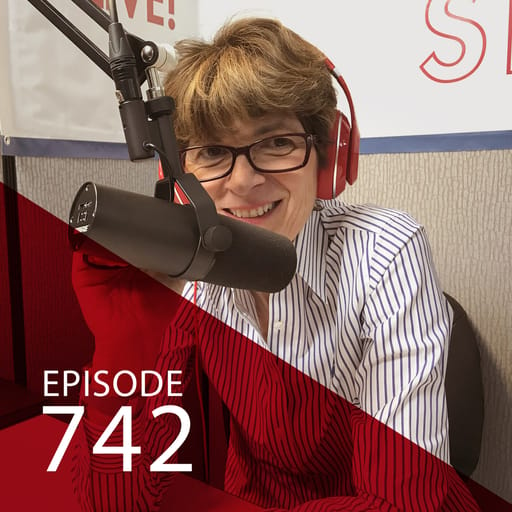
Transcript 0:00 [gentle music] I would argue we need to fix our supply chains, and there are a few things we can do to address this. We need to make our supply chains more sustainable. We get it. We need to do it. 0:13 We need to address the worker shortage. Everybody's heard it, but we need to look at what is the worker shortage, and we need to leverage technology and digital transformation where possible. 0:28 [upbeat music] Welcome to The Peggy Smedley Show, the podcasting voice of IoT and digital transformation, with your host, Peggy Smedley. 0:47 Hello, listeners, and welcome to today's edition of The Peggy Smedley Show. As always, I'm your host, Peggy Smedley. 0:54 I'm sure by now someone has told you to buy your Christmas presents early, or maybe you are the one who is passing the message on to your family and friends. I forecasted years ago that the supply chain was vulnerable. 1:09 And while I didn't foresee the pandemic, I did preach about things like the worker shortage and climate change, both of which are now having a profound effects on our supply chain and the delivery of goods and services today. 1:27 The bottlenecks to which we are witnessing are unlike anything most of us have ever experienced in our lifetime. Rather than focus on the obvious, I want to look to the future for today's show. 1:41 I want to present some strategies for what needs to happen next to create a more sustainable supply chain. 1:49 Later on in the show, but before we get to all of those things about the supply chain, I want to talk about what we're looking at in our society as, as overall, and I have an amazing guest that I'm going to be interviewing for the entire rest of the show. 2:03 I'm going to be interviewing Heidi Roop, who is the assistant professor at the University of Minnesota, and we're going to talk for, actually, for forty-five minutes of the show, and we're going to dig into the science of climate change. 2:17 So I really hope you're going to stick around for that discussion because this should be an interesting conversation and maybe, as I look at it, a little bit controversial for some. 2:29 We have a lot to talk about, and I always like to say a lot to unpack on climate change and climate s-science. 2:36 So stick around and, uh, you will certainly want to hear what one of this year's Connected World's Women of Technology winners have to say about what we need to do to actually improve our world. 2:50 So, uh, but, you know, let's see what she, uh, is going to throw at us and what research she's done. But first, let's really look at our supply chains and why they're so fractured. We are sh- we're... 3:03 Well, let's say it this way. We're short on workers. We're short on materials. Constraint disruptions from climate change and the pandemic have added to this remarkable strain. We all know this already. 3:16 You've heard it over and over. 3:18 Even people you hear s- talk about it in grocery stores, when you're walking down the street, things you never heard the average person talking about are you-- are, are, are saying things like supply chain. 3:31 You know, that there's a shortage in the supply chain. Now we need to be talking about what are we going to be doing about it. We need to start taking action. So let's kind of ask ourselves a question. 3:45 What needs to happen next with our supply chains? Not, let's not look back. Let's look forward. I would argue we need to make them more sustainable, more resilient. 3:58 So let's look at a report from MIT, the MIT Center for Transportation and Logistics, and the Council of Supply Chain Management Professionals, because I think they have a lot to say on this. 4:11 In the second annual State of Supply Chain Sustainability Report digs into the current conditions in our supply chains. But first, let's define what supply chain sustainability actually is. 4:26 The report suggests it is based on both the environmental and social concerns of sustainability. 4:34 It defines supply chain sustainability as the management of environmental and social impacts within and across networks consisting of suppliers, manufacturers, distributors, and customers in line with the UN Sustainable Development Goals. 4:53 Now, I find this interesting because I'm not sure we heard a lot of this in the past, but I enjoy hearing what they're saying now, because this spans every phase of the supply chain from raw material sourcing and extraction to production use and the end of the product life. 5:12 Now, we need to know this because the supply chain is not new. It's not something that just happened yesterday or two years ago or a decade ago. 5:21 The supply chain and collaboration is something we've had for many, many decades. So here is what the report is actually has uncovered or what it finds. 5:32 Last year, when the impact of the COVID-19 pandemic was escalating, many expected the crisis to slow enthusiasm for investing in supply chain sustainability. Now, that isn't exactly what ended up happening. 5:49 The survey results suggest the pandemic did not slow the push to make supply chains more sustainable. 5:57 More than eighty percent of the survey respondents claim the crisis had no impact or actually increased their commitment to supply chain sustainability during that time.Now good for them, right? 6:11 I mean, yeah, hey, hey, that's what they found out. The caveat is this, the study pr- kind of progress continued with large and very large companies. 6:23 Meanwhile, small and medium-sized companies were more likely to pull back. So where's the communication here in that so-called supply chain? 6:33 The report points to some pretty innovative things we did in the past year that more of us can continue to do in the years ahead, or maybe even the year ahead. 6:45 Let's look at a few of them now because I think that's very important. For one, social issues came into focus in twenty twenty. This heightened awareness of forced labor and social inequalities. 6:59 Wow, look at the magnifying glass on those. This is one key area we need to rebuild in economies and our supply chain. We need to look at everyone. That's what collaboration is all about. 7:12 We need to look everywhere we can. In the report, the concept of a moral kinda calculus is explained. Companies will need to juggle the needs and trade-offs of investing in different sustainability dimensions. 7:28 [chuckles] There's something we didn't think about in the past. 7:31 Companies will need to consider things such as social issues like worker welfare and safety, as well as environmental commitments such as climate change and mitigation and product stewardship. Hey, guess what? 7:46 It's not all about money. But you know what? We don't have that all the way across the board, but we'll get to that. Looking beyond social issues, the report also points to the need for climate change mitigation. 7:59 It is something I've said at the very start of twenty twenty, before the pandemic hit the United States, this is the decade of sustainability. It has to be. We have no other choice. 8:16 We need to invest in sustainability or, and for energy savings. We need to look at our ecosystems. 8:25 We need decarbonization, and we need to fix it to help stabilize our supply chains, all the way through the supply chain. 8:35 This is all tied together, and many companies have gone very public with very bold commitments to sustainability. 8:46 And as I discussed it on last week's show, Schneider Electric stated very clearly that sustainability is a core of everything it's going to be doing, and it does, and has been doing. 9:00 The company stated its objectives of electrification, decarbonization, and efficiency. It's very clear, very simple. You get it. You know what they mean. That's why they are the leader. 9:15 They wanna be the leader in sustainability. Microsoft has been very clear, also and very direct in stating by twenty thirty it plans on achieving its carbon negative goal. 9:27 You know what they want, you know what their mission is, and that's what they're going for. Meanwhile, M- Walmart has promised to become a regenerative company by twenty forty. You get it. They're on a mission. 9:41 You know what? Companies like this are saying, "We're going for it, and we're gonna do what it needs to be t- need, what needs to be done to get there." 9:49 We are starting to see some progress being made in all of these areas. Finally, the report points to specific examples of how digital transformation can help m- make our supply chains improve. 10:04 On December twenty-ninth, the Federal Railroad Commission announced that positive train control technology was successfully deployed on all fifty-seven thousand five hundred thirty-six miles required of the track. 10:20 This technology tracks a train's position and automatically deploys brakes to prevent collisions, speeding, and trains entering danger zones. 10:31 If we know the worker shortage is going to continue to be a problem, and we know it is, we're seeing it, it hasn't changed, we need to start leveraging technology to speed up our supply chains, literally. Right? 10:48 This is simply one great example. There are so many other areas we c- we have to automate, and we need to automate. But you know what? Speeding things up isn't gonna solve the problem. 10:59 We all get that, and if you don't get it, you need to understand it. We need to start taking the steps to do things now. Okay, so here's my opinion for today. 11:10 I would argue we need to fix our supply chains, and there are a few things we can do to address this. We need to make our supply chains more sustainable. We get it. We need to do it. 11:21 We need to address the worker shortage. Everybody's heard it, but we need to look at what is the worker shortage. 11:27 And we need to leverage technology and digital transformation where possible because we have to look at how do we leverage the, all of these tools. I'm glad to see that many companies are focusing on this issue. 11:42 The White House's announcement this past June about building resilient supply chains and revitalizing American manufacturing is a step in the right direction. 11:53 Like I've been focusing on rebuilding our production and innovation capabilities and supporting of the development of markets that invest in workers and value sustainability, drive quality, but we all need to be doing more. 12:08 I've been saying it, and we've got to get more companies who believe in it.Because we can all talk about it, but we have to take action to do it. 12:17 And we have to invest in each other, not just in our own companies, but invest in each other. We need to take action, but we need to be able to be patient as well. Digital transformation takes time. 12:31 Digital transformation requires strategy and training. Our problems are not going to be fixed overnight, and we all know that. Be patient with your suppliers. Be patient with your workers. 12:48 Be patient with your customers. Let's extend grace as much as we can during all these trying, trying times, and let's work together to make digital transformation and the sustainable supply chain a reality. 13:04 Because the reality is we have to understand the challenges and educate. We can't just demand change, but we have to listen to what are the hurdles in order to make change happen. 13:19 Ask the questions that need to be asked, and then collaborate to make the changes work in the supply chain. Train our workers, listen to the hurdles, and imagine, and then innovate to make these changes happen. 13:37 As always, you know, share your thoughts with me on Connected W Mag. Together, we can all improve our supply chains and we can collaborate. I'm curious what you have to say. 13:50 Again, share your thoughts with me on Connected W Mag. But most importantly, check out our website at connectedworld.com or check out our show website at thepeggysmedley show.com. 13:59 All right, we're going to take a quick commercial break, and then we are going to talk about climate science, and it's going to be a great discussion. So stick around. We've got more to say right here. 14:09 This is The Peggy Smedley Show, the podcasting voice of IoT and digital transformation. And remember, with great technology comes great responsibility. We'll be right back after taking this quick commercial break. 14:22 [outro music]