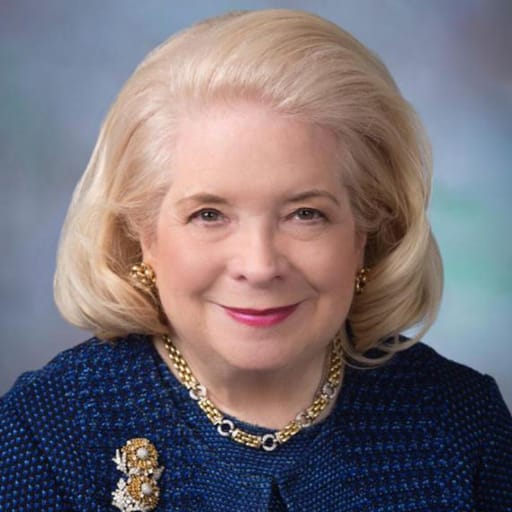
Transcript 0:00 Modify as necessary the grid as it now stands. And so all of this requires permits, of course. The permitting process, because it's state, federal, local, regional, you name your choice, it's more complicated. 0:13 When Putin says, "Build a pipeline," by God, the pipeline gets built, period, end of story. There's no argument. [laughs] That's it. 0:19 And so in the US, though, because it's a democracy, we have these multiple layers of players, and all well-intended and, and all that sort of thing, but trying to bring it all together is a tremendous challenge. 0:31 [upbeat music] Welcome back to The Peggy Smedley Show, your voice for our connected world, with your host, Peggy Smedley. Hello, listeners, and welcome back to The Peggy Smedley Show. 0:49 I'm your host, Peggy Smedley. My next guest specializes in energy and environmental law and policy. She represents clients throughout the United States and the world. 1:00 She was an adjunct professor at George Washington University Law School for more than 20 years, teaching some 60 students energy law while also co-authoring texts on energy law. 1:12 She was the first woman president of the Federal Energy Bar Association, as well as the first energy lawyer to be honored as one of the top 100 lawyers and top 50 women lawyers in Washington, DC by Super Lawyers. 1:27 Before being named to her current position, she served as the chairwoman of the association, a role she held since 2019. Please welcome Sheila Hollis, Acting Executive Director, the United States Energy Association. 1:42 Wow, Sheila, welcome to the show. It's an honor to be with you. Thank you for taking the time to reach out to me. 1:49 Well, you know, Sheila, I love when we get to talk to powerful women who actually not only understand things that are happening in our world, but understand what we need to do to help protect our world and are an inspiration to our next generation, and you fit the bill on all of that. 2:04 So let's start by just talking about what is the United States Energy Association. Give us a little background on that. Sure. Well, it's a utterly unique organization. 2:14 Uh, it works hand-in-hand with the United States government, uh, USAID, the State Department, and the Department of Energy to enhance, uh, and provide energy through- throughout the world to improve systems, uh, to improve training, to clean up where it's, uh, in desperately needed situations. 2:35 And basically, the, uh, the 30% of the world has no energy supply, uh, other than the most basic, you know, sticks from, from the top of a mountain energy supply, we know, trying to, to, to bake a loaf of bread. 2:48 So we work very, very hard to help those countries, hand-in-hand with the US government, to improve their lot. 2:58 And then we work very extensively throughout Eastern Europe, uh, and very extensively in Ukraine for many years. 3:05 And it is, uh, one of our pride and joy, uh, uh, successes is in Ukraine, but all throughout Eastern Europe and, uh, but in also other parts of the world, uh, in, in Africa very extensively, uh, in, in Asia extensively. 3:21 So we have a, a remarkable record and, um, we have been doing this... Basically, the, the entity was formed in a hundred, uh, nearly 100 years ago, but it expanded dramatically when the wall fell. 3:34 And when the wall fell, uh, the Berlin Wall I'm referring to, of course, the Berlin Wall, uh, it became obvious that we would have an opportunity to help, uh, countries that had been behind the wall that were still with, still actually unbelievably had, uh, working with systems that had Kaiser Wilhelm seal on it in E- in East Berlin. 3:55 Uh, that tells you how, how antiquated and some of the difficulties they were having. 3:59 Uh, and a lot of it, of course, was, uh, oriented towards coal burning and, uh, and, uh, uh, ultimately, I, I think that's, uh, still in a lot of Europe, but, uh, it, it has diminished considerably, certainly in the US, but well beyond. 4:12 You know, when I hear you talk and I hear you, you know, I'm, I'm sure when we think about history, we always say we don't wanna look to history, but I think history, uh, teaches us a lot. 4:22 So I think when we look about, you know, the Berlin Wall coming down and we think about what we have to do, the hurdles to be able to accomplish things. 4:30 I mean, right now the delivery of clean energy just to homes, to businesses, how do you accomplish that? How do you help us all understand it's not an easy task? There's a lot that has to be done. 4:42 We forget what, uh, w- the needs that we have here in the United States, let alone the world. They're just... What you described is almost, is heart-wrenching. 4:51 We kind of see it a little bit because what's going on in Ukraine, but there are many other countries that need energy, clean energy let alone. Oh, God, yes. 5:02 It's, it's, uh, it's, it's heartbreaking in many parts of the world still. Uh, we're looking... 5:07 If you, if you look to India, for example, it, the unbelievable suffering of people, many parts of India where the temperatures are, uh, 104, 114 degrees many days, and they, air conditioning does not exist. 5:20 Uh, they are lucky if they have any i- any cover at all in many parts of India. Uh, and those are the things that, that, that we're trying to address. We're trying to help. We're trying to get people trained. 5:32 Uh, same in, in s- parts of Southeast Asia, it's the same concern. 5:36 Uh, and our goal is to basically work in tandem with the US government to f- to find those places in the world where we actually can help, where people are needy, where we can improve their lot. 5:48 And whether it's c- it's helping to clean up, it's helping to modernize, it's helping them to design, uh, for example, el- electricity system, a transmission system. 5:57 If they have natural resources, but they don't have the transmission lines, such as in Uganda, they have tremendous amount of hydropower in Uganda, but they, it's still 70% of the people don't have electricity because there's no transmission lines with which to move that massive amount of hydropower. 6:14 So those are the types of issues we look at and how we try to, to help in the circumstances that we can, understanding the sensitivities, uh, of international relations and all that. 6:24 But semicolonBut this is with the US government's vision too. They know where they can help, and we wanna help. A- and that's what it's all about. 6:34 We're talking about things like right now, you know, clean energy, renewables, electrification, hydro-power, and then we're talking about countries that don't even have that. But then we're- Yes... 6:44 we're also talking about how do we establish things? How do we establish grids? How do we establish micro grids? There's a lot of things that have to happen in order to do all these things. 6:54 But even we, before we even start getting there, we have to start thinking about there's a lot of bad guys out there who are just creating havoc that doesn't even let us establish some of these things. 7:03 I mean, so there's all these- Oh, absolutely... cyber security issues that you have to come into play to, to make sure that we're able to establish kind of the right protections for all of this. 7:15 I mean, so there's a lot of moving parts, I always say. No matter what we wanna do, it's never a straight line. Yeah. Is, is, is that true? I mean, y- you- That's correct... you find that, right? Absolutely. 7:26 And, uh, you know, just, uh, to... I would say the two existential questions facing the energy environmental, uh, arena are two. One is cyber security and, and security of, of all the energy systems that we do have. 7:41 Step one. Step two is of course CO2 and dealing with CO2, and we're, and trying to reduce CO2 in the circumstances that we can in the best way that we can. 7:51 And so a lot, a lot, just like the US government is facing, you know, it, it, yes, it, it, it accelerates, it depending on in certain areas, depending on who's in office. But the, the basic system is there. 8:04 We know that CO2 ultimately has to be reduced, and we've got to at least reduce the amount of, of growth of CO2. Okay. We've, we've got that. 8:13 We understand that, and there's a huge amount of effort- Setting, setting aside the politics, we got that. We get it. We got that. All right. I love that. Yeah. Okay. Yeah. Got it. 8:19 Setting aside the politics, we know it's gotta happen. And we're taking steps already if you look at the, at the CO2 emissions in the US. It's not because we've increased coal burning. 8:29 It's because we've, we've added s- y- the, the United States has grown. Our communities have grown. Our desire for elec- a need for electric power has grown. Uh, just look at the role that the internet plays. 8:41 There's a, there's a lot of power that's devoted to a lot of interaction. The... Look at what we've done since the Industrial Revolution. We, we get it. Exactly. Right? Exactly. We all get it. We all have things. 8:49 [laughs] Well, you know, that's why- That are connected... 8:51 that's why, uh, for example, the Federal Energy Regulatory Commission, we look back, uh, in 1920 when the Federal Power Act came into being, it is, it came into being because it is, it is a service invested with the public interest. 9:04 It is a matter which is invested with the public interest. The public is what it's all about. 9:09 And so when you, for example, built hydro electric dams in the 1920s and '30s and '40s, like for example TBA, when you built those hydro electric facilities, you were thinking of the people, the people who desperately needed power. 9:22 Uh, and LBJ invented the, uh, uh, basically invented watching his mother crawl up a hill in Texas dragging water up and down the hill with no electricity there. That's how, that's how basically, 9:35 uh, the, the whole concept of rural electric power was created. So there's many... It, it's not a, a party thing. 9:43 It is a thinking thing as to what we can do to provide energy to people who desperately need it domestically and internationally in a way which does not damage the environment, understanding that it, it... 9:57 or what I should say to be realistic, everything is going to damage [laughs] the environment. If you put in solar panels, then you're going to have to mine to get the materials to get solar panels together. 10:07 You're going to have to make all sorts of international trade decisions and what have you. You're gonna use up a lot of space. You're gonna u- use up a lot of fields. 10:14 If you're gonna build batteries to hold the solar power and the wind power, uh, that will have to be of a huge magnitude obviously, then you're gonna, A, have to build transmission, and B, you're going to have to secure the rare earths and rare minerals in which, 10:28 which these batteries are made of, and unfortunately we don't have those in the United States to any great degree. 10:34 Canada has some, but most of them rest in the hands of China and the countries in which China wisely, they w- nobody s- nobody said they couldn't do it, they acquired a lot of mining rights throughout Africa and other parts of the world, and that is where a lot of the, uh, minerals, rare earths, rare minerals are gonna come from in addition to China itself. 10:53 So the trade-offs and the magnitude of the trade-offs in all of this are immense. So those are the things I think we don't publicly talk about. 11:02 But we need to talk about them because we, we make these trade-offs, but we forget those are the trade-offs we have to understand as, as we a citizenry do. 11:10 Because if we're talking about reducing CO2s, we have to talk about all the other things. And then what you just said is the cyber side of things. 11:18 We also have to talk about no matter where we are in the world, there's always going to be somebody out there who's gonna figure out how to create havoc in our world. So whe- Yeah... 11:26 wherever it is in the world, because we're connecting so many things s- in every part of the world, and, and we're always gotta keep an eye on what's going on out there because that's, there's always somebody who wants to create havoc on our lives. 11:40 I mean, it just- Yeah... happened, and, and we have to worry about power, power outages. Is, is that correct? 11:47 W- uh, we always have to worry about power outages, although, yeah, b- well, just because of the, the changing climate. The magnitude of what we're connecting, the changing climate, right? I mean- Yep. Absolutely... 11:55 it, it's happening all over, and, and we say, "Is it because we've added so much?" And what we're doing, and there's so many different things. One, it's the bad guys. 12:03 Two, it's because of just climate change and because we've added so much to it. I mean, there's many different things when we have that, that's... 12:11 And I think we don't understand that, and I think that's a part of the discussion that we say that we're struggling to understand what is added to climate change. I mean, there's a lot of different th- Yeah... 12:21 Again, it goes back to a lot of different moving parts that you just described. So do we need to understand that? 12:27 Do we need to, to kinda have a deeper discussion of what's contributing to all of that?Well, one, one issue that I think needs to be just faced realistically is that, uh, we have a, uh, have a situation in the US where we are shutting down nuclear plants, which of course do not omit any CO2, uh, because of their aging out. 12:47 Uh, you know, that's just the way. They have a, generally have a license that lasts 40 years, some, there are chances of for it being extended to 60 years. 12:55 But we have been, uh, shutting down nuclear plants because they're aging out. And we also have the issue associated with nuclear waste storage, which has not been resolved. 13:03 It's, it's just been, it's just been, uh, in, uh, in kind of, uh, hold in place kind of, uh, kind of, uh, decisions, uh, trying to figure out where and how to move all this nuclear waste into a safe storage spot, uh, after a $15 billion adventure in, in, in, in adventure in, uh, in, uh, Nevada. 13:24 That came to naught. So, uh, there's all kinds of things w- going on there. I'd like to say something too about the, the, the, uh, problem a- associated with blackouts. Okay. 13:35 When the blackout of 2003, 2004 o- occurred, I was re- representing a grid. At that point, it was just starting up. The grids were a new thing then. 13:45 That was w- the creation of, of, uh, grids as opposed to just independent utilities working within their own little working groups, regional w- working groups. So that was, that was a, a, a critical part of this. 13:57 But, uh, just seeing what happened, we can learn so much from that, and that was before we had developed even further needs and more complex needs. 14:07 Now we're looking, we're looking at, uh, a situation where we have a, a variety of players on the grid now. Uh, and we have, uh, small producers. We've got big producers. 14:19 We've got, uh, issues associated with getting the power into storage and all. We really are... I think the, the... 14:25 And setting aside the cyberattack situation, which is another layer of concern, uh, it, we just have got to really think this through, and we have to do it from administration to administration. 14:37 This is not the sort of thing that you can, you could just push a button and switch a, a policy like this, 'cause there's not just billions but trillions of dollars are gonna be invested in these going-with decisions w- that look like they're gonna stay in place. 14:49 [laughs] So- So that's what we're saying. The grid's aging out, but yet at the same time, it, the transition is going to be m- monumental. Big. Big. 14:57 Because, well, w- we're adding a lot of new players, a- and we're adding new forms of energy, and we have to, uh, calculate in the need for battery storage and making sure we will have that battery storage. 15:08 Uh, plus we need to continuously, uh, uh, fix, uh, modernize, uh, modify as necessary the grid as it now stands. 15:18 And so all of this requires permits, of course, uh, the permitting process, because it's state, federal, local, regional. Y- you name your choice. It's more complicated. 15:28 When Putin says, "Build a pipeline," by God, the pipeline gets built, period, end of story. There's no argument. [laughs] That's it. 15:35 Uh, and, and so in the US, though, because it's a democracy, we have these multiple layers of players, and all well-intended and, and all that sort of thing, but trying to bring it all together is a tremendous challenge. 15:47 You saw the h- the hydro line, the, the power line that was gonna come down from Canada through, through Maine, which of course, uh, has no, [laughs] no CO2 emissions. 15:57 It's all hydro on a, on a gigantic transmission line. Well, [laughs] the, the, the good citizens of Maine voted it down, no. [laughs] Referendum. And that, that just came, it... 16:08 I guess you could say it came out of the clear blue. 16:10 It, it didn't exactly come out of the clear blue, but just the, the finality of it was, uh, sort of astonishing because, you know, you're trying to, you're trying to meet so many goals. 16:18 You're trying to get clean energy into the US from a safe source. That would be Canada. 16:23 And, uh, it, it, you know, it, it, it came a cropper because of we're in a democracy, and democracy is wonderful except when it doesn't work for you, you know? 16:33 [laughs] So Sheila, we're running out of time, but I'd like you to stick around because I'd like us to continue this conversation and maybe help us define some things that maybe'll help our listeners. 16:42 So let, let me take a quick break here because we need to wrap this up, and, but I would like you to stick around, and we'll talk some more. All right. I'd be happy to. 16:49 Sheila Hollis, Ex- acting executive director of the United States Energy Association, thank you for your time right now. Where can our listeners go to get more information on the association? 17:00 Well, if you go to the USEA website, you'll see, uh, well, we're having a, a, a big, uh, upcoming meeting next week that you'll see that you can listen in on. It's all free. It's all available on the internet. 17:11 And, uh, we do multiple, multiple, uh, programs and, uh, and with, uh, so many times with USAID, sometimes with the State Department, sometimes with the Energy Department, with all the major players in the industry, and also the cutting-edge players that are coming in with new ideas. 17:27 Just go and you'll see all the things that we've done, workshops, press conferences. We do a press conference about every month, uh, that is definitely with a good o- there will be a good one Friday. 17:37 Uh, and, uh, just, uh, tune in and you will hear from the top people in the industry, government and industry, and also the think tanks, and it's all free. [laughs] It's great. All right. 17:47 Well, th- Sheila, thank you so much. It's a pleasure. Okay, listeners, that's all the time we have for the show today. Make sure to share, subscribe for all the episodes each week. 17:58 As always, you can share your thoughts with me on Twitter and follow us at Connected World. And remember, we broadcast every Tuesday at 12:00 PM Central. 18:05 All right, please check out our website at connectedworld.com or our show website at thepeggySmedleyShow.com. And don't forget to tune in to Project Sustainability podcast at pspgreen.lipson.com. 18:16 All right, this is The Peggy Smedley Show, your voice for our connected world, and remember, with great technology comes great responsibility. Have an awesome week.