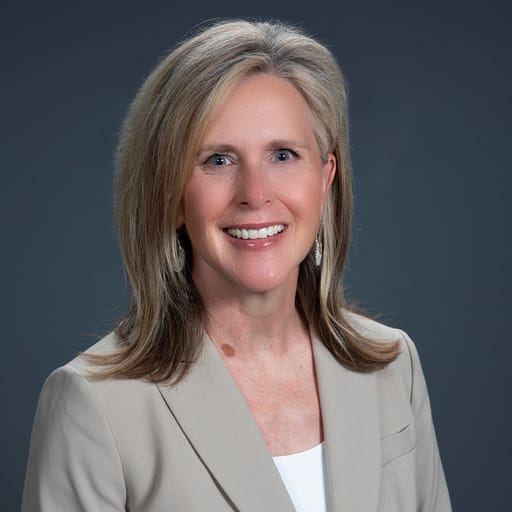
Transcript 0:00 [gentle music] So the C- is a sign of improvement, but it's still not a grade that I'd want to take home to my parents, and I'm sure many of us would not be super proud of that grade. 0:11 And it, and it really isn't a grade... It's, it's still a mediocre grade. It means that our, our infrastructure isn't meeting the needs of our citizens. Further, 11 categories are still in the Ds. 0:24 Five categories did go up, one went down, but we're still struggling to maintain the infrastructure in a state of good repair. 0:36 [upbeat music] Welcome back to The Peggy Smedley Show, the podcasting voice of IoT and digital transformation. Hello, listeners, and welcome back to The Peggy Smedley Show. As always, I'm your host, Peggy Smedley. 0:50 I'm happy to be joined by my first guest today. She is an experienced chief executive with a diverse background that includes transportation, land use, public policy, and community advocacy. 1:03 With more than 25 years of experience, she has worked in several technical areas, including flood control, traffic impact analysis and mitigation, land development, public works, and transportation policy. 1:15 She is passionate about ensuring infrastructure meets the needs of all community members. 1:21 Please join me in welcoming back to the show Christina Swallow, director of the Nevada Department of Transportation and former ASCE president. Christina, welcome back to the show. Uh, hi, Peggy. 1:34 It's so good to be back on this show. I, I, I look forward to having a conversation with you today. You know, I always enjoy when guests come back that have been on the show. 1:42 They know what it's like, and this has been like kind of giving birth to a really big baby when you give... you come out with the ASCE report card [laughs] after four years. 1:53 You must kind of has- just had this giant sigh of relief that it's finally done because you've really been involved in it. Yeah. This report card is a huge lift for us. Uh, we release it every four years. 2:04 We've been, we've been doing that since, uh, 1998, and yeah, that, that math doesn't quite work, but, um- [laughs]... it is every four years. 2:13 Um, and the most recent one came out in 2017, and we have a huge team that's engaged with it. And really like the last... You know, it's one of those efforts that, you know, like you get... 2:22 You're getting so close, and I'm like, "Team, we're almost there." We're like at that, that po- that final bit of the marathon. 2:28 We, you know, we turned that corner at 26 miles, and I'm like, "We just gotta go that final point two." And I have to tell you, earlier this month when we hit that finish line, it was, it was a huge relief. 2:38 But, you know, our work, our work isn't done. Uh, we just, we just reinformed the nation about the, the condition of our, of our infrastructure and, and now the, now the work is... 2:49 You know, it transitions to, to getting our infrastructure back to a level that it will meet the needs of our, of our communities and meet the needs of all Americans. It's... 3:00 Telling, telling the, the, the story about the condition is only really the first step. And for you and I who've talked about this many times, our infrastructure is really very sad. 3:10 I mean, it's, it's unfortunate to say that, but when you look at a grade, when we look at, I think, the roads received, what, a D if I'm looking at, and the overall infrastructure was a C-. 3:23 Talk to me a little bit about the key takeaways from, from the report card itself because I think, you know, you and I both know that it, it... 3:33 maybe that's a jumping-off point to look at overall cities because I think not every city is as bad as w- another city, and why does that happen? 3:42 Why when you have an overall grade is w- 'cause another city might go, "We're not as bad as some cities." Why is an overall grade representative like that? 3:52 You know, Peggy, that's a great question, but I think before I get into the takeaways, I wanna, I wanna give, uh, your listeners a little bit of a, of the background of the report card, you know, what all is in it, so that they have an idea of how it comes together. 4:04 And so, you know, the report card includes 17 different categories of infrastructure, and that is one more category than what we had in 2017. We added stormwater this year, so it's 17 categories. 4:16 Everything from roads and bridges that you've mentioned, drinking water, dams, levees, airports, waste, um, parks and rec, schools. It's a really diverse group of infrastructure, um, those 17 categories. 4:30 And when we do it, we, we evaluate them on eight cri- key criteria, which I think we'll start to get into that second part of your question. 4:37 But the criteria we look at are, you know, condition and capacity, funding, future need, innovation within the sector, resilience of existing structures, operations and maintenance, and even public safety. 4:50 So we really look at the breadth of criteria that helps shape and inform our infrastructure. And then as you alluded to, the key takeaways. 4:59 Well, one is that we did get a C-, and this is the first time since we first evaluated the grades in 1998 that we've given a grade out of the Ds. 5:09 So the C- is a sign of improvement, but it's still not a grade that I'd want to take home to my parents, and I'm sure many of us would not be super proud of that grade. And it, and it really isn't a grade... 5:21 It's, it's still a mediocre grade. It means that our, our infrastructure isn't meeting the needs of our citizens. Further, 11 categories are still in the Ds. 11 categories. 5:33 Five categories did go up, one went down, but we're, we're still struggling to, to maintain the infrastructure in a state of good repair. It's, um, costing Americans every single day. 5:46 We anticipate that, um, or we, we know that it's costing Americans $3,300 a year, every American household, $3,300 a year or $63 a week. 5:58 And, and we can fix it, and we can make that infrastructure serve our communities and make life easier.When we look at that, when we look at overall what it costs us, I mean, this past year we were all stuck at home because of COVID, you know? 6:12 And we would like to think, "Well, did we save that money? Did we not save that money?" 6:16 I mean, there has to be some cities that are getting better at this, that they know, they've figured out because if people are going from urban to rural, we can't just invest in just saying, "Look, let's just repair all these roads," because we just don't have the infrastructure, you know, when we look that people aren't gonna go back to the cities. 6:36 So we have to reimagine what cities are going to be like. You know, roundabouts. We have to get smarter and think because we have so many distracted drivers. I mean, things have to be done differently. 6:49 Are we learning from this to build different roads going forward, or are we just gonna put the money back into the same roads? [laughs] Wow, that was a whole lot of questions in that idea. I know. I'm sorry. 7:00 [laughs] No, it's great. It's great 'cause, 'cause you, you asked a couple different things. You, you asked a little bit about COVID, so let's spend a minute and talk about the COVID impact. 7:10 What we saw, and this report card is, as I mentioned, a four-year look, so where have we been since 2017? 7:18 2020, as we know, had a, had a significant economic impact on our, on our states, on our cities, on our, and on our, on our infrastructure. 7:28 The, the revenue that was generated, that economic impact impacted our ability to improve our infrastructure, and it slowed plans, and it, and it hindered our ability to focus on asset management, um, in terms of delivering those critical preservation projects. 7:44 So, so COVID, and we've not yet seen the full outcome of that impact. So I think we're going to watch moving forward how that, what that economic impact had, h-how many projects were delayed. 7:57 We know the federal government did come to the table to help many areas of infrastructure continue to deliver the infras- the critical infrastructure needed, but it didn't help all. 8:07 And so I think we're at the time, the jury's still out on what that, that full economic impact or, or infrastructure impact will be from COVID. 8:16 And then you mentioned a little bit about people relocating from cities, and, and there definitely has been some relocation of people from cities. However, 8:27 most, most of the employees in any given city, um, don't have those options. You know, the, the doctors and the nurses and the grocery store workers and, um, 8:39 and the lawyers and, you know, uh, many of those, they still have to come into the city to do their work. 8:45 And so while they may have moved where they reside, um, they may have, not all have, many can't, um, because they, they rely on other modes of transportation. 8:56 I mean, I think that was one of the things that we saw so critically during COVID was that transit still remained an essential service, and transit still had to deliver their program. 9:06 And so, yes, some people have relocated. Interestingly, some of them have had just relocated to a smaller city- Mm-hmm... from the bigger city that they were. 9:13 So, so we're all gonna have to take a look and see what that COVID impact was. 9:17 In the transportation space, we've also seen with telecommuting that it's changed temporally where the traffic is but not necessarily the total traffic numbers. Our numbers are recovering. 9:29 Some of them are lagging still, but some of them are beyond what they were b- in 2019 already. So, so we're still trying to, to monitor the COVID impact. It's, uh, just high level on that. 9:40 But in, in terms of, you know, cities that are inspiring and, and areas that are doing really good things, ASCE has an infrastructure game changers, uh, website that goes along with our report card, and that's where we highlight some of our most innovative projects and programs that we've seen across the nation. 9:59 And so there's a couple of examples that are, are kind of cool, and some of them are things that are, that are where we're leveraging technology to help advance. 10:07 So Columbus, Ohio, has a free autonomous shuttle program, and that really helps serve as that critical, you know, first mile, last mile solutions for residents that don't have immediate access to transit centers. 10:18 So, you know, using technology in the form of autonomous, uh, vehicles to help with that transit piece. Another good example is, uh, Cary, North Carolina. They are... 10:27 it's a small and flood-prone community, and they've set up flood monitoring systems to warn residents and businesses when water levels are beginning to rise. 10:37 So an advance warning system that allows the residents and businesses to take the steps they need to protect their facilities. 10:44 And then a really good third option is the Port of LA, which has built an optimization software, and that streamlines the efficient movement of goods through the nation's largest port to really increase productivity. 10:56 So in all of those cases, we're looking at ways that we've... 11:00 we're able to leverage technology to make our assets work for us even better, and I think that's something we're going to have to think about long-term is we don't have enough money to continue to build the way we used to build. 11:14 So when we do invest our resources, we need to make sure that we're investing them in a manner that, um, optimizes the use of the existing assets. 11:24 So it's interesting you said all that, Christina, because even when we look at this right now, we have to look at how long it's going to take us to build a sustainable road, a resilient road because there's gonna be time we might wanna say we're not gonna invest any more, let's say, in gasoline. 11:41 We're going EV, autonomous that you just described. So some of these cities are doing that, so how do we enhance what we're talking about here? 11:48 Because that sounds great, but you and I know that it takes a little time to get there. So are we talking, you know, h- how do we get to where you just described so we have this ideal road of the future? 12:03 [laughs] Well, uh, we didn't get here in a matter of a handful of years, and we won't get out of it shortly either. 12:11 It took us decades of underinvesting to get to the place where we are.I should say the last four years we've started to see us eke out a little bit better. 12:21 So if we continue to invest, we will see the grades begin to improve. And, and I think, I think, and it's kind of probably a cliched response, but, you know, how do you eat an elephant? One bite at a time, right? 12:34 And so we have to be looking at, um, strategic investment, uh, strategic leadership, and, and, and celebrating the wins when we get them, learning from them. 12:46 If there's opportunities for learning, learning, and then continuing the cycle all over again. 12:51 It will take us some time to get the grades up, but we know that if we start investing today, we will start seeing results i- in the near future. 12:58 Well, Christina, I have so many more questions, but we're gonna have to wait till we get you back to answer them because we're out of time. 13:04 So Christina Swallow, director of the Nevada Department of Transportation and former ASCE president, thank you so much for your time today. 13:12 Where can our listeners go to get involved and learn more of what you've done and what they can continue to do? Because we all have to be involved to improve all of this and for a better future for all of us. 13:22 Our website, infrastructurereportcard.org, is the best place to find out not just the national grades, but also how your state is doing. Thank you so much. Thank you, Peggy. 13:33 Okay, listeners, that's all the time we have for this segment, but we'd love to know what you think about all this and, and g- share your thoughts with us. 13:40 So we- what I'd love for you to do is, uh, share them with me on Twitter @connectedwmag. Check out our website at connectedworld.com or the show website at thepeggysmedley show.com. 13:49 We've been putting up a lot of stuff about the infrastructure report card and so much more, so get up there, put your thoughts up there. 13:55 All right, this is The Peggy Smedley Show, the podcasting voice of IoT and digital transformation. And remember, with great technology comes great responsibility. We'll be right back after this commercial break. 14:05 [upbeat music]