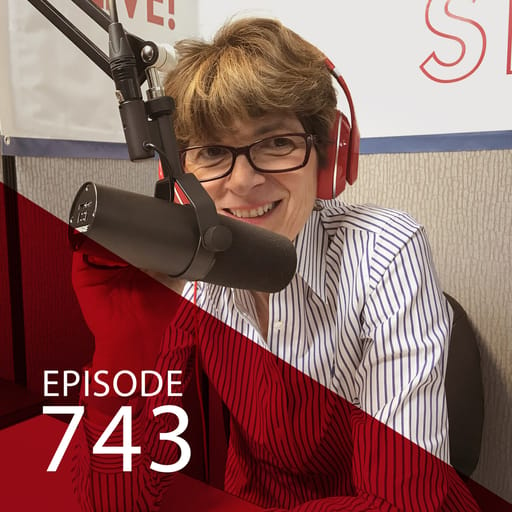
Transcript 0:00 [gentle music] We need to be more efficient, we need to decarbonize, we need electrification, and we need innovation to create energy efficiency and to make construction safer. 0:16 We need to bring other solutions that people can afford. How do we move these factory-controlled ideas to the job site in affordable ways? We need innovation to make our world more sustainable. 0:39 [upbeat music] Welcome to The Peggy Smedley Show, the podcasting voice of IoT and digital transformation, with your host, Peggy Smedley. Hello, listeners, and welcome to today's edition of The Peggy Smedley Show. 0:57 As always, I'm your host, Peggy Smedley. So today, I'm gonna talk all about our new Living Lab. 1:03 I introduced it to you a couple of weeks ago and I shared that we're embarking on this journey to understand how to best leverage technology to build a greener home. We all need to start understanding how to do that. 1:16 So my objective is to understand what works, what doesn't, and how to make our homes more energy efficient. 1:23 So on this first segment, I would like to share with you a little bit about what I've learned so far, and I've learned a lot. 1:32 Before I get into what I'm going to be sharing about everything, I want to tell you about who are some of the guests we're going to have on this week's show. 1:40 First, I'm going to be talking to David Yemmit, CEO and founder of Serbia Centennial. Then I'll wrap up the show with Brian Dadama, Senior Director of Engineering, Innovation, and Product Performance at McNellis. 1:57 So, uh, let's get started and talk about, uh, what we have learned so far in trying to, uh, kick off or the research to start with the Living Lab, because we haven't broke ground just quite yet. 2:09 But, uh, residential homes are responsible for about thirty-four percent of carbon dioxide emissions. If we want to meet our goal, our global goal of climate neutrality, uh, we need to address this. 2:25 We need everyone involved to play a part in finding and implementing a solution. 2:31 Our goal with, uh, the Living Lab is to incorporate the most advanced products, uh, systems, maybe even methods from leading manufacturers, technology companies to demonstrate, and I think even educate both the industry and all of us consumers alike. 2:48 So for today, let's talk about alternative building methods, and this is what, uh, I want to share with you. So let me explain. 2:57 Uh, stick framing has been one of the go-to methods for construction for centuries and-- But some in this space are actually suggesting that it's going to change. 3:09 And so we did some research and, and kind of looked at all these methods. But stick framing can be time-consuming, expensive, and there can be safety implications. 3:19 Framing consists of light and heavy framing, for those of you who might know. 3:24 There's a huge need to explore new methods of construction in order to make it more affordable, maybe let's say resilient, and even energy efficient, which started out on the start of this, uh, segment. 3:37 So let's look at a few of them. ICFs are insulating concrete forms, and SIPs are structured insulated panels. 3:46 Now, SIPs consist of an insulating foam core sandwiched kind of like between two structural facings, typically, uh, oriented strand board. These are, uh, precisely manufactured under factory contro-controlled conditions. 4:03 So a SIP home allows for better control over indoor air quality because, uh, their airtight building envelope limits incoming air to, uh, controlled ventilation. 4:17 So this kind of filters out contaminants and allergens, is, is the pitch, and this leads to kind of a healthier, energy efficient, and more resilient structures overall. 4:29 Now meanwhile, these ICFs result in cast-in-place concrete walls that are sandwiched between two layers of insulation material. Now, they're also strong and very energy efficient. 4:43 Now, the Porcelain Cement Association suggests its history dates back to after World War II, and blocks of treated wood fibers held together by cement were used in Switzerland. 4:56 Now in the nineteen forties and even the nineteen fifties, chemical companies developed plastic foams. And by the nineteen sixties, a Canadian inventor developed a foam block that resembles today's typical ICF. 5:10 So now if you look like in the nineteen eighties and the nineteen nineties, some American companies got involved in the technology, manufacturing blocks and panels or even planks. 5:21 So if you kind of look at all of this, the benefits are pretty vast. You know, strong walls, energy efficiency, and even for most of us who prefer not to have them in their homes, ins-insect resistant. 5:35 So these are just to name a few. So for contractors, this method is traditionally been considered very fast, flexible, and can meet higher energy code mandates. 5:48 So now I've kind of described to you a lot of, uh, kind of the background of all this. So why might you ask, is this not the go-to building method? 5:58 Right away that if I were you and you're listening to this, that's-That's what you would think about. So let me share with you the experience we've had in doing some upfront research. 6:09 Well, even with the soaring lumber prices, ICF and SIPs are not cheaper or better than convenient stick, at least not based on the research I've done up to this point. 6:22 Now, anybody out there who's in the SIP world or in the ICFs, you wanna call me up and you wanna yell at me, feel free, because of the research I've done so far, you can't convince me otherwise, at least not just yet. 6:34 I know some of you are saying with all the supply chain problems from the pandemic, how is it possible that the price of lumber, which soared to perhaps its highest in almost a decade, still be higher? 6:48 Well, as lumber went up, the prices of ICFs and SIP companies and wall that they manufactured saw the rewards, increasing their pricing, and the i- irony of all this, they've never come down. 7:03 Now, in fact, even though lumber has come down, not to the point of where they were before the pandemic, they are still better than ICFs and SIPs. 7:16 This is just our experience, so before y'all flip out and you start screaming at me, and you're the CEO of some company or you're some sales reps, well, I've done my due diligence. 7:27 So we compared pricing for the living lab with not one, not two, but several companies, and we went to a lot of different reps to ask for their opinion, and the costs are way higher than traditional building when you consider energy, labor, and materials. 7:49 Now, here's what is really frustrating, and this is what I wanna share. 7:55 These companies don't want to make it even equitable or even make it affordable for the average person, and that's perhaps what is the most disappointing to me and why I'm doing a radio show and why I'm writing a blog about it. 8:11 It's not ab- just about the price. It's about the attitude that goes along with the price, which has kinda got my ire up just a tad. 8:20 Unless they get grants from the government, they're not going to do anything to make it equally equitable or allow the rest of the world to get involved in this. And they don't... 8:32 And the irony of all of this, they openly admit it. I know, sometimes it just boggles the mind. 8:39 But it's really sad to think that someone who wants to build a home more sustainably, a more sustainable home today can't because these companies don't wanna budge on price. Now, 8:54 these are the companies that are becoming high and on, I guess, high on profits. I, I mean, that's all I can say. They just don't care about civic engagement. Really? Civic engagement. 9:08 Isn't this what we're talking about? 9:11 I just heard a, a, a panel talk about if you don't get involved with your community and if you don't understand that you have to work with the community, and you don't have to give back to the community, you're not gonna be in business in a couple of years. 9:26 Well, they don't care about making a difference. They are only care and are consumed about making that big green profit dollar. Well, guess what? I hope everybody listening says, "Guess what? 9:41 You better care," because I, I, I'm, I, I'm frustrated, which is why I'm doing a radio show on it. 9:48 Candidly, there was one company that wanted almost double because he said he was making incredible money and he didn't need to negotiate. That's what he told me. Because demand was just too high. 10:01 He actually used those words with me. Sadly, those were his words to me directly. I understand he's running a business, but sustainability should be accessible for everyone. 10:18 Another company was charging as much to install the walls as it was actually what it cost to purchase the product. Now, we need to figure this out. I'm, I, I don't understand. Don't get me wrong. 10:31 These companies are in the business to make a profit. I get it that, you know what, this is not a philanthropic endeavor, although we're all supposed to be helping each out, out. I get that. 10:43 But unless these companies are willing to engage in an equitable rate for all, we are never going to solve public problems and make a real difference in engaging citizenship. 10:56 Certainly not in my lifetime, I can tell you that. So here's my opinion for today. We need new alternative methods and technologies to build our homes and our cities. 11:10 The traditional methods just aren't cutting it anymore, and we all know that. We need innovation to solve the worker and the material shortage, and we need new materials. 11:24 We need to be more efficient, we need to decarbonize, we need electrification, and we need innovation to create energy efficiency and to make construction safer. 11:39 We need to bring other solutions that people can afford. How do we move these factory-controlled ideas to the job site in affordable ways? We need innovation to make our world more sustainable. 11:58 This will never pass the consumer muster if it's affordable, if it... In, in... When we're looking at it right now, if we're not delivering on its promises.The same can be said for solar or electric vehicles. 12:15 If all of these solutions are so expensive now, and as I'm looking at them and trying to price them for the, this average home, and it's only for the rich right now, how many years is it going to take before we really can do it? 12:30 I talked about this o- on the show a few weeks back ago. Dr. Shelly Francis of EVnor has a passion for ensuring frontline communities impacted by climate change have access to electrification. 12:46 She says one of the best ways to do this is by engaging with the frontline communities to help unlock the potential for electrification. 12:56 We can talk electrification all we want, but we have to understand how we are going to engage these communities. I have the same passion for sustainable homes and cities. 13:10 We need the public exchange and the commitment from these companies who are making these products. So far, what I have seen, it's all lip service and a lot of talk, but when you go out and try to price these products, 13:28 it's just, it's not doable. We have to hold these companies accountable to their actions and their marketing hype. We are only going to be able to achieve our sustainability goals if we start at home. 13:44 And we are only going to embrace it at h- at home if we can afford it, and it's equitable for all of us. So here's my tip. 13:54 If we work in this space, let's put our heads together to figure out how to make this work for all of us. Join us in our Living Lab to help us solve some of these problems, because I'm excited about it. 14:08 I'm excited about what we can do. We need to create a sustainable, clean, and green future for all of our homes so we can all live together in future cities. 14:16 How exciting is that for all of us to learn, live, work together? We need to close this divide, and we need to work together in order to make it all happen, to aspire together. 14:30 What do you believe is the next step for our sustainable homes? Are we doing enough to bring about civic engagement, or is the reality still that the average person can't afford this? I don't believe that. 14:46 I believe we can. We need to make change happen if we're going to move forward, and I do believe we can. So let's work on this, all of us together. 14:55 If you're interested in more information on the Living Lab, learn more about what we're doing at connectedworld.com or constructek.com. We want you to work with us, you know? 15:09 Check out our websites, share some thoughts with us, send me a note at, uh, connectedwmag, send me a note on LinkedIn, but share with us. We wanna know what you think. We'd love to put more solutions in the Living Lab. 15:23 All right, well, that's all the time I have for this segment, but we're gonna keep talking about this Living Lab and all the cool products that are going into it and all the cool companies that are already signed up to work with us. 15:33 All right, that's all the time we have for today. As I said, check out our website at connectedworld.com, our show website at peggysmedley show.com. 15:40 All right, we're gonna take a quick commercial break, but as always, this is The Peggy Smedley Show, the podcasting voice of IoT and digital transformation. Remember, with great technology comes great responsibility. 15:49 We'll be right back. [outro music]