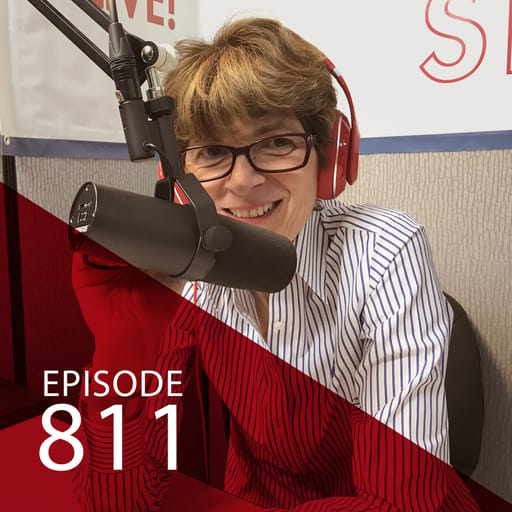
Transcript 0:00 [gentle music] If we want to give customers that personalized customer experience, it starts with the employees, all of us. So we have to know what's happening from the top all the way down to the bottom. 0:12 We need to teach and train everyone how to be the best customer, how to treat the customer how we want to be treated. We say that, but sometimes we don't understand what that means. 0:25 We need to create that culture in our business. Sometimes we just say it doesn't matter, but it does matter, and it does matter to everybody. 0:34 [upbeat music] Welcome to The Peggy Smedley Show, your voice for our connected world, with your host, Peggy Smedley. 0:52 Hello, listeners, and welcome to today's edition of The Peggy Smedley Show. I'm your host, Peggy Smedley. Today on The Peggy Smedley Show, I'm gonna be talking all about customer service. 1:02 Yeah, there's a report out that digs into customer care among some of the leading US wireless companies, and this fits perfectly into the topic for those of you who are attending this week in Mobile World Congress and have the topic actually top of your mind as you're walking the show halls. 1:20 And it's exciting because as we talk about customer service, I think it's something that we're not very good at, and I know many of you might say you are, but I guess if you look at these results, maybe we need to dig deeper into what they're saying. 1:33 But we're only going to talk about the carrier report for a few minutes, and I won't dig deep into all the other things, because the big takeaway from the report is that the carriers are doing something that can actually be applied to nearly every vertical market, and maybe there's a takeaway here that we can all learn. 1:51 And I'm going to share with you what that is and how you can apply it to any industry, maybe your own industry. 1:58 And I'm also gonna share my thoughts about what is missing from many companies today and how it could improve customer service overall, and I hope maybe that takeaway is how we can be better at serving our customers. 2:11 So that's our first segment today, but later on in the show I've got some guests, as always. 2:16 I'm gonna be interviewing Melissa Durbin, the sales director for digital and application innovation at Microsoft, and we've got a lot to talk about. 2:24 We're actually gonna discuss the creation of the next-generation digital platform for manufacturers and how these connected products are helping enterprises. 2:34 We're also gonna discuss some of the vertical markets embracing products as a service, and steps a business can take to implement products as a service. 2:43 And then I'm gonna wrap up the show welcoming back Frederic Dubien, who's the program manager for IoT and edge computing at Eclipse Foundation. 2:53 We're gonna discuss a new survey about commercial adoption of IoT technologies and edge computing, and we're also gonna discuss the role of open source technology and the most common operational challenges to overcome. 3:08 As always, we've got a lot to unpack on the show today, so I hope you'll stick around for the whole hour. So let's get started. Let's look at this new report. J.D. 3:18 Power released its 2023 US Wireless Customer Care Study earlier this month. 3:25 Now, the study is based on responses from fifteen thousand nine hundred and forty customers, so it's not a report that a lot of people say, "We've interviewed a hundred people." 3:35 This one really talked to a lot of customers who contacted their carrier's customer care department within the three months prior to the study. 3:44 Now, the study evaluated customer care experiences across six factors, including store service, phone service, website service, app service, social media service, and text service. 3:59 Now, if you think about it, these key areas are all the things that you do every day. 4:04 You go into the store, you use your phone, you're on the website, your apps, social media, everybody's talking about that, of course, and people text all the time. 4:13 So the studies were fielded from July through December of 2022. Now, here's what it found. Today, there is a decrease in problem resolution across digital, which includes the website and the app. 4:27 There's also the same decrease in problem resolution time in store and phone service, but here's an interesting thing. The result? It is driving significant improvements now in customer satisfaction. 4:42 All in all, customer satisfaction is now up fourteen points on a thousand-point scale. Now, J.D. 4:49 Power suggests this shift comes after the wireless carriers have addressed staffing challenges and invested in advanced tool-enabled digital customer support solutions. 5:01 Now, they are reaping the benefits of all that hard work. When they recognized they had a significant problem, they invested in to change what had to be done. 5:12 It also found that the top-performing wireless providers take a systematic, channel-coordinated approach to customer care and problem resolution, which seems to be paying off significantly. 5:25 Now, I'll say this is interesting take on how to improve customer care through systems and automation, and we need to be looking at this, because when we look at our customer care, we hear a lot of negative things, but when you look at the results, this is how one telecom communication area said, "Nope, we can't take this. 5:45 We've got to invest in it." So 50, 60 years ago, this would not have been the case, and that's why this is really great. The carriers are saying, "We've got to do better." 5:54 Back then, the customer experience was more personal, but now look what we have. 5:59 Management employees got to know their customers one-on-one and determine how to best service that individual client.I do think an element of that still exists today, but it's not like it used to be. 6:12 But the large companies like Carrier are serving millions of clients all at the same time. Automation is a necessity, and we have to look at that. Something else has changed in the past five decades: the customer. 6:24 Look at how the customer role, the customer experience. Today's customer wants very fast response. There's no waiting. Immediacy. We've all learned we want it today within minutes. So they want an always-on connectivity. 6:38 They want the problem to be fixed almost immediately. Automation can certainly help, and it is helping, so systems can help. The types of technology we have are changing the way we want things resolved. 6:51 The right education and changing from management can make a significant altering of the way we experience the influx of demand of customers. 7:01 So there's a lot of things that can be done to improve this customer experience. So how do we find that balance between that fast response time and that personal customer care? 7:12 I think that's the interesting point out of this survey. What do you do? How do you respond to it? 7:17 And it's not easy, and you have to really think about what you're going to do with your customers, because we all know a negative review is a louder voice than a positive one, so that becomes the challenge. 7:30 I think we need to go back really to the basics. I think we need to treat customers like we would wanna be treated, and that's always hard because we forget about that fact. 7:40 I recently had a very negative experience with the builder in my neighborhood, and it's just not me. My neighbors were having a negative experience too. 7:49 If you wanna read the full blog, go over to connectorworld.com and it's there. But the big takeaway here is that we need to stop running so fast and furious with limited staff. 8:00 We need to understand the negative consequences that result from this. We can't forget good customer service, people skills, and genuine Southern hospitality. I think in the experience that I had, it was lost. 8:13 They didn't care. We can't forget that. We need to understand the importance of this. So this will lead to more referrals, recommendations, and repeat business. 8:22 So that brings me back to the question of the day, and this is what I want you to think about. How do we find that balance, then, between that fast response time and the personalized customer care? Because it's not easy. 8:36 We have a lot to do, and our time is limited, and we all recognize it. It's a pressure. We're under a pressure cooker, right? So I have some ideas, which brings me to my opinion for today. 8:47 Customer care service is no longer an option. We have to understand that. People want things immediately, and you have to respond. 8:54 So we need to be providing customers with what they have come to expect in all walks of life. This is going to require a few things, a few changes. 9:05 That mindset, that physical way of thinking is going to have to change, and you're gonna have to consider it. 9:11 Whatever you are, whatever industry, whatever business, it's going to require both a personalized customer experience and fast response time. 9:20 And we've even seen the companies that are providing us our quick coffee having to change how they make the coffees, how they make our lattes, thinking about how they change because customers don't wanna wait anymore. 9:32 So both are critical in today's competitive market. We have to think about what are we doing when we service our customers, because a lost customer is a lost customer forever. 9:43 It's very hard to regain that customer back once they've left. So we want to keep our customers, and we wanna keep our best customers forever. 9:51 So actually, I have two tips for you today, which first, companies will need to leverage technology to be fast and provide the best services to clients, and you need to understand how you're applying technology. 10:03 It's not technology for technology's sake. It's understanding the data behind the technology. 10:09 If we want to give customers the service they have come to expect, the only way we're going to do this is with technology, applying technology and look at the data behind the technology and the transparency of the information that tells us how we're doing it and are we doing it well. 10:27 Sometimes looking at data tells us something we don't wanna know and we're afraid to know, but that's the only way we're going to get better. It's looking at the data and improving. 10:36 This will include internal technologies to improve internal systems and processes. 10:42 Sometimes looking at the things we're not doing well is hard to look at and facing the facts, but it's those facts that make us better, faster, quicker, and makes us improve, and it's also including the external customer-facing technologies. 10:57 So it's both internal and external, so our customers are feeling good about us and saying things look good, feel good, and that experience they're having makes them want to be a repeat customer. 11:08 You don't wanna lose that customer. So second, management needs to be on top of what their employees are doing as they are a reflection of the company and the community. Sometimes we're disparate. 11:21 I guess I would like to say we're away from what's happening in the field. We don't understand it. So let me explain this one a little bit more. 11:28 If we want to give customers that personalized customer experience, it starts with the employees, all of us. So we have to know what's happening from the top all the way down to the bottom. 11:38 We need to teach and train everyone how to be the best customer, how to treat the customer, how we want to be treated. We say that, but sometimes we don't understand what that means. 11:52 We need to create that culture in our business. Sometimes we just say it doesn't matter, but it does matter, and it does matter to everybody. 12:00 One lost customer, that customer tells it to someone else and to someone else and to someone else, and those negative reviews go on and on. We don't want to do that. 12:11 There is-One very fine line to walk between companies need to take care of both customers, employees. We need to understand that fine line can separate and lose that customer forever. 12:25 But at the same time, they also need to teach employees how to take care of customers well. So it's a way of how you do your job and how do you treat customers, because there's so many things going on. 12:37 We're in this very fast-paced world, so sometimes it's like, how do I get my job done and how do I treat the customer? That fine line becomes very critical. How do you walk it? 12:47 So the companies that can figure out how to do this well will be the ones that will succeed in the long run. So we're trying to juggle a lot of things. 12:57 It's like we're at the circus, but we need to understand the circus is in town all the time. It's not just once in a while. 13:04 So we're juggling and spinning a lot of plates, so we need to understand how do we make that work. So what's the technologies that help us have the visibility and transparency into our systems internally and externally? 13:17 So I'm curious, what are your thoughts? Have you considered your customer service impacts your company and your brand loyalty? What are you doing about that? 13:26 Because it's very important to understand what's happening in our society and what people are saying about you, because it changes, and the types of customers change, and you wanna constantly get the best customer all the time. 13:41 Without the best customers, you will have no customers, so you always want to grow your customers and make those customers loyal customers, best customers, the ones that are giving you the reviews that are at the top of the list. 13:55 So you think about it when you're buying something and you're looking at those reviews, you want customers who think the same way about you, whether it's in a B2B world, whether it's in B2C, whether it's direct to consumer, whatever it might be. 14:08 Today, in a software world that everybody's a software company, we have to get the best customer reviews. All right. I'd love to know what you think. I'm curious how you're delivering the best service to your customers. 14:21 Just have customer service. Think about how the telcos are having to think about it every day. 14:26 As always, if you have thoughts on what I've talked about today, please send me a tweet to continue this discussion on social media at Connected World, or send something on LinkedIn. 14:34 I'd love to continue the conversation there. All right. Looks like I'm out of time for this first segment. Please check out our website at connectedworld.com or our show website at thepeggy medleyshow.com. 14:45 Make sure to share and subscribe to our episodes each week, and don't go away. We're gonna be right back after this commercial break. This is The Peggy Smedley Show, your voice for our connected world. 14:54 And remember, with great technology comes great responsibility. We'll be right back. [upbeat music]