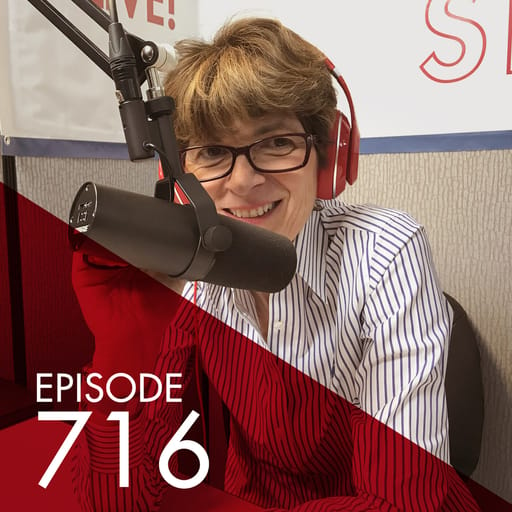
Transcript 0:01 Look, we're going to figure out how our companies are going to make our products achieve carbon neutrality by reducing the carbon emissions. That's what we're gonna set our goals out to be. 0:12 Once you put your mindset to that, once you decide you're going to do it, you're on the path. You're taking the journey. That's what we need to do. Right now, we're not doing it. 0:22 We're sitting there saying we're gonna wait till we figure out how to do it. 0:27 [upbeat music] Welcome to The Peggy Smedley Show, the podcasting voice of IoT and digital transformation, with your host, Peggy Smedley. 0:47 Hello, listeners, and welcome to a very special edition of The Peggy Smedley Show. As always, I'm your host, Peggy Smedley. 0:55 Today is Earth Day, so I'm bringing you an extra show this week to talk about Earth Day and a pledge. So let's jump right in. 1:07 More than fifty years ago, on April 22nd, 1970, the first Earth Day was celebrated. In the decades leading up to it, Americans were consuming large amounts of leaded gas. 1:21 Air pollution was common, and following the massive oil spill in Santa Barbara, California, in January 1969, Senator Gaylord Nelson announced the idea for a teach-in on college campuses. 1:39 A young activist chose April 22nd, which was a weekday falling between spring break and final exams. On that timeframe, Earth Day inspired twenty million Americans to take to the streets to demonstrate. 1:56 In 1990, Earth Day went global, and today, more than one billion people participate in Earth Day activities each year. Now, talk about making an impact. Now, we're talking a positive impact. 2:14 This is one of the largest global civic movements for sustainability. The organization, earthday.org, devotes its mission to this. 2:26 It aims to diversify, educate, and activate the environmental movement worldwide. Here's what's really impressive, at least to me. 2:37 It works with more than fifty thousand partners in a hundred and ninety-two countries to build environmental democracy. 2:47 In the course of five decades, this day has led to some big change, and today, there are workshops, panel discussions, and more all focused on restoring our Earth and our natural ecosystem. 3:06 The emphasis is on everything from natural processes to technologies and innovative thinking. So here are some of the key topics covered: climate and environmental literacy, 3:22 climate restoration technologies, reforestation efforts, regenerative agriculture, equity and environmental justice, citizen science, cleanups, and so much more. 3:40 There are so many efforts underway this entire week, but I want to narrow in on just one specific program, the SCS Global Services Carbon Neutral Certification Program. 3:55 Here, companies demonstrate carbon neutrality by reducing carbon emissions throughout their organizations, and they can offset their remaining product carbon footprint through the purchase of carbon credits and can certify their products as carbon neutral. 4:18 Now, here's how they do it. It uses a life cycle assessment framework to determine the product's carbon footprint. 4:28 Now, this can guide companies through a full scope assessment or focus strictly on the carbon footprint component. 4:38 Big news came earlier this week when this program was selected by Amazon as one of its third-party certifications for its Climate Pledge program. 4:50 This joins a lineup of other certifications already a part of the program, including Bluesign, Carbonfree Certified, CarbonNeutral by Neutral Capital Partners, Carbon Neutral by Carbon Trust, 5:07 Cradle to Cradle, EcoLogo, ENERGY STAR, Global Organic Textile Standard, Green Seal, and Amazon's very own Compact by Design certification. 5:24 Now, there's a whole host of others, but now if you haven't heard of Amazon's Climate Pledge program, I'm going to give you some of the details, which are pretty exciting. 5:35 The technology giant partners with third parties to highlight products that meet sustainability standards. To qualify, a product must certify by one of the sustainability certifications I've already mentioned. 5:50 For example, Amazon's Compact by Design certification identifies products that may not look very different but have a more efficient design. 6:02 Think removal of excess air and water and less packaging.Certainly there's a benefit here for Amazon. We all know that, right? But these products are more efficient to ship, 6:16 but at scale, these small differences can also lead to big savings in carbon emissions. So it has a benefit to be gained here. Still, Amazon is committed to reaching the Paris Agreement. 6:33 For those of you who might not know this, the Paris Agreement was signed in 2015, and it aims to keep global temperature from rising. The treaty provides a framework for financial, technical, and capacity building. 6:50 In September of 2019, the UN Secretary António Guterres hosted the Climate Action Summit in New York. Here he pushed for more ambitious climate pledges and increased funding. 7:05 At the end of the event, 77 countries were committed to achieving carbon neutrality around 2050. But Amazon is aiming to reach it 10 years early and being net zero carbon by 2040. 7:22 Pretty bold if you ask me. But if Amazon is behind it, then you know this movement has some legs, right? Because they want it to make it happen, much like many of the other companies who have said they're going to do it. 7:36 And we're seeing other big corporations have similar goals and targets. Okay. So what are we gonna do here? Are you gonna be one of those companies? So here's my opinion for today. 7:48 Earth Day is a great opportunity to ask yourself what are you doing to help move your company to a more sustainable world? We need to ask ourselves if we are taking the right steps to be circular, to be sustainable. 8:06 What can we do with ESG? How can we minimize water waste? How can we move to zero carbon? How can we inspire young innovators to step up to be more creative, to help us achieve the goals we're trying to achieve? 8:24 Simply, how can we be good stewards of the world around us? Here is the problem. We can't just do it one day, one year, one slow movement, or even just in one week. 8:40 We need this to continue in May, in June, July, and beyond, year, week, month, every day, every week, every year. And here's my tip and my challenge for all of you. 8:55 How can you continue the passion from Earth Day to the rest of the year every day, 365 days a year? How do you continue to do that? How can we take what we are doing today and fuel it for the future? 9:12 How can we build on the momentum? I would love to hear what you're doing. 9:17 I wrote a book with the idea, Sustainable in a Circular World, with the idea of getting people excited about it, inspiring people to understand it's not gonna be an easy road, and there's a lot of really smart people helping us all to get there, but what is going to be the way that we're all going to achieve our goals? 9:37 It's not an easy mission. So we have pledges. We have companies. It's no different than it was a tough battle to start wearing seat belts. No different than it was a tough battle for us to stop texting when we drive. 9:50 All of these, when we take these pledges, is to get us to understand we have to change the bad habits that we have, and that's what this is. We are all stewards of ourselves. We are stewards of our environment. 10:04 We all recognize, we did not realize in the beginning that we were destroying the environment. Or maybe we did, but now we all realize we have to clean up the ecosystem. 10:15 We have to move forward together and all go in the same direction. So what we have to do right now is figure out how do we solve the problems that we have. And now do you take that pledge? 10:28 Do you take a step forward and say, "Okay, what do we do to stop the damage that we've caused?" So now do we take the pledge that what we're hearing that it's Amazon? Do we take one of these others that are out there? 10:42 It really doesn't matter, but the ultimate idea is we now have this Earth Day that says, "Look, we're all doing it together." 10:51 If there are millions and billions of corporations out there saying, "This is how we do it," whether it's Cradle to Cradle or EcoLogo or carbon neutral or carbon-free certified or BlueSign, it really doesn't matter who you follow. 11:08 What really matters is are you willing to take a step forward to make your products better? 11:15 Are you willing to follow that so that you have a life cycle assessment framework so that you are achieving products as being carbon neutral? 11:25 Once you do that, once you start achieving those goals and saying, "Look, we're going to figure out how our companies are going to make our products achieve carbon neutrality by reducing the carbon emissions, that's what we're gonna set our goals out to be," once you put your mindset to that, once you decide you're going to do it, you're on the path. 11:47 You're taking the journey. That's what we need to do. Right now we're not doing it. We're sitting there saying we're gonna wait till we figure out how to do it. 11:55 The book I wrote, Sustainable in a Circular World, is helping you understand how do you get on that path. 12:03 I want you to read the book, understand the generations that we have, understand how do we get there, and once we all get there together, we can achieve these goals. 12:13 I know if you try it, I can try it, we can all be better stewards, and that's why this book will help you understand what you need to do. Read the book. 12:23 If you haven't, I will bet you you will start understanding what together you have to do. And for those of you who haven't, sit down, read a few pages a night. 12:34 By the time you're done, you will know who your partners should be and at least start getting a feel for how you can be a better steward and understand what Earth Day is all about. Together, we can be better. All right. 12:47 Well, that's what this special show is all about today, getting us thinking about how do we start participating in Earth Day. So I hope you enjoyed this special segment of The Peggy Smedley Show. 13:00 We've got so much more of these shows every Tuesday, because as you know, we broadcast live every Tuesday at 12:00 PM Central. So I hope you'll listen. 13:09 I hope you enjoyed this special edition that we did, because we wanted to bring it to you because we are focusing on sustainability and helping you be better citizens, helping us be better citizens of the Earth, and so that we can avoid all the damage we've done to our ecosystem. 13:25 But in the meantime, I'd love to hear what you have to say. I want you to tweet at me at connectedwmag or Peggy_Smedley. I want you to engage in a dialogue with me and tell me what you think. 13:35 Together, we can talk, communicate, or send me a message on LinkedIn. That's what I want. All right. Well, we are out of time for this special edition. 13:43 So as always, this is The Peggy Smedley Show, the podcasting voice of IoT and digital transformation. And remember, with great technology comes great responsibility. 13:51 Hey, check out our website, and most importantly, what I want you to do is send me messages. I want to hear from you. Have an awesome week. We'll see you next Tuesday at 12:00 PM Central. Take care. [upbeat music]