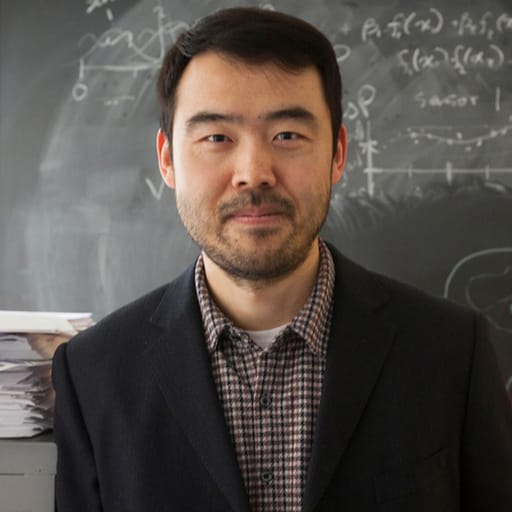
Transcript 0:00 You know, I feel like, uh, how we can utilize IoT for social impact, for social equity, my personal view is there are two important factors, right? One is the connectivities that we already, uh, uh, talk about, right? 0:13 The other side, I think, uh, I think, I feel oftentimes ignored, uh, is the engagement. 0:20 [rock music] Welcome back to The Peggy Smedley Show, your voice for our connected world, with your host, Peggy Smedley. 0:35 Hello, listeners, and welcome back to The Peggy Smedley Show. I'm your host, Peggy Smedley. My next guest's research focuses on energy and the environment driven by societal impact. 0:46 He is currently leading a National Science Foundation funded project to design a statewide public Internet of Things network aiming to bridge the digital divide between rural and non-rural America. 0:59 In addition to his teaching role, he also serves as the Kathy Dwyer Marble and Curt Marble faculty director at Cornell Atkinson Center for Sustainability. 1:10 Please welcome Max Zheng, professor at the Sibley School of Mechanical and Aerospace Engineering at Cornell University. Max, welcome to the show. Thanks for having me. Max, we're delighted to have you. 1:25 I thought we'd start the show off a little bit different. 1:28 I'd like to broaden the discussion topics from IoT and sustainability to actually talk about IoT for societal impact, which is, I think, a subject, if I'm not mistaken, you're very passionate about, and sustainability is one kind of su- s- kind of social impact, but there are many others that IoT can play a critical role. 1:51 I think if we think about it, there's things as zero hunger, uh, access to healthcare, telehealth, as many of us talk about, and even public transportation. 2:02 For, for this conversation, and it'll be very interesting, I think, to our listeners, I'd love to kind of begin our discussion here, if we may. W- what do you think w- w- if we start our conversation there? Yep. 2:15 Um, so I personally f- feel very passionately about IoT as a, a emerging technology that we should, uh, take advantage of this opportunity to create a more equitable and, uh, just society. 2:33 So this is something I'm very passionate and also I'm, uh, I'm working on. Uh, I can give a few examples. Yeah, that would be great. Around this one. Let's... Yeah, let's talk about some of those examples. 2:43 I think people learn so much from examples. So I actually, I went through the, uh, the previous program, you know, program, you know, in your talk show, and, uh, I think that one program you talk about, 2:57 uh, digital agriculture. I think that's a v- a very exciting area for IoT to play a very critical role, right? But, uh, my example here is that for to implement the agricultural robotics on a farm, right? 3:13 So, uh, to uni to enable the smart machineries and, uh, many other applications. So you need, uh, the infrastructure, right? To enable the real time positioning in a, uh, agriculture field, right? 3:28 And so in order to make that happen, you know, one of the most popular or reliable technology for the, uh, for accurate field positioning, uh, is so-called RTK. RTK stand for Real Time Kinematic. Uh, so 3:46 but you needed this infrastructure to enable the field positioning, and, uh, this infrastructure, I would say in general cost tens of thousands dollars, right? Of course, we want every farm, every single farm in the, 4:01 in the United States is equipped with this RTK infrastructure. As you can imagine, uh, tens of thousand dollars are not a small number, right? 4:10 And, uh, you may have some of those big farms are, you know, able to afford it, but, uh, uh, some smaller farm cannot, right? So essentially, 4:23 if we are not aiming at, uh, you know, for, uh, aiming at, uh, social equity, we may end up with, uh, creating dichotomy in our, in digital ag- in digital agriculture for those who have and those who have not. 4:42 So, you know, this just one example, uh, but, uh, my point here is that, uh, we really envisioning IoT as a, a public utility 4:54 so that we can have this free access, uh, to the entire society regardless of, you know, the income level or the social economic status. 5:05 So you describe something for the have and have-nots when we talk about the RTK and, and the positioning of it. 5:12 You know, it's the application of what we're saying, and, and correct me if I'm wrong, it's, it's surveying to correct for common errors in, in the way we're talking about positioning. 5:22 And, and if we're doing that, why are we looking at it that it's going to be for the have or have-nots? Are we not saying that society can help make this available for everyone? 5:33 I mean, we're, we're seeing right now Bill Gates trying to buy up all the land all across the country. [laughs] So I mean, here's a, a billionaire trying to say that there's a lot we can do with farming. 5:44 I mean, shouldn't he be able to make it a little bit more affordable and make it so that everybody should be able to have the right things for the right people? 5:54 We will certainly welcome, you know, for anyone to invest on a public utility, you know, public IoT infrastructure. So I think that would be good for everybody. 6:04 Uh, but at the same time we have to assume, you know, we have to ensure the equitable access.To those utility, right? 6:12 So by saying for those who have, who have not, here is, what, what I'm saying here is for it's likely, right, so some of those, uh, smaller farm or some of the farm who are struggling to make the end meet, right, they cannot afford the RTK infr- the RTK infrastructures, and, uh, they will be left alone, right? 6:34 They will be left behind in this, uh, you know, uh, digital agriculture revolution. So that's not what we... That's what we do not, uh, want to happen. So and that's the key here. 6:46 So if we want to use the k- the kind of technology, it's like in any technology, as technology advances, the same thing wh- when people started getting their smartphones and app for that, you know? 6:55 There were so many people who were able to have them and who were late to receive them, you know, when we were all talking- Right. Y-... about that. So what we have to do is think about we can't let the world go hungry. 7:07 Yeah. We have to make sure we're feeding the world, and we've watched many people in the world go hungry while others waste food. I mean, this is what- Right... we've seen, right? And now we have- Yeah... 7:17 technology and sensors that enable us to know when people go hungry. 7:22 I mean, you even have students, if, if I'm not mistaken on this, I know you can give me o- e- examples of this, who are constantly thinking about feeding the world. I mean, w- we have to... 7:31 I mean, that's one of the 17 UN sustainable goals is trying to make sure we don't have people in the world going hungry. 7:40 But I mean, isn't the idea be- tying the IoT and the UN sustainable goals to leverage so that we don't, and we're including all of us, that we have diversity and inclusion and that there, we prevent poverty? 7:53 Isn't that o- one of the many goals? Yes. So t- uh, to use another example you just mentioned here. 8:00 So we have in our local community, uh, there's a entire volunteered r- round program, uh, called, uh, M- Mutual Aid Tompkins. Uh, so basically they are, they're managing and deploying over 60 food cabinets. 8:17 Those are outdoor food, uh, food cabinets, you know, for community to donate, uh, imperish- non-perishable food and also for those who need, uh, who need food, right, to take, uh, to take the, to take the food. 8:33 The, so the, one of the challenge they are facing is that they had to constantly drive around for the entire county to check the inventory of the foods, of the food cabinet, you know. 8:47 Because some food cabinets are located in the area where, you know, whatever been put there are gonna be taken away very quickly, right? 8:55 So checking the inventory of those f- uh, food cabinets over, you know, over 60 of them o- over a, a large area is time-consuming and also labor-intensive in some way, process. 9:09 So my student in my class, uh, this is a introduction to IoT class. Uh, so they basically designed this IoT integrated, uh, food cabinet, right? So, uh, to en- essentially enable the wireless, uh, inventory tracking. 9:25 So essentially when, essentially have the weight sensors, right? Those are non-intrusive weight sensors at a different level of the cabinets. 9:33 You know, when the, when the, uh, when the inventory gets depleted, right, so the Mutual Aid colleague will receive a wor- re- receive a, receive a alert, right, saying, uh, "The cabinet is empty," right? "We need to 9:49 re- uh, restock, uh, the cabinet." So, uh, you know, this is, uh, I would say a small thing to do, right, but as in time make a lot of difference, uh, in term of how the community can help, uh, help each other, right? 10:05 So I, in my eyes, I think it's a big thing. 10:07 I mean, we've been using sensors in vending machines so that people can get candy when they know row J is empty, using that for that very same thing that you just described, but now we're helping feed the hungry. 10:19 I mean, it's a beautiful thing that I think that your students have figured out and said, "Hey, vending machines can do it. 10:24 Why can't we use these pantry-type cabinets, these food pantries, to help feed the hungry when they need it, to know when a, when a shelf is empty, that they can, and, you know, the right people are alerted to always make sure there's food for those who need it, and there's never a depleted shelf?" 10:42 I think that's a wonderful thing and, and I guess my question is, is there a way that, you know, there's always vandalism. There's always the, the, the mischievous type of behavior. 10:53 Are they able to sense and know when food pantry areas are, are there problems? Are they able to tell those ki- types of things? I hate to say that that, you know- [laughs]... 11:02 to think about that, but the, that's the world we live in today. I know. Uh, are they able to sense those types of things as well? Uh, that would be our next step, right? So, uh- Okay... 11:11 that was our next iteration will, will helping, and, you know, hopefully, right, helping those capabilities. 11:18 Uh, but, but, but I think I, I echo your point here, is that, uh, we are not, in, in many way, uh, we are not really inventing new technology, but how, but, uh, the, the question of how we can bring a technology to s- some, to a certain sector of the society, uh, who have been really left behind in the technological revolution. 11:44 So that's a, you know, that's like a, a recurring theme for, uh, for many thing we are doing here. Well, I think that's what you described. It's IoT for societal impact. I mean, before- Yeah... it was IoT for business. 11:57 This is IoT for improving society. I mean- Right... when you can br- I think that's the thing that you described, and you now have your students thinking ways about how we can do things for good, you know? Yes. 12:09 And that's really- Right... 12:10 the amazing side of this, is we're saying, "Look, you've been using it, and how people can they get, turn it to revenue, turn IoT in for revenue, return an ROI."But this is now how can we do it for society? 12:23 How can we help our societies become better and stronger, and communities participate? 12:28 And that's what I'm hearing you describe, that you're helping encourage your students to be more innovative, more creative, rebuild communities who are being left behind. Yes. 12:38 And, you know, also, uh, to be honest, the students also, they feel really passionate about it. 12:43 Me- you know, one student told me, he said, "You know, uh, this is the first time we work on a project not just for the grid, but for the public good," right? "For the benefit of the society." 12:57 So they're, they feel very motivated, uh, to devote their time to it, right? So I think that's one very good outcome from that projects. 13:06 So when you look at projects like this or helping your students, you know, now we're at that point where w- we have 17 UN, uh, goals that we have. You know, the UN has dec- decided, you know, that- Mm-hmm... 13:18 you can make a difference in almost any single one of those, if you think about it. When I think about any of them, I say, like, innovation or infrastructure or improving our cities right now, or hunger. 13:29 We, and we always talk about reducing hunger, and we hope we're doing it. Inc- inclusion, you know. Uh, the list goes on and on. 13:36 Are there one or two of those right now that your students say, "I'm most passionate about... This is where I- Mm-hmm... 13:44 feel I can make a contribution," that your students are saying, "That's, that's where I, that's my bullseye. That's what I'm going after." Yeah. 13:51 I would say, let me give you one more example for that, and then I would sort of want to bring to the another sort of more higher level. Uh, so another example is about, about telehealth, right? 14:05 So in the, in our society is, uh, so especially in the rural area, so lack of, uh, primary care physician causing many problem, right? 14:17 One of the, uh, result from this lack of, you know, uh, healthcare in rural area is the, the rural residents, they typically go to those regional hospitals for some, you know, say, some really routine monitoring task, right? 14:34 You know, like, uh, for blood pressure reading, uh, for some, you know, for some other very routine type of tests. So but I, I... 14:43 But the result is that sometime those visits, right, those, like, routine visits overwhelm the capacity of those regional hospital. 14:55 So and the question is, of course, you will say, you know, the telehealth can, can really help, right? 15:02 So a patient can, say, monitor their blood pressures, and then the data transmitted, you know, securely, uh, to the database of a hospital. Uh, but we have a deal with this, uh, connectivity issues in rural America. 15:18 So, you know, I don't know whether you have living in a, like, in a rural area. You cannot assume re- reliable cellular connection in many part of the country, right? I mean, for many reason. 15:31 I don't, I don't wanna get into the detail. [laughs] So that you could have the technology, but you don't have the connectivity to trans- to transmit the, transmit the data. 15:43 So that's, you know, that's one of, one of the ongoing project we are working on, and how we can enable telehealth in rural area 15:54 as, you know, without reliable, without reliable cellular connection or just without the connection at all, right? How we can enable this? 16:02 You and I both know without an internet connection, I mean, that's life or death, especially in a rural community that can't get immediate care, especially when we talk about in, in the United States right now that close to 80 million people are retiring. 16:20 If they're moving to rural America or whatever might be happening, we need that telehealth. We need to be able to have- Mm-hmm, mm-hmm... that immediate care. I mean, that's what you're really describing here. Yeah. 16:30 You know, actually, there's I, you know, I personally experience it, right? So I remember, uh, we have a family friends who, uh, uh, we were visiting one of the state park around, you know, around here. 16:43 Uh, so, uh, this family friend who was elderly, uh, who show me, uh, who showed us the, uh, you know this medical alert device. You know, this is like a, you know, wearable, uh, watch, right? 16:55 Uh, basically if, you know, God forbid, if something happened to her, you know, she fell, right? 17:01 Uh, you know, this device is supposed to alert, uh, some remote, uh, medical, the medical personnel, and they will send, you know, ambulance or something, right, to, uh, to help her. But, uh, 17:15 if you look at the fine print of that device, right, it require cellular access. And, uh, what happened to be, uh, what happens is in that particular park, there's no cellular connection at all, right? 17:28 And, uh, you know, that's what, you know, what, you know, like I said, if, uh, God for- anything happened to her, this, this device is we- is useless, right? Uh, you know, this happen to, 17:41 to many American, uh, I would say, on a daily basis. Uh, so that's why I, you know, I feel, like, very passionate about, you know, this back to your UN sustainable development goals, right? 17:54 Uh, we are passionate about how we, how IoT can help, right? How IoT can help address those challenges. So to... Hmm. Yeah. I was just gonna say, we're at this point now, we need to have technology. 18:08 If we're connecting billions, you know, millions of devices, I mean, and, and connections. Our-- There's just so many in, in one's home right now, just so many, uh, you know, with an IP on it. 18:21 We need to make sure they're viable. I mean, that's what we're talking about right now. That's what you're saying. 18:26 So if it's a medical device versus us connecting a light bulb that has an IP on it, we need to ensure a medical device, whether it's a pacemaker or whatever it is, if it's a watch, whatever it is that's connected to something that's happening and needs to alert a medical professional, it's a- it's gotta always be on, always be working- Yeah... 18:44 wherever you are in the world. Yeah.Exactly. So it had to be, uh, be trackable, right? Yeah, uh, anywhere in the world. 18:53 Uh, so I wanna go back to another point here, is, uh, you know, I feel like the- for IoT, uh, in term of, uh, how we can, uh, how we can utilize IoT for social impact, for social equity, um, I think there are two, you know, uh, my per- my personal view is there are two important factors, right? 19:12 One is the connectivities that we already, uh, uh, talk about, right? The other side, I think all... I think, you know, I feel oftentimes ignored, uh, is the engagement. So my favorite quote [laughs] 19:28 is, uh, you know, this is field or dream quote, right? You know, "If you build it, they will come," right? So but uh, for, for implementing IoT network 19:40 in a rural area or in the urban area with, with diverse, uh, population, right? You cannot assume they will come in, you know, just because you build it, right? So 19:53 I just make a point that we wanna turn IoT as a public utility, right? But it doesn't mean, you know, if someone, right, someone build this free public universal access utility, then 20:11 all sector of the society will benefit, right, from the IoT applications, right? For... 20:18 It, it's just not true that we as, you know, for some sector of society, uh, we have to, uh, engage them, right? 20:30 Uh, you know, through, you know, through workshop, through education, or through some community activity to introduce the technology to them. 20:39 And in addition to that, we also need a champion from our community to basically show the member of the community how this can be, can benefit us. You know, I can... 20:52 You know, I have, uh, many examples where very good intentioned effort to bridge the digital divide end up not making much difference by ignoring this engagement piece. 21:06 And that's a very critical point, because sometimes that good intention doesn't necessarily deliver, is what you're basically saying at this point. 21:15 So we have to be very careful about that for all of those that we're, we're talking and what you're trying to reach in the rural, rural communities. Yes. You know, many... 21:25 To be honest, many part of the society, uh, don't even recognize the, you know, the term called Internet of Things, right? Um, so and, uh, so it's sometimes hard for them to imagine what IoT can benefit them. 21:39 So, uh, you know, as part of my project, actually we spend a lot of efforts in term of in how we communicate, right? 21:48 How we communicate, uh, technology and potential benefits to, you know, to some sector of the society, and then how to engage them, how identify champion, how support those champion from the community, right? 22:03 To lead those efforts. 22:05 And, you know, oftentimes, you know, for example, you know, as a, a research university, we may not be as effective in promoting technology as a member of the community, you know, one of their own, right? 22:20 So and then we basically how to support them and, um, and hope for them, you know, work with them and to create the, you know, create the benefits, uh, for the society. 22:33 In your mind, are there some tips that you would give right now that we need to do to kind of help move this along right now to make sure that we're doing the right things for these products? The products might have... 22:47 You know, you build a product and you think you're in the right intention, but yet there's still those major hurdles to get the product to the right people at the right time. Yeah. 23:00 Um, so I would say the, the most important thing is, is community engagement, you know? That's what we learn, uh, from, uh, you know, my own experience, right? And also from many others. So I think for... 23:16 We have to comm- you know, like I said, we have to communicate, uh, what is IoT, right? Um, but also time, we have to be, uh, transparent in term of the impact or the consequence of the technology. 23:30 You know, for example, you know, in term of the privacy, right? In term of data security. Uh, that we have to be able to, to talk, to talk through it and, uh, and also design our products, right? 23:43 Design our applications, right? With those potentially consequences in mind, right? 23:53 And, uh, you know, through, you know, I think we already see, you know, from my own experience and, uh, also from others from that this kind of engagement process will eventually create a much bigger and also impactful market, uh, for IoT technology. 24:14 And, you know, in some way that's, uh, what, you know, what I see my role is, uh, as a, a academic researcher, uh, in the IoT, uh, in, uh, in the IoT domain. 24:25 When you look now a- ahead, as you start seeing, as we start applying IoT and sustainability and how all this comes together, how do you envision it then? So 24:39 my vision is that in the future, probably in the near future, IoT will become a public utility. It's just like electricity. It will be a basic need for the society. 24:53 And also-I envision that all sectors of our society, regardless their socioeconomic status, will benefit from IoT. And, uh, I think we really have a really good opportunities to do so. 25:09 And, uh, but, um, you know, as in time, I think as, uh, the, you know, all, you know, as a industry, uh, as a research community or as the, and, you know, public advocates, right? 25:24 Uh, we have to beco- we have to consciously think about how to apply IoT technology to bring social equity, right? 25:35 Uh, so you know, like, some of my example shows, you know, sometime it's not we're not inventing new technology, but how to bring technology to some part of the society who have been left behind, right? 25:51 So those are, you know, those are my visions. So there's a lot of work to be done. I mean, this is what needs to be known to all the companies that are out there. There's still work to be done. We're not there yet. 26:01 We still have much more work to do, is that's what you're saying? Yes. Many more years in the journey ahead, is that what we're looking at? 26:08 I mean, when we say there's work to be done, there's a lot of work to be done, or little work? How would you describe that then, looking ahead then? 26:16 If we work together, you know, by we, I mean, you know, the industry, the research community, and, uh, you know, NGO and government, right? If we put as emphasis, I don't think it's gonna take that long at all, right? 26:30 But, you know, if we are, you know, if our goal here is to see how, uh, we can generate, uh, profits, right, from deploying IoT and the social impact 26:44 and the social equity is only, probably only a side, um, you know, as, a- another side outcome, right? Uh, I don't... I, I think that gonna take very long. So that's why, you know, I'm hoping, uh, that, uh, we'll put 27:02 the social impact as almost as i- important as, uh, economic return, right? So in, you know, when we think about, when we think about where we're envisioning, uh, the future of the, the IoT technology. 27:18 Well, I tell you, Max Zheng, professor at the Silby School of Mechanical and Aerospace Engineering at Cornell University, this has been really an, wonderful conversation. 27:29 What is your URL so our listeners can learn more about what we talked about? Uh, it's energy.mae.cornell.edu. Max, thank you so much for all your time today. All right. Thank you. 27:45 Okay, listeners, that's all the time we have for this segment. Make sure to share and subscribe to our episodes each week. Share your thoughts with me on Twitter, @connectedworld. 27:53 Please check out our website at connectedworld.com or our show website at thepeggyסmedley show.com. All right, don't forget to check out Project Sustainability podcast at pspgreen.libsyn.com. 28:05 This is The Peggy Smedley Show, your voice for our connected world. And remember, with great technology comes great responsibility. We'll be right back after this commercial break. [upbeat music]