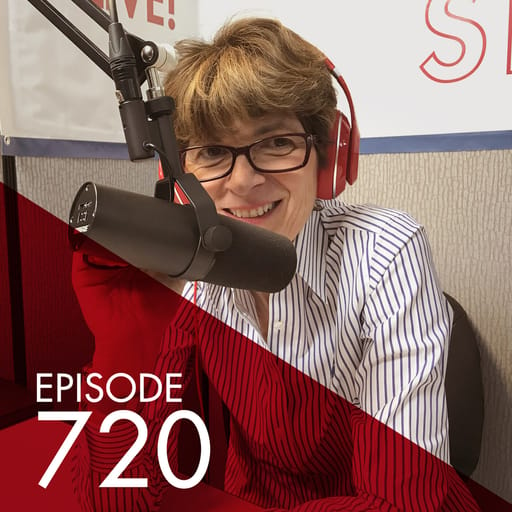
Transcript 0:00 [gentle music] Highlights women are more likely to leave manufacturing than men, and fewer than one in three manufacturing professionals are women today. 0:11 How can we do more, or what can we do better to get women involved? Consider what attracts women to a career in manufacturing. 0:22 The study shows the top three priorities when choosing a workplace are attractive pay, attractive benefits, and a work/life balance. 0:40 [upbeat music] Welcome to The Peggy Smedley Show, the podcasting voice of IoT and digital transformation with your host, Peggy Smedley. 0:55 Hello, listeners, and welcome to today's edition of The Peggy Smedley Show. As always, I'm your host, Peggy Smedley. 1:02 This month on the show, I'm really enjoying talking all about sustainability, and today I want to narrow in on manufacturing and our workforce. 1:11 We know that manufacturers are still struggling to fill a lot of the jobs, and a new report shed some more light on this challenge. And I'm gonna dig into some of the details, and on... 1:23 I will give you my thoughts on what needs to happen next. But first, let's talk about, uh, who are some of the guests we're gonna have on the show. 1:30 I'll be talking with, uh, Liviu Tudor, who's the founder and president of Genesis Property, and then I'm gonna wrap up the show with Anne Munarrio, who's the senior manager of climate change and sustainability services at Ernst & Young. 1:47 So stick around. We've got a great show for you. So let's get started. Manufacturing employment in the United States has held somewhat roughly around 8.7% of overall employment for the past decade. 2:01 2020 was certainly a hard year for many. For manufacturing, it resulted in a net loss of about 578,000 jobs. That number represents nearly six years of job gains. 2:18 Yet, at any given moment in the past six months, nearly a half a million, about 500,000 jobs, have remained open in manufacturing. The reasons are pretty vast, and we've all talked about this so many times. 2:33 But generally, we're seeing a generation of workers begin to retire. We all know that. We've all talked about it. You have heard me say it over and over again. 2:47 We don't see enough potential new workers interested in manufacturing. 2:54 Some believe this is because new en- entrants have a different expectation for jobs and careers, or simply a lack of an interest in the industry. 3:07 Others believe there is insufficient education or a lack of effective job training programs. Whatever you believe, we, we clearly have a problem. 3:21 And as I see it, we have a very serious problem, at least for the next few years, and this is what we need so desperately to address. 3:34 We have a really big problem when it comes to attracting and retaining a quality workforce, and I think we can all agree on that. 3:46 There's no one out there that I think can argue or debate me against that point at this very moment in time. So let's take a look inside that new report I mentioned at the top of the show. 4:00 The 2021 Deloitte and the Manufacturing Institute Manufacturers Talent Study digs into this, and here's what it found. 4:10 US manufacturing ex- is expected to have roughly 2.1 million unfulfilled jobs by 2030. The impact of not filling these jobs is going to be huge. But now, there's a lot of things we have to consider here, though. 4:27 Roughly eight in 10 manufacturing executives say that not filling jobs has a moderate to very high impact on maintaining production levels. Filling those jobs isn't going to be ea- easy either. 4:42 US manufacturer survey believe that finding the right talent is now 36% harder than it was in 2018. This comes as the unemployment rate has nearly doubled the number of available workers. 4:59 Now, certainly, there are some organizations taking steps in the right direction. Now, let me give you a couple of examples because I think we have to look at what's happening. 5:09 The Connecticut Digital Credential Ecosystem Initiative is one example I want to share with you. 5:16 This is a network of companies, community colleges, and government agencies that aim to develop a new kind of pathways to digital careers. 5:25 It is helping community colleges issue industry-validated credentials to support career pathways across the state of Connecticut. 5:36 Employers will be able to approve the knowledge, skills, and abilities for those credentials. Now, I like what's happening in this state for many reasons. 5:48 It is creating the path-For young talent, the path to be able to see the journey ahead that you need. So let me give you another example because I think we need to look at examples to see how we can grow. 6:03 General Motors Technical Learning University began in twenty seventeen, and it has a focus of improving the technical ability of skilled trade workers and salaried manufacturing engineers. 6:18 Since it began, it has trained more than three hundred GM employees. In August twenty twenty, it completed a two million dollar upgrade to manufacturing laboratory facilities. 6:31 And in the next three years, it anticipates training up to thirty-six hundred US-based workers on vehicle launches and in other critical areas. 6:41 Now, these are all great examples of programs in the works, but we need to do more to address the two point one million shortage we're facing right now. Okay, so here's my opinion for today. 6:57 We need to take steps today to solve this workforce shortage. If we don't, we're going to struggle to keep up and to keep pace with other countries as we hear often. 7:11 But more importantly, how are we going to continue to inspire others to want to have these important jobs? We're aren- we aren't going to be able to keep our clients very happy if we don't fill these jobs. 7:27 We aren't going to be able to respond to n- to new market opportunities. We aren't going to be able to support new production and innovation. 7:38 Rather, we're kind of just going to be spinning our wheels, no pun intended, intended, maybe GM, maybe we are, trying to get work out the door. We need to do better, and it starts with our workforce. So here's my tip. 7:55 I actually have two tips for today, which I love to give tips on manufacturing because manufacturing is really something that is near and dear to me for a lot of reasons. But first, 8:07 we need-- because it's my first book I wrote is, is Mending Manufacturing, we need to consider diversity, equity, and inclusion. Diversity and inclusion are already on the radar of many manufacturers. 8:20 In the supply chain, more than half of the organizations have an objective or goal to improve DEI. We know that. That's exciting. While a quarter have formal targets, this is according to Gartner. So that's great. 8:36 We're moving in the right direction. While we're taking these steps in that direction to do that, the reality is there are still an entire subset of our population that aren't even tapping into that yet. 8:49 Let's consider one for just a minute. Women. Okay, women. 8:55 The two thousand and twenty-one Deloitte and the Manufacturing Institute Manufacturing Talent Study, oh my gosh, I mentioned, it's such a long title, earlier, highlights women are more likely to leave manufacturing than men, and fewer than one in three manufacturing professionals are women today. 9:14 How can we do more, or what can we do better to get women involved? Consider what attracts women to a career in manufacturing. 9:26 The study shows the top three priorities when choosing a workplace are attractive pay, attractive benefits, and a work-life balance. But this goes deeper than just offering fun perks. 9:43 This speaks to the culture of a manufacturing environment. 9:47 At a very granular level, manufacturers need to create a culture that is inclusive, that starts from the top and needs to permeate throughout the entire organization. 10:03 We need a culture shift to help us find the talent that we so desperately need. My second tip is manufacturers need to go digital if they haven't already. 10:17 Artificial intelligence, the Internet of Things, digital transformation can help fill some of these gaps. 10:26 It can help do work faster and more efficiently, and it can make the work more attractive to workers helping to also fill in some of the gaps. 10:37 We need to show workers that manufacturing can offer a rewarding career with that work-life balance. We know the younger generation have learned from their parents, and they don't want to work those long, grueling hours. 10:53 They want that work-life balance. Technology is one way to do that. I'm-- And here's the really important thing. I'm curious, what would you add? What have you learned from all of this? 11:05 What else can we do to tap into to solve this worker shortage? But here's something that's very important. We are seeing this, whether we want to admit it. Tech- technology itself is taking this transition, 11:21 and we are seeing, as what has been happening since COVID, that middle management who has not been properly prepared, has not been properly trained, is now being squeezed out. 11:34 If they haven't been prepared how to move up the ranks as the mergers happen or now we're working from home or things are happening and they haven't properly been upskilling, they're being outskilled, right? 11:48 They're being put out of jobs. And who's to blame for that?So the problem is we need workers, but what are the workers we need? Technology is taking over because as it should, but who are the... What are the jobs? 12:05 Who are the people we need? Did we as employers do the right things to train our employees to take over these new positions we need? 12:14 So the middle management workers are finding themselves out of jobs and what are the positions that are available? Did we properly skill and train the people we had? That's the problem we're struggling with today. 12:29 What are the right skills that we need in, in the employment that we have? That's part of the challenge that manufacturers in every industry is facing today, and that's the challenge we're seeing in transportation. 12:43 They don't have the right truckers. They didn't do the right things to make sure we had the right people when we need them in the right places. And a lot of it has to do with re-skilling, upskilling. 12:54 We have a lot of things we have to... And digital transformation is training and taking over in a lot of different ways, and that is what happens when new technology comes into play. 13:03 And everyone can say, "Well, technology's taking over." Technology just makes the transition, the transformation, and that's what it's all about. 13:12 So we all have to think about how do we leverage technology in the best way possible, and that's where it comes into play. I'm really curious about what you think about the discussion today. 13:23 I'm out of time for this first segment, but I want to hear your thoughts, so I would love for you to continue this conversation with me on Twitter. So I'd love for you to tweet at me at connectwmag. 13:33 Share your thoughts with me. You might not agree with me, that's okay, but I'd love to know what you think. So again, tweet at me at connectwmag. 13:40 Check out our website at connectedworld.com, our show website at thepeggysmedleyshow.com. We're gonna be right back to continue our conversation with our great guests. So as always, check us out as... 13:52 on the Peggy Smedley Show website, as I mentioned. This is The Peggy Smedley Show, the podcasting voice of IoT and digital transformation. And remember, with great technology comes great responsibility. 14:01 We'll be right back after this quick commercial break. [outro music]