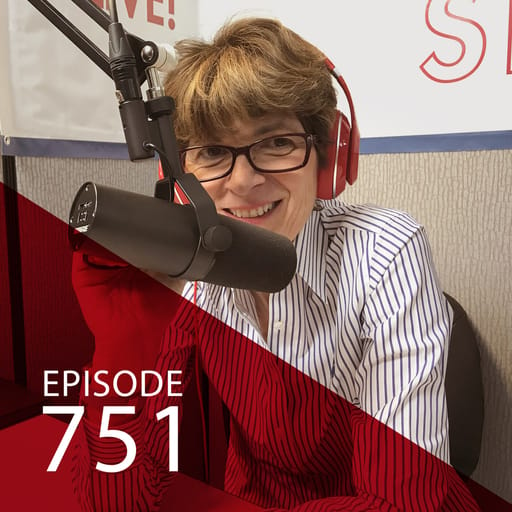
Transcript 0:00 Microsoft has a vision, and the premise is this: in the future, mobility will be more sustainable, safer, and more productive. There's a lot to talk about there. We have a real opportunity here. 0:18 If we are willing to take it, we can develop a lot of creative solutions, but the challenge, though, is how are we gonna do it? How are we gonna collaborate with partners? 0:31 How are we gonna be open to create the solutions that make our world more sustainable? 0:39 [upbeat music] Welcome to The Peggy Smedley Show, the podcasting voice of IoT and digital transformation, with your host, Peggy Smedley. 0:57 Hello, listeners, and welcome to today's edition of The Peggy Smedley Show. I'm your host, Peggy Smedley. If you joined me last week on the show, then you heard me talk all about technology past, present, and future. 1:10 I argued that we can't simply look to the future. We need to consider our past, present, and the future. We need to look back to look forward. 1:20 We need to know our history, our current industry challenges, and our future opportunities. So for today's show, I want to do that with one very important vertical: mobility. 1:34 So let's talk about everything from automotive to city mobility. So there's a lot to really talk and kind of unpack, as I like to say. So let's look at what has evolved in the past year. 1:47 Let's look at the current state of the market, and then let's look at the future. So stick around. We're, we're gonna talk all about mobility on this first segment, so there's really a lot to really engage in. 2:00 Later on in the show, I'm going to be interviewing one very special guest. I will be talking with Sanjay Ravi, who is the General Manager of Automotive, Mobility, and Transportation industry at Microsoft. 2:14 So we're gonna talk specifically about what Microsoft has been doing this past year, how sustainability, digital transformation plays kind of what into what we're talking about here in m- automotive and what Microsoft is doing and what they plan to be doing, uh, specifically in automotive, and we're gonna look to the f- what the future has to do with, uh, in, in their plans in, in automotive, but more specifically, what they are gonna kind of, uh, tell us all about things at CES in the next couple of weeks. 2:50 So, uh, maybe we'll get some secrets out of them, too. So stick around. We've got a lot to talk about there. But first, let me give you my thoughts on the state of mobility. 3:00 Let's start with city mobility and then dig into automotive. Cities are facing one big challenge: failing infrastructure. Boy, how many times have you heard that? 3:11 I think if you got a nickel for every time you heard failing infr- infrastructure, I think you'd be rich. 3:16 At peak travel times, for example, Birmingham, the UK's second-largest city, behaves like a city a third of its population in terms of economic output. The city isn't alone. 3:31 Even with hybrid working arrangements for many, there is a strain on the city's infrastructure systems. So what if we reimagine mobility? That is something we are all doing already. 3:48 Whether we want to or not, it is happening very quickly. Car-sharing services are on the rise. 3:57 The car-sharing market is anticipated to grow more than 20% between 2021 and 2027, and this trend extends far beyond the Ubers and the Lyfts of the world. 4:11 As another example, Volkswagen's daughter company, Urban Mobility International, has launched an electric vehicle car-sharing service called WeShare. Now, how very cool is this? Now, think about that. 4:24 The goal is to reduce the number of cars on the city streets and to use those that remain more effectively. Now, this is very creative if you think about it. 4:37 The company uses AI to monitor demand and parking behavior trends. Now, this enables it to optimize its services and minimize operating costs, and guess what? This extends far beyond our roads. 4:53 Now, if we let our imaginavi- imagination kind of drive us further, we can even reimagine our transit systems, our airports, and the list go on and on, and so much more will come to mind. So think about it. 5:08 We can then reimagine travel. 5:11 I love the example from Amadeus and Microsoft from a year earlier w- that we talked about, or actually I said, should say earlier this year because we're not into 2022 yet, but it's almost in. 5:24 Together, the companies are harnessing cloud technology to innovate and explore how new products and solutions can create smoother travel experiences in the future. They have three clear areas of focus. 5:41 This is what I like. 5:43 W- number one, they're gonna foster collaboration across the entire travel industry to create new hyper-personalized services and industry offerings tailored to the unique needs of the travel ecosystem.Now come on, who doesn't want that? 6:03 Personally, I'm all over this idea. I just think it's so awesome. 6:08 They're also focusing on joint innovation and product development, and they intend to accelerate the move of Amadeus' technical platform to the public cloud. 6:21 I'm truly excited by the intent here because of the focus on reimagining travel. 6:28 We all hear the complaints of travel, but now here technology players are stepping up saying, "We can do something to make the process better." And this simply is just one example. Just one example. 6:44 My point here is in the past year, mobility has changed dramatically. Just dramatically in just one year. 6:52 Companies are rethinking how we move, just how we move, and just mobility alone by the way we want to travel in some new, unique ways. 7:04 Now, I wanna take the last few minutes of the show that we have to talk specifically about how to-- how the automotive industry and how automotive is evolving in just this past year. 7:16 Now, again, in a year, in twelve months, we've seen a lot happen because of the pandemic, but what can we expect in the months ahead? 7:25 'Cause we're tired of talking about the past, so let's kind of reimagine or kind of think about what, what's gonna happen. We're steadily progressing to a more automated driving. 7:37 Cruise and GM have teamed up with Microsoft to commercialize self-driving vehicles. Volkswagen Group has partnered with Microsoft to accelerate the development of automated driving. 7:51 And Bosch is also working with Microsoft to develop a software-defined vehicle platform for seamless integration between cars and the cloud. 8:02 Hitachi and Rii announced their partnership to accelerate their transition to EVs. 8:09 So you can see there is a lot of partnerships out there, and I could share dozens of more examples with all of you on this show, and we couldn't get through them all. 8:19 But the idea is there's a lot of partnerships, there's a lot of creative ideas that's reimagining the automotive industry. 8:26 But the bottom line is this: automated driving can help improve passenger safety while reducing congestion. The challenge is that these solutions require large scale computational capabilities. 8:43 We need data from the road and weather to detect obstacles. We need data from the driver behavior. 8:52 We need data that is more machine learning algorithms to learn from billions of real and simulated miles driven. 9:02 Companies like Volkswagen and Microsoft are addressing this, and they're talking about it, and this is only going to speed up as we look to the future. 9:12 By twenty twenty-five, Volkswagen Group will invest around twenty-seven billion euros in digitization and increase the proportion of in-house development of software in the car. 9:27 Quite simply, city mobility and our cars will become more connected, and they need to be connected in a way that makes us safer and easier for us to get around. So okay, let's talk about what my opinion is for today. 9:42 We can either disrupt or what do I always say? Be disrupted. How people get from point A to point B isn't the same as it was a hundred years ago, and it won't be the same a hundred years from now. 9:58 Maybe a year from now it's gonna be different, right? The way-- Based on how we're seeing it accelerate, it won't be the same ten years from now. That's what's so exciting right now. 10:09 We are witnessing this change happen right before our very eyes. The pandemic has changed a lot, and yes, but there is more happening here than just talking about the pandemic. 10:21 There's a lot happening because we're enabling it to happen. 10:25 Transit, cars, and more are changing as people, businesses, and cities are thinking about how to be more sustainable, more productive, and at the same time, technology is advancing and enabling all this to happen. 10:43 This is opening up the door for more innovation like autonomous vehicles. It opens the door for an entirely new mobility of ecosystem. 10:58 History tells me, and has told all of us, innovation will not slow down. That's what I'm seeing. In fact, it tells me the pace of change is only going to speed up. 11:11 And if you or anyone else thinks it's not, well, then guess what? You're missing, missing a huge opportunity. 11:19 So again, as we think about what's gonna happen, we have to think about how are we going to take this opportunity to invest in the future, but by also looking at what's happened in the past. 11:31 And I know there's a lot of innovators out there that say we shouldn't look to the past because technology has showed us that we should only look forward. But I don't think that's the right idea. 11:41 We have to look to the past briefly to understand how the future is going to change. We have to see what has occurred to understand about the future. 11:51 So I've said this already on this segment, we need to reimagine mobility.On the next segment, Microsoft's Sanjay Ravi will share specific examples of what is, what is coming up at CES. 12:04 Because I've talked to him briefly before we are gonna have our interview, and what he's really shared with me and what I think I like about our dis- brief discussion, is that he's going to unveil some things that they're going to be talking about at CES, but what I really love in his of, i- his vision for mobility is what he sees for the next decade, and that's what I want you to stick around for, is letting him share with us what that means. 12:32 Microsoft has a vision, and the premise is this: in the future, mobility will be more sustainable, safer, and more productive. 12:45 And that's why I hope you'll stick around to hear what he says that means, because there's a lot to talk about there. We have a real opportunity here. 12:54 If we are willing to take it, we can develop a lot of creative solutions, but the challenge though is how are we gonna do it? How are we gonna collaborate with partners? 13:06 How are we gonna be open to create the solutions that make our world more sustainable, more safe, and more productive? 13:17 It's very essential that we understand that, because this changes the way we've done things 100 years ago when cars first started driving on roads. It's a different way of looking at our cities. 13:32 Again, I've said this before, we have to reimagine our cities. COVID has now said to us when we think about it, we're all not going to be in cities. What is the rural and urban development going to look like? 13:45 We have a failing infrastructure, and for that very reason, we can't build the roads the way we used to in the past. 13:52 That's why looking back doesn't mean we gotta look forward the same way, but we have to look back because we can't build those roads and the infrastructure the same way because the technology is different. 14:05 The way we look at our technology and our innovation is completely different, which means we have to look forward, but we have to understand what that's going to mean for the way we commute, the way our technology's going to bring us from point A to point B, and reimagine what that means. 14:24 Reimagine what that means with machine learning, AR, VR, digital twins. All of those things are going to come into play, and we have to be thinking about those. 14:35 And I think sometimes we forget advancing technology makes us think completely different about how all of these solutions will come into play and how we will use them. All right. 14:47 Well, we're out of time for this segment, but as always, if you have thoughts about what we've just talked about, I want you to tweet at me at connectedwmag. 14:57 Share your thoughts, because I'm sure you have an opinion that's completely different than mine, or maybe you agree with me, but that's what we want you to share with me. 15:04 Check out our website at connectedworld.com or the show website at thepeggySmedleyShow.com. 15:09 Stick around, Sanjay Ravi is going to be here with us and we're gonna hear him talk about it, and we want to know all the exciting things he's gonna share with us, and he's gonna let us in on a few things that are happening at CES. 15:21 All right. This is The Peggy Smedley Show, the podcasting voice of IoT and digital transformation. And remember, with great technology comes great responsibility. We'll be right back after this quick commercial break. 15:32 [upbeat music]