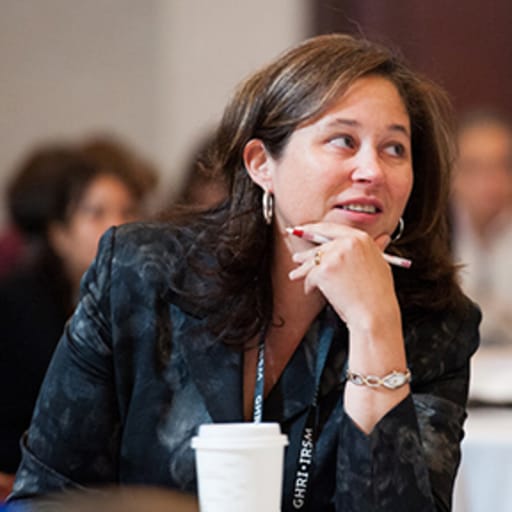
Transcript 0:01 If you're gonna develop policies that are meant to affect the lives of youth and young adults, then they need to be at the table, I know that seems like an obvious thing to say, in helping to shape those, whether it's a policy or those services. 0:14 So making room for them at those tables really for, um, ensuring getting out of the way in some cases. 0:22 [laughs] Uh, I have many of these incredibly talented leaders and future leaders in my classrooms that I'm, you know, I learn with. 0:34 [rock music] Welcome back to The Peggy Smedley Show, your voice for our connected world, with your host, Peggy Smedley. Hello, listeners, and welcome back to The Peggy Smedley Show. I'm your host, Peggy Smedley. 0:49 My next guest studies the impacts of population health interventions on social, gender, and health inequities. 0:56 Her research focuses on evaluating the role of different governance approaches and models in public health systems. 1:03 In addition to her teaching role, she is currently the director of the Dalla Lana School of Public Health Center for Global Health and co-director of the WHO Collaborating Center on Health Promotion. 1:15 Please welcome Erica Di Ruggero, associate professor of Dalla Lana School of Public Health at the University of Toronto. Erica, welcome to the show. Thank you so much for that warm welcome, Peggy. 1:28 I'm delighted to be here. 1:29 Well, I'm, I'm excited to have you on the show today because I think this is really a very interesting topic to really talk about for this month that we're, we're getting into these discussions because I think COVID has forced us all to really learn a lot of lessons. 1:44 Whether we truly continue to, to advance them will be the interesting thing. 1:48 And, and I would love from your perspective with the pandemic, uh, especially like when I look at a place like, uh, uh, Canada, you know, and the public health system and maybe the lessons we can learn, you know, globally or just from Canada, what you've learned. 2:03 I would love to have you give us, uh, your insights on what lessons m- have been learned from the COVID-19 pandemic that will help revitalize, let's say, your public health system just in Canada and, and are there lessons maybe the rest of us can learn from that? 2:20 Yeah, I think that's a great question, and I'd like to preface my remarks by saying that we too often don't learn from our lessons, so I really truly hope this time around that we will learn from not just the lessons from COVID-19, but also the lessons from past, um, pandemics, which look like blips in comparison to this one. 2:42 I think one of the key lessons we've learned already is that COVID was not really the great equalizer, that many people who live, work in conditions of vulnerability were much more at risk, and these were inequities they were facing well before COVID, and COVID really further exacerbated those situations for them. 3:04 The second thing speaks to, you know, the public health systems. 3:08 Um, I think it also exposed the fragility of our systems, and while I think we did our level best to respond as public health system actors, there are lots of lessons to learn around, um, how we can do better in terms of how we need to strengthen our public health systems and better value public health as much as we do healthcare. 3:30 And healthcare, of course, was an instrumental part of the response, but we also need to really value the prevention arm of the health system in order to better respond in the future to such pandemics. 3:44 I think it's an interesting point that you make, you know, just the idea of the fragility part of it, and then e-even the idea of strengthening it because I think the fragility part of all of this, the equalizer that you say, because I think our eyes were opened. 3:58 Things we never thought we would even consider, we considered because of COVID. 4:04 Hundreds of years we, we thought of things differently, but we changed in an instant in saying how we had to change, and that to me opened our eyes. The question is, did we learn from that? 4:15 Just like you asked that, you made that statement at the, at the opening remarks, I think is, is one that I'm kinda curious. Do you think we really learned or is this just like you said? Is it a blip? 4:28 I mean, you know, the pandemic, d- are we really going to say we learned something and we need to take it and now use these lessons to change the way we think about things? 4:38 The, the, the great equalizer, as you said, you know, and, and, and I, I just think sometimes some of our lessons we forget. Our, our, our, our, our, our... As humans, we, we forget these lessons. 4:51 You know, our memories are short. Mm-hmm. Yeah, no, I think you raise a lot of important points, and, you know, I would say, you know, for people who live in vulnerable conditions, it wasn't the great equalizer. 5:03 But, um, you know, I, I am hopeful, um, that hopefully we will take some important lessons, and more importantly, use those lessons to reform and reconstitute our systems and better invest in them. 5:16 But let me start first by saying that the sheer magnitude, um, of this pandemic I think has made it, um, you know, very different certainly in recent decades compared to other, um, experiences that we would have had. 5:31 Um, many lives were lost, you know, uh, at the start of the pandemic, some very tragic deaths in long-term care homes, many vulnerable people who lost their lives, um, who were having to make really unfortunate trade-offs between going to work and not having the luxury of being able to work from home because of the kinds of jobs they have. 5:54 And the other thing that I think we're mindful of is, and yet don't have a really clear picture on, is the number of people who will have to live with the consequences of long COVID. 6:05 And so those are all things that, you know, have come out of this pandemic in terms of touching people's lives. 6:13 You know, from a Canadian perspective, you know, I think it really depends on where you live and how well-Canada fared in managing the response, and overall I think we did fairly well. 6:24 There were areas where, you know, based on SARS 1 back in two thousand and three that we actually did improve on a little bit in terms of better coordination between the different levels of government, federal, provincial, territorial, um, but there's still challenges there in getting everybody to sort of work together because, um, often governments work in isolation of each other. 6:47 Um, we also, you know, I think saw some challenges, uh, in terms of the resourcing of public health systems. Um, a few examples come to mind. 6:57 I think in a couple of provinces, including Quebec, they had cut public health prior to the pandemic. 7:03 In Ontario, a decision was about to be made to cut public health funding, and fortunately it was put on hold as the pandemic hit. 7:12 And so it, I think, points to the kinds of things we really have to invest in, not just the workforce, which is completely burnt out from having to deal with this, but also in reinvesting in our public health systems to be able to not just respond to what we're still dealing with, but the threats, um, that will be coming our way, and they extend well beyond infectious disease and include climate change, chronic disease, um, burden of illness, mental health impacts of, of COVID. 7:44 Uh, so I think, um, we do need robust public health systems to be dealing with these kinds of challenges, and that starts with better investment in the system, better governance of the system, better information systems, better evidence informing those systems. 8:02 I could go on, but I will stop there [laughs] and take a breath and- Well, but you know, I think it's important because I think you're talking about governance and, and governance to me and, and, and correct me if I'm wrong, is more- Mm-hmm... 8:14 than just when we should care about governance. We're talking about things like policy and stewardship, I think legal oversight. I think it, it, the public health system is, it's many things. 8:26 So that's why I think when you were talking, I wa- I, my mind was wandering to the point that I think people think governance, it's, it's just a rule. 8:35 It's, it's, it's, you know, somebody's controlling us, but I think it's lots of things, and I think when we saw, you talked about so many different things initially when you talked about people who are going, who are gonna have COVID, you know, long-term COVID and dealing with that or, or workers who had to work, and we needed those, you know, nurses and doctors who worked phenomenally long hours and- Mm-hmm... 8:56 there were so many things that would go on, but I think it's the idea now, you know, I, I also look like it, partner engagement, like collaboration, and we think about the supply chain. 9:06 There were so many things that happened during COVID that we needed to work in, in the system, in the framework of things. So that's where there's, to me, is, is a lot of things had to... 9:18 A lot of moving parts, I always tell people. You know, it just can't stop, you know? 9:22 The, the, we had to have a global effort, even though you, you, you initially started talking about Canada and how we learned, but we globally had to work together to make this work, and we, we saw when things, everybody closed up how, as you talk about climate change, how we improved CO2 emissions, you know [laughs]? 9:40 I mean, we were getting to our goals better, you know, 'cause nobody was driving cars and, and, and things like that, but I mean, there's a lot of different things that you talked about that I think you know way better than I do, but I think there's a lot of things that when you're revitalizing things, there's a lot of moving parts that come together. 10:00 Yeah, no, absolutely. And I think, um, governance is one of these things that, as you say, get narrowly interpreted, but they are all the things you were describing. 10:10 Uh, you know, they're really about how we, um, affect better policy development, who's at the table to shape that policy, sure, legal authority, oversight, stewardship over resources, as I was mentioning, you know, which partners need to be engaged, and also a real commitment to continuous learning. 10:28 Those are the k- kind of functions which you already alluded to very nicely that, um, kind of make up what we mean by governance, um, in this case, public health. 10:39 And, you know, given the size and magnitude and scope of this pandemic, it required not just actors within the public health system to work together but, and with o- other actors in the healthcare system, but also sectors outside of health that needed to be mobilized to really help to, to take a whole-of-government or whole-of-society approach. 11:02 And there are lots of lessons that we can learn from the, the many experiments that we put in place to help provide income support on a temporary basis. 11:13 Um, we experimented a lot with different ways to subsidize and support those who were really getting hit badly. 11:22 How are we gonna turn those into really, I think, solid policy ideas and evaluate those going forward to help sort of address not the health needs and also the determinant, what we call the determinants of health, you know, because our health is not just determined by access to healthcare, which of course is important, but many other determinants, you know, a secure income, having, um, you know, a decent job, having access to safe places, affordable housing, all of those things, and I think we really, really require, um, public health to be working with multiple sectors to really address what, what we call the determinants of health. 12:04 That's a great point, the, the determinants of health, because we watch cities.Change. Mm-hmm. 12:10 Where people were in rural areas or urban areas, go to rural areas, I should say, and, and we watch this because COVID changed everything. People were-- didn't want to be in closed areas. 12:21 And even now, as we're seeing as we start opening up, it's still changing. 12:25 So you talk about affordable housing or what people can and, and want it to be and, like, the housing market has just dramatically gone crazy, but that makes it where we are seeing inequities. We're seeing- Mm-hmm... 12:37 a lot of things happening, and, and what do we call that becomes... It, it, it, it's changed a lot so is that... 12:44 Uh, and, and I keep saying, w-we're talking about we wanna go to EVs and all of these things, but we're seeing it's not the great equalizer because we're seeing gr- a, a bigger financial divide because of what's happened here. 12:56 And, and, and COVID has, has been a part of some of that, but I know what we're trying to do, but prices have, have gone up. 13:03 Uh, gasoline prices are going, and, uh, and sometimes it'll equalize itself, but it's not right now. I mean, and so how do you, how do you get people to be able to have that secure income? 13:14 We, we did it with a little bit here in the United States. I, I... You could tell me how things were in Canada. 13:20 I know your he-healthcare system's a little different than ours here in the US, but I, I think there's a lot of things going on, and we need to think about, you know, we can act locally, but we have to think globally, or we're gonna have people without water. 13:35 We're, we're not gonna have... Or deforestation. All of these things coming into play when we think about what, what's going on. Yeah. 13:43 I mean, I think, um, you raise a lot of issues, um, that, of course, are the subject of entire [chuckles] programs at our school. [laughs] Right. 13:52 But, but, y- I mean, what makes a society healthy is not just, you know, the absence of disease, right? It's much more complicated than that. 14:00 Yet, um, I think we do have good examples of policies that have been innovative, but we tend to develop policies in silos. They tend to be... 14:10 I kinda like to use the stovepipe analogy, where it's, you know, quite vertical and, you know, the research really shows that we need to do a better job of developing s- um, policies that are cut across sectors. 14:22 So what do I mean by that? That, you know, if you're gonna try to impact, um, you know, income, for example, well, we know that that can also have a profound impact on reducing, um, household food insecurity. 14:36 And so it's thinking about those connections between, um, different policies and ensuring that they're providing that kind of, um, you know, social safety net to be able to have all boats rise as opposed to the race to the bottom. 14:52 Um, and that means a more equitable society, and there's tons of research to show that societies that are more equal are also healthier. Uh, but how do we get there? And hopefully we will have the political will. 15:08 We certainly have growing evidence and also some more imagination about the kinds of what I would call intersectoral policies to really help address those cross-cutting health, um, and societal goals. 15:23 Um, we have an opportunity to do that. Um, I think coming out of COVID, you know, in the context of this build back better, uh, societies, uh, we... Many people have argued that we cannot go back to normal. 15:37 [chuckles] And the last normal was not working for us. 15:41 Um, and, and this is not just for the poorest of the poor, but many, many working families who are really struggling to make ends meet, and that was before, uh, the pandemic. 15:52 So hopefully there will be some efforts, um, afoot and some very hard decisions that need to be made, but this is, I think, the opportunity that we have before us. 16:04 And finally, I just wanna speak to your point around global. 16:06 Of course, that's very much part of my work, and I think this pandemic, obviously, it, it doesn't necessarily bear repeating, but it was clearly global in scope. 16:17 But we have still got many inequities that we're dealing with, if you just take the vaccine access issue, where we have many parts of the world that still don't even have enough first doses into arms, large parts of Sub-Saharan Africa, um, that don't have access to the vaccine, although that's changing. 16:37 Whereas in other parts of the world, including, you know, some high-income countries, we're talking about four doses, you know? There's really a moral- And we-... imperative to do better there, so. 16:49 And I'm sorry to interrupt, but we threw out doses. No problem. It, it, it, it, it breaks my heart to think we're at four doses, and yet we wasted doses. How does that happen? Yeah. 16:59 Well- It's crazy to me to think the ineptness that that can happen. Mm. You know? And that's- Well, I mean, countries were accused of vaccine hoarding, right? Which happened. 17:09 I mean, Canada, um, in the early months of the pandemic, where it was under a lot of pressure, the federal government that is, to make sure it was securing a supply sufficient for its own population, also took, um, vaccines out of COVAX, which was this, you know, sort of common, uh, like I call it, store, uh, to which high-income countries were supposed to be contributing to help support, um, just over ninety low and middle-income countries that would have had access issues to the vaccine. 17:41 And while our supply issues certainly, um, improved, as you say, um, being able to manage that implementation, but also that fear that we need to continue to have enough for our population, which is really hoarding vaccines, but... 17:57 And, uh, many countries, you know, are, are... have done this, um, that we're not actually equitably distributing these vaccines to other parts of the world. 18:07 Um, and that, to me, is a huge problem still, and we need to do better as, um, uh, countries who have the ability to, to sway, uh, um, you know, decision-making at the global level. 18:21 The WHO director-general has been calling for vaccine equity forMonths, you know, probably since the, you know, the availability of vaccines. 18:32 And so otherwise, this is not going to go away, and of course, there's going to be another, you know, infectious disease [chuckles] at our doorstep anytime soon. 18:42 Of course, we're starting to see that as well on smaller scales. But are we not learning that even just by now we're, we're seeing a s- what's gonna happen with our food problem is going... 18:52 We're gonna have a food chain problem in, in, in- Mm-hmm... what's happening in just in the war situation that we're having. Yeah. Yeah. That's going to p- it, it, it... 19:01 One small thing that we think doesn't affect us affects all of us. So I mean, we have to look- Mm-hmm... about the importance of being more resilient and equitable that you're trying. 19:10 It's not just our public health, because that is affecting our public health when we look at these things and we ignore them, and we close our eyes to what's happening around us, it affects all of us. Mm-hmm. 19:20 But we, we can't just ignore what's happening to part of the world. We have to be aware of everything. 19:26 I mean, I, I guess I'm struggling with that because just like you have done all this research, w- we as a society have to understand everyone. I understand that- Mm-hmm... 19:35 we, we kinda look at things, but we have to be aware of what's going on around us. We, we have to be more of... So I guess, what are the approaches then? 19:44 And, and you and I are talking about this, and I'm sure there's really lots of people out there looking at this. 19:49 But aren't there some approaches by now that we've learned just going back to COVID that we could say we should be learning from this and saying, "Look, we can do it better"? Mm-hmm. 20:00 Yeah, no, I, I mean, I think, um, there are lots of questions in what you laid out there. 20:05 Um, I think, you know, it does start with really good data, good evidence, and also never resting on our laurels as institutions that provide public health evidence, for example, generate it, but also those that use it to make decisions have to really continue to build trust in, in the public. 20:27 Um, that's certainly something that has come out of COVID. I think we can do better in terms of how we think about investments and, you know, those health and social assets. 20:39 We need new models of economic reform, um, that aren't just about growth, more growth is better. And, and there are new models coming out that are really looking at sort of the de-growth agenda, right? 20:52 Which has a lot to do with let's consume less, or at least consume more responsibly. So I think there's some really great initiatives that probably just need to be further scaled, evaluated, and, and taken up. 21:06 So it's n- it's not really one thing. 21:08 And back to public health, I mean, as one actor in all of this, I do think, you know, some of the key recommendations that are coming out of our public health experience here is we need better data and surveillance, as I said before, investments in the system, and we also need to support and reinvigorate the workforce as well, the kinds of skills, and of course, universities can help contribute to that, but once they're in organizations. 21:38 So those are some of the recommendations that are coming out of some of the reports here, uh, including some I've authored. 21:44 And finally, modernizing how we collaborate and govern public health and taking that kind of whole of society approach. So it's really not one thing. 21:54 [chuckles] But I think we have a moment here in time where we could do better and take a more of a whole of society approach, um, on some of these big public policy issues that really require, I think, the strategies that involve multiple sectors. 22:11 I think it's really important what you say. I'm always a big believer on data, data, data. I always say that's important where we track and we trace and we understand it. 22:19 I really also agree with you on everything you're saying about we consume too much. I mean, we are a- Mm-hmm... make takeaway society that's unbelievable, and that's a part of it. 22:27 But I think the idea of reinvigorating, we talk about that a lot, of reinvigorating our, our workforce, but I think we've left a huge portion of our workforce out. Those, those millennials that I think are... 22:42 we're trying to, say, re-skill them. Some of them never really got trained, didn't go to college, and they're, they're kinda left out. 22:48 I, uh, we talk about it, but we haven't figured out what to do with them, and that's... There needs to be a better word, re-skill, up-skill. I know that they use that, but I think there's... 22:56 What, what do we do with them? 22:58 Because I think that whole idea, there's just exciting part that I think, and, and you talk about that public health side of it, that I think there's so much, they're so talented, they know what to do, they, they understand technology, but there, there just needs to be more that we can do for them to contribute to all of this because they're a b- maybe they're not the millennials, but they're the generation in between there. 23:21 But I think when I talk to them, they're the ones that have so much more if they weren't the, the ones that went to college or whatever. 23:28 So I'd love to know how do we get that collaboration that we're talking about that helps across all barriers? 23:36 Because I think if we wanna revitalize the public health system, we've got a lot of brilliant minds out there that I think would be eager to do it. 23:43 Sometimes we, we, we look for things so complicated, it sometimes it doesn't have to be. 23:48 Yeah, no, I, I mean, I think that your last points really speak nicely to, you know, who's at the table or conversely who's not, and that, that links back to governance. 23:59 You know, some of the work I've done is, you know, if you're gonna develop policies that are meant to affect the lives of youth and young adults, then they need to be at the table, I know that seems like an obvious thing to say, in helping to shape those, whether it's a policy or those services. 24:14 So making room for them at those tables really for, um, ensuring getting out of the way in some cases. 24:22 [chuckles] Uh, I have many of these incredibly talented, you know, leaders and future leaders in my classrooms that I'm, you know, I learn with. 24:31 And, um, and so I think it's also how we approach our relationships with different groups within society, but I'm just honing in on youth and young adults as you were mentioning.It's their planet. 24:43 They [laughs] also want to see, um, not, you know, um, not to implode, um, but we're certainly on a path, uh, given what, what we're seeing in terms of the impact of climate change and this overconsumption kind of train that we seem to be on. 24:59 And I think they've got some fantastic ideas, civil society, and what I mean by that, the community organizing, allowing some of those voices to come to the table, and not always speaking for them, but giving them an opportunity to speak and, um, and speak their truth and, and talk about their experiences. 25:20 To me that, again, I know it seems like something we've probably said many times before, but we have to really follow through on that. 25:27 Extend that to many other groups of society that are historically left out, and yet are deeply impacted by many of the decisions that are made or not made necessarily to improve health and health equity. 25:41 I loved when COVID happened and some of the younger generation helped the elderly who didn't even understand how to actually get their COVID shots because they didn't know how to use the internet, but they were the ones- Mm-hmm... 25:53 helping them. I mean- Mm... that's the kind of thing that we're talking about. 25:56 It was, it was a lot of, you know, they were the ones that stepped up, and I think that's the, the digital natives who understand this stuff, and I think that's what you're talking about. And it's exciting to... 26:07 You know, we have to engage them in ways that they engage themselves and said, "Look, I understand that my grandmother and my grandmother's friends," and so on and so on, "didn't know how to do this," but they stepped up. 26:17 And it's that kind of thing that we need to celebrate that they understand that, and they understand so much more than that, and I think that's what you're talking about, is that it- we're, we're in this really awesome time to do so much more. 26:30 I, I know that's a small thing, but it was a major thing for us trying to get COVID in- into, a lot of other shots into a lot of people. 26:38 And, and I think there's still, just like we said, in other countries that still don't have their first dose. 26:43 And I just think there's a lot of lessons to be learned, and, and the research I'm sure you're doing is, is showing a whole lot more that we can continue to do. Mm-hmm. 26:52 Yeah, no, I, I agree, and I think that's a really nice example of, you know, the power of intergenerational connections and those really important relationships within communities, that c- cohesion. 27:05 That's using assets in a community to get, in, in your example, needles into arms or to even help reduce isolation. 27:14 I mean, loneliness has been [laughs] actually declared as something that's incredibly detrimental to one's health, and many older adults, seniors who find themselves, you know, disconnected or not close to family or living on their own, there are many, I think, bridge programs that are helping to reconnect them to the resources of in, in their own communities. 27:37 And the example you gave, you know, involving younger people I think is a good one, and there are probably many other innovative initiatives like that in communities around ea- in each of our countries and beyond. 27:51 Well, Erica Di Ruggerio, associate professor at Dalla Lana School of Public Health, University of Toronto, thank you so much for your time today. 27:58 Where can our listeners go to get more information about what you, what you're doing and some of your research? Oh, well, thank you again, Peggy. It was really a pleasure to chat with you. 28:07 Um, you know, I, I could [laughs] see myself talking a lot more about all of these very complex issues, but I appreciate the opportunity to chat with you about them. 28:16 Um, I think www.dlsph.utoronto.ca is our website for our school, and myself and many other colleagues' work are featured there. So thanks again for the opportunity. Thank you. 28:31 I hope you'll come back and we can talk some more. Sounds good. Okay, listeners, that's all the time we have for this segment. 28:37 Make sure to share and subscribe to our episodes each week, uh, and share your thoughts with me at Twitter, @connectedworld. Check out our website at connectedworld.com, our show website at thepeggySmedleyShow.com. 28:48 And don't forget to check out Project Sustainability podcast at pspgreen.libsyn.com. All right, this is The Peggy Smedley Show, your voice for our connected world. 28:58 And remember, with great technology comes great responsibility. We'll be right back after this commercial break. [upbeat music]