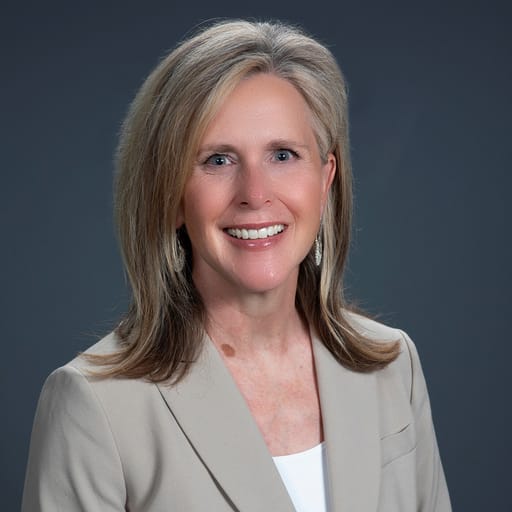
Transcript 0:00 And then there's that direct utility component. So it's, it's gonna require investment at all levels, and we don't want to forget the private investment piece. 0:08 Um, some of our infrastructure is a private venture, like, uh, the railroad systems, the freight rail. And so it's, it's investment at all levels, local, state, federal, and private. 0:19 [upbeat music] Welcome back to The Peggy Smedley Show, the podcasting voice of IoT and digital transformation. Hello, listeners, and welcome back to The Peggy Smedley Show. As always, I'm your host, Peggy Smedley. 0:34 I'm happy to be joined by my first guest today. She is an experienced chief executive with a diverse background that includes transportation, land use, public policy, and community advocacy. 0:47 With more than twenty-five years of experience, she has worked in several technical areas, including flood control, traffic impact analysis and mitigation, land development, public works, and transportation policy. 0:59 She is passionate about ensuring infrastructure meets the needs of all community members. 1:05 Please join me in welcoming back to the show Christina Swallow, director of the Nevada Department of Transportation and former ASCE president. Christina, welcome back to the show. Uh, hi, Peggy. 1:18 It's so good to be back on this show. I, I, I look forward to having a conversation with you today. So Christina, let's just talk a little bit about... 1:26 I, I'm really big right now in talking about the resilience side of things because we have to look at new approaches, we have to look at new materials, technologies. You know, we're thinking about... 1:36 You, you mentioned the idea of water, you know, our climate and things like that happen, and we need to be more aware of what happens if a bridge collapses or anything. Are, are we talking about sensors? 1:47 Are we talking about just materials in general? Because this is Ben, and I've talked a lot about this being a make-take-waste society. 1:54 We can't just rip up the roads anymore and go, "Oh, well, you know, we're ripping them up. Let's just pave over new roads." Are we talking about thinking differently about how we fix, repair, create our new roads? 2:06 I- I- Is, is, is this part of what you've been thinking about in these past four years? Yeah, Peggy, it definitely has been. 2:11 Our, our future in the infrastructure sp- space really just depends on, on our infrastructure being resilient. And so we've been thinking about building resilient infrastructure since we started building infrastructure. 2:22 I mean, you think about some of those, those iconic pieces of infrastructure, the Golden Gate Bridge, when they built that, they were planning on that bridge being there for a long time. 2:30 That is typical when we build infrastructure, that it will last for fifty or a hundred years. 2:34 And so we need to make sure that when we do it, that it is appropriately resilient for the conditions in which it's being constructed today, as well as what those conditions may be a century from now. 2:46 And we also need to make sure that we're thinking about and considering the sustainability piece of that. And that means, just like you said, new technologies, approaches, and materials. 2:56 So when we think about resilience, we like to think about it as the infrastructure system's ability to withstand or protect against broad scale impacts from multi-hazard threats and incidents. 3:09 So like I said, what that means, thinking about what could come and how we harden the system to withstand that event. But in some cases it might mean also building in redundancy. So it's a little bit of both. 3:24 But what we know, and there's, uh, been a lot of research on this, um, the National Institute of Building Sciences has actually done quite a bit of research in the resiliency space, and they've found that every dollar spent on pre-disaster mitigation and preparedness saves six dollars in rebuilding costs after a storm. 3:40 So a six-to-one return in investment. And again, that's something that's critical when we don't have enough re- resources today to build everything we need. 3:48 We certainly don't need to be spending six times more to fix it. 3:52 So we're making sure and working with our state and federal leaders to make sure that when we have that investment, that it is available to also use towards increasing the resiliency of the infrastructure. 4:06 I mean, just last year, NOAA reports that we endured twenty-two weather events that bore costs of over one billion dollars to our community. So imagine if you had to spend six times that to recover. 4:17 We wanna make sure that we're investing our money in the technology, in the materials, and some new approaches, which might be just simply put building in some redundancy to make sure the infrastructure lasts for whatever comes at it. 4:29 So if I'm hearing you correctly, whether you... 4:32 A company l- leaves, uh, behind a bridge, a, a roadway, a plant, I mean, I, I know when I interviewed Bechtel for my book, they talked about that, that each project requires a team to examine how they're impacting the environment. 4:47 I mean, is this what we're gonna be talking about? 4:49 Because they have to ask the right questions upfront, what they told me, and re- recognizing as a sustainable company that means answering those questions early on, not just saying, "Let's build it," because we're talking about... 5:02 And the president gave the same thing when he talked to us when he was giving his press conference. He said the same thing, you know, airports are delayed. So I mean, we can't just build an airport. 5:13 We have to understand, is it reducing the community's access or all of these important questions? Are these the things we're talking about as well? Those are, those are definitely the things we're talking about. 5:23 It's something with all of our transportation projects that we need to consider, and it's, it's broad-based impact. 5:30 It's not just the environmental impact in terms of, you know, what is the impact on the flora and the fauna. It's not just that. It's also impact on the community, it's impact on the air, it's impact on the water. 5:41 We need to be thinking about, and we're required in, in most of our development, we're required to have those, have those discussions, work with the local community. 5:49 And you know, and interestingly, it's transforming a lot of the conversations. 5:53 I don't know if you've been following what's been going on in the transportation space, but increasingly we're recognizing that we need to figure out how, how to move people differently. 6:02 If we're going to achieve the, the national climate goals, if we're gonna achieve the climate goals-Or really just ensure that we, our cities are more resilient to, to the climate impacts that we're seeing, we need to be thinking about how do we build our communities differently? 6:17 How do we provide options for the people that live in those communities to move in a different way? So yeah, it's, it's considering all of the environmental impacts of our projects, not... 6:27 And it, and it's social as well as the traditional when you think of environment, you know, the flora, the fauna, the air, the water. It's also the social impacts. 6:36 Well, that's why we're saying we wanna move from this gray to green to blue. It's, it's because we're gonna have a water shortage. We already know this from a global perspective. 6:44 We have to act locally, and I keep saying think globally because we have to be able to do this because if people are moving, as we talked about in our initial conversation, we have to make sure we know where people are and at the right time, and we have to use technology to say when are they using water? 7:01 When are they moving? And, and you, and you mentioned e- earlier too is whether the essential services, we have to be able to know to make those shifts and, and transportation is a part of that. 7:12 It's a very interesting point that you mentioned. So when we look at all of this, how are we going to really pay for it? 7:18 Because it's not going to be by gas taxes because all of this isn't gonna be the way people are going to be on the roads anymore because we're not gonna have gasoline. 7:27 Uh, ultimately, if we go to autonomous vehicles, we wanna go to electric vehicles. We're talking about how are we gonna... the battery gonna sustain this. 7:35 We're, we have all these conversations going on, a confluence of forces, so to speak, going on, and we know the government wants to put in, you know, our administration is talking about it, but it's still not gonna be enough. 7:45 Is it going to be us consumers pay by the mile? I mean, it's a lot of things we're gonna have to discuss. What, what is it going to be? 7:54 So we currently are looking at a ten-year, two point six trillion dollar investment gap. That investment gap would get us, funding that investment gap would get us to a B in our infrastructure grade. 8:06 So I just wanna make sure we know what we're talking about here. It's a two point six trillion dollar investment gap. And what we also know is that as people, we pay for what matters. We pay for what we value. 8:16 In some cases, you, you mentioned a case. 8:19 You mentioned the transportation space, but one of the ways that we saw the, the drinking water grade actually went up, and one of the reasons why that went up was because at the local level, the local utilities, the water utilities adjusted the rates to ensure that they had the, the revenue necessary to maintain and update their system. 8:38 So in some cases, it may be very directly adjusting the rates at, directly at the user level. In some cases, it may be an update to the federal system, uh, in the... 8:50 When you, when you talk about transportation, the federal gas tax has not been adjusted in decades, and so we do need to look at how do we raise revenue at the federal level? 8:59 And, and that's important because, um, there, the transportation system isn't just a local system. 9:04 It is a national system that gets people from one end of the country to the other end of the country, and there's a lot of diversity in there and, and sizes of states but relative to their, the roadway network. 9:15 So there is a federal role in that transportation system, and, and interestingly, I think the jury is still out on what we do as our vehicle fleet becomes ever more electric and ever more fuel efficient. 9:27 So far, the degradation in the, in the revenue source on the transportation side has been not just the fact that we've failed to adjust that revenue source since the early '90s at the federal level, and in some states' cases it's been equally as long, but a good number of states have, have adjusted. 9:42 It's also the fact that vehicles are becoming increasingly fuel efficient. So even outside of the electric vehicles, vehicles on the road, regular gas-powered, are also increasingly more fuel efficient. 9:54 So we do need to look at that, and as you mentioned, a VMT fee, so a m- uh, something that you pay based on the miles you use, the miles you travel on the road, may be something, uh, that gets piloted on a broader level. 10:06 It's already being piloted in many states across the nation in different levels to see, you know, how does it work for at their local state? 10:14 I think there's a western coalition that's looking at how does it work across state lines? Because that's gonna be critical is if we look at trying to get to a federal model. So there's a lot of different things. 10:23 There's the federal component. There's the state component, and then there's that direct utility component. So it's, it's gonna require investment at all levels, and we don't wanna forget the private investment piece. 10:34 Um, some of our infrastructure is a private venture, like, uh, the railroad systems, the freight rail. 10:40 And so it's, it's investment at all levels, local, state, federal, and private, and, and we will have to invest, and it is an investment. If we put in, we'll get more back. 10:51 So I always say we know that we have to have all these partnerships, but we always forget the bad guy. [laughs] I'm sorry to say this. When we think about this, while we're trying... 11:02 And the bad guy was our pandemic that happened. That threw a wrench into everything. 11:07 Even though you talk about two point six trillion, we can never keep our, take our eye off the bad guy that can happen, uh, whether it's in our water systems, whether it's something that happens. 11:18 So we think we have everything what we want, but there's always something that can play havoc in our plans. So no matter what, how do we keep moving forward when we have to plan for the unexpected? 11:30 Wow, Peggy, that's, that's a- [laughs]... that's a difficult question. 11:34 I think, I think part of it is if we get our, if we invest now and improve the grade of the infrastructure, which is important to do, and everybody agrees in the value of the infrastructure, everybody agrees, agrees that this is important. 11:47 So first, we, we have that agreement, so now we need to act and invest to improve the infrastructure. That will provide us with a buffer in case we have a surprise, a pandemic that lasts a year. 12:00 Right now, if we have this pandemic, our infrastructure is at that point. It's at that critical failure point. You know, if you think about... I mean, we're not quite-- We're mediocre. 12:10 If you think about, like, your roof on your house, as it starts to degrade, if you don't invest in it, the degradation rate increases, right? 12:18 So if you miss-If you miss a, um, a roo- roofs we don't invest in every year, but if you miss a critical repair, it's going to be more expensive, you know, the next incident, the next leak. 12:31 It's gonna be more expensive to fix it. 12:33 So we need to make sure that we improve the grade of the infrastructure so that we have a buffer, we have a little bit of room to recover should we have another pandemic like we just did in 2020. 12:44 And that's the same thing we say about our, our ecosystem, our environment right now. We, we've let this take-make-waste society, and now look where we're at. So our infrastructure has to be the same concept. 12:55 We have to understand we've let it degrade so much that we have to restore our natural ecosystems. I don't think people should not understand this. 13:04 I mean, it's very easy to understand, but why are so many people having a trouble understanding we have to invest in our infrastructure? Why is it so hard to say we need to put the money to- to it right now? 13:16 When you, when you look at infrastructure and when you talk to people, and we've done the polling and, and I, I don't have that exact data in front of me, but what I do know is that when we do the polling, the vast majority of Americans, regardless of what political flavor they are, the vast majority of Americans understand the need to invest in infrastructure. 13:35 And, and you see that, and you can understand that because if, if their water system fails and they have to be on a boil water notice, that impacts them. 13:44 If their, if their transportation system fails and they get to work late and maybe they lose their job, or maybe they have to pay an extra, um, penalty because they're picking their child up late from daycare, whatever those are, Americans understand the critical nature of, of investing in our infrastructure. 14:00 The challenge is investing in the infrastructure requires leaders to, to raise rates, to raise taxes, to raise that revenue. And, and that's... 14:14 Data shows that, um, when they make those hard choices, they still get elected, but it's still, it, it's a hard choice, especially when you're looking at Americans that today have spent the last year under a pandemic, which had a huge eco- personal economic impact on households. 14:30 So those are... 14:31 It, it's hard, you, when you, when you're watching, um, the Americans be impacted by something so broadly as the pandemic, and then you're coming around and saying, "Y- you have to help them get through this. 14:43 Oh, and by the way, we're going to also raise revenue for our infrastructure." It, it's hard to balance those decisions. 14:50 We know, you know, and, and the Americans know it's critical that we invest in our infrastructure, but, but I understand how sometimes those decisions can be difficult. 14:59 If we go back to that $3,000 number you threw out, it, it, it starts to make sense, but we have to help them understand it. 15:05 Christina, I love when you're on the show because [laughs] you always raise really good points that we all need to understand. Thank you so much for spending time with me. 15:12 It just, it really helps illuminate all the things we need to understand here, and infrastructure's so very, very important. Thank you, Peggy, for having me. Okay, listeners, that's all the time we have for this segment. 15:22 As always, you can share your thoughts with me on Twitter and follow us at connectedwmag. Remember, we broadcast live every Tuesday at 12:00 PM Central. 15:30 Please check out our website at connectedworld.com or our show website at thepeggysmedley show.com. All right, this is The Peggy Smedley Show, the podcasting voice of IoT and digital transformation. 15:40 And remember, with great technology comes great responsibility. We'll be right back after this commercial break. [upbeat music]