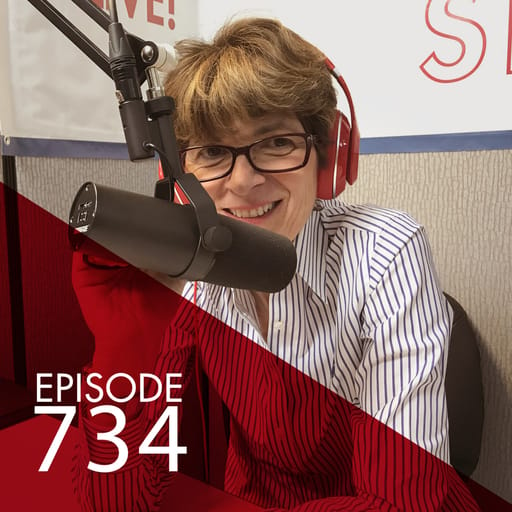
Transcript 0:00 [gentle music] A circular economy can design out waste and pollution and it can ensure continual reuse of products and natural resources. Keeping products and materials in use can help regenerate natural systems. 0:21 [upbeat music] Welcome to The Peggy Smedley Show, the podcasting voice of IoT and digital transformation, with your host, Peggy Smedley. 0:37 Hello, listeners, and welcome to today's edition of The Peggy Smedley Show. I'm your host, Peggy Smedley. Today on the show, I'm talking all about sustainability and recycled materials. 0:49 We have lived in a single-use, throwaway culture for far too long. I'm talking about a linear society, and I believe we have reached the end of our linear take, make, waste economy. 1:04 Both government and businesses are recognizing we need to change, and we need to change now, and if we don't, we're going to see a carbon collapse. Now, here's the good news. 1:16 We can run successful businesses in a way that is good for our environment and good for our economy. I will explain how and give some examples here on this episode. 1:27 On this first segment, I will dig into where we are today and where we need to head in the next few years and maybe even in the next decade. Later on in the show, I have a few great guests I want to share with you. 1:39 I will be talking to David Witkowsky, co-chair of the Deployment Working Group for IEEE Future Networks. And then I'm going to wrap up the show with Peter Linder, head of 5G Marketing North America at Ericsson. 1:54 So stick around. We've got some great discussions, uh, that we're going to have today. So let's get started. 2:00 If you've read my book, Sustainable in a Circular World, then you know that our singular use, throwaway culture accounts for roughly 40% of all the plastic generated every year. 2:14 If we continue at the rate we are going to, by 2050, plastic in the ocean will outweigh our fish. Yep, that's right, it's going to outweigh our fish. 2:24 Waste continues to collect in places, and we will never be able to reach. Ecosystems around the world will suffer. We have five generations that we need to take into consideration and we need to educate. 2:38 The good news is we are taking steps to educate and change and make everyone aware. So let's look at some examples of how we are taking the right steps today. 2:50 The North American Insulation Manufacturers Association has announced the results of a new survey. 2:57 It questioned its members on the use of pre and post-consumer recycled materials in insulation and acoustical products in both 2019 and 2020. The survey includes data from both US and Canadian manufacturing facilities. 3:14 Now, here's what it found. US manufacturers use, used four point one billion pounds of recycled glass in the production of residential, commercial, and industrial thermal and acoustical insulation. 3:30 Meanwhile, Canada members used six hundred and thirty-three million pounds. 3:34 Both US and Canadian facilities used more than one point three billion pounds of recycled blast furnace slag in the production of the thermal and acoustical insulation. 3:48 Now, here's what's really interesting and maybe even exciting. Since the recycling program be- began in 1992, these plants have diverted almost seventy billion pounds of recycled materials from the waste stream. 4:04 Now, I think this is progress. This is actually a step in the right direction, and that is certainly only one example, but we have a lot more work to do. 4:13 Now, let's look at some other things that are happened- happening in our world today. 4:18 I mentioned this i- this in my book, but I think it bears a lot more repeating and there are some updates that I want to share with you as well today. 4:27 The Next Wave Plastics Coalition, this is a consortium of multinational technology and consumer brands. Here are some of the companies you might know, Dell, HP, Ikea, and there's many others. 4:40 Together, they aim to decrease the volume of plastic and litter entering the ocean, and they are doing this by developing a global network of ocean-bound plastics and s- in, and, uh, with the plastic supply chain. 4:55 The objective is to divert a minimum of twenty-five thousand metric tons of plastics. This is equivalent to roughly one point two billion single-use plastic water bottles from entering the ocean by the end of 2025. 5:12 This lines up with the UN Sustainable Development goal to conserve sustainable use with the oceans, seas, and other marine resources for sustainable development. 5:24 Now, here's what I like about these examples that I'm sharing with you today. Both aim to be transparent with members and externally to the public. 5:35 We need to see the progress we are making if we are going to continue to change and make change happen. Think of it this way. It's like a snowball. Transparency can help us see what is happening. 5:48 It can actually help us see what's happening in other industries, and then take what we've learned and apply it to our businesses, to our personal life. I also like that they are quantifying the data. 6:00 You've heard me say so many times, "Data, data, data."Having a clear number allows us to see the progress we are making. Case studies are another great way to see the progress we are making. 6:14 Consider the example a Nexwave member company, HumanScale, which makes office chairs. In 2018, the company introduced Smart Ocean. This is a task chair made with recycled fishing nets. 6:29 More recently, in July 2021, the company launched Liberty Ocean. Each chair uses almost two pounds of recycled fishing net material. Now talk about a commitment to sustainable manufacturing. 6:44 Both chairs are certified net positive. Now, Trek is another example. The biking company has released a lineup of three new XR trail mountain bike grip models. 6:58 Now, each features a core made from recycled ocean-bound plastics. Meanwhile, its Bontrager Bat Cage are made out of ocean-bound nylon from recovered fishing nets from Chile. 7:13 Now, these are those, uh, bottles that are on your bikes that hold them. Uh, you've probably seen them. 7:19 I think it's kind of interesting, in just one year alone, the Bat Cage will remove 44,000 square feet, or 3,850 pounds of fishing nets from the ocean. Just think about that. 7:33 Now, I could go on with many more really cool examples, but the point is, is companies are making some big progress in the world of recycling. Okay, so think about this. 7:44 I think we have to do more, and I think these companies that I shared with you, these examples, are just the beginning of what many companies are doing, and there's lots of companies stepping up, but we need lots more companies stepping up. 7:59 So here's my opinion for today. We need to be more circular. We need to be more restorative by design. You've heard me say that. We need to decrease the waste and pollution. 8:13 We also need to do it all at all levels. We need to do it in our homes, in our businesses, and in our government, in our cities. 8:25 A circular economy can design out waste and pollution, and it can ensure continual reuse of products and natural resources. Keeping products and materials in use can help regenerate natural systems. 8:41 The 2021 Circularity Gap, if you've heard me talk about this, the report suggests we can make a big impact if we change the way we produce and consume materials. We need to double the global goal of circularity. 8:58 If we're going to reach this goal that we've all set in place, then we all need to do it. We need to do it together, and we need to do it now. 9:07 We need to work together to become more circular in our businesses and in our supply chains, in our homes. We all need to be headed in the same direction. But here's my question. Is your business? 9:22 Are you thinking about this? And if you're not, I guess the question should be, why aren't you? So let's go to my tip. Do something, even if it's small. Make a change in your home. Make a change in your business. 9:41 Maybe you make a big, bold move like some of the... Maybe you can't, or maybe you wanna make a big, bold move like some of the manufacturers I've told you. 9:52 Maybe you wanna think about being like some of these companies we've talked about. There's a lot going on, but if you don't even think about it, how do you know if you can or can't do it? 10:02 Maybe you can start recycling single-use plastic. Whatever it is, you gotta start it. You gotta do it now. Future generations are counting on it. Future generations are counting on us. On Tomorrow's Connected World blog, 10:19 I take a deeper dive into this topic. I take a closer look at the report that assesses policies and bans and taxes. 10:29 There are some interesting things happening in the EU and China, and I talk about and I write about what it might mean for the US going forward. 10:41 I hope you'll check out my blog, but even more importantly, what we're talking about today is, are you thinking about these things? 10:49 Now, the blog will help you kind of digest these things into a deeper perspective, but today I want you to really start contemplating what your company's doing, what your businesses are doing, because if you're sitting on the sidelines, like I say, it's not gonna happen. 11:07 That's why I wrote Sustainable in a Circular World because it's like the drip method. I always tell everyone, we have to start thinking about it. It's drip, drip, drip. I've got to keep reminding you. 11:19 We have those five generations, you know. We started out with the baby boomers and Generation X and millennials and Gen Z, and there's still some of those traditionalists out there. 11:30 All of these different generations that are out there, understanding that each generation ages into the next and influencing and swaying our behaviors, all while shaping our thinking about the environment, is very important. 11:47 That's why it means we have to think about these things. 11:50 We can't just ignore it, and if you're ignoring it now saying, "I can wait," well, it's gonna be too late for the next generation, for future generations, and what kind of world have we left them? What have we destroyed? 12:04 And that's the problem. We're, we're thinking about that we can wait, but that's gonna be the problem, you know. Time is going to be the... 12:13 Time in history is going to tell what we've done, and that's what I hope we have awaited for. 12:18 Well, I'm out of time for this segment, so if you've got thoughts on what I've talked about today, please send me a tweet and continue this discussion on social media at connectedwmag, and I wanna hear what you think. 12:30 You know, and don't forget, check out my blog on connectedworld.com, but... or check out a past show segment on thepeggysmedleyshow.com. 12:38 We'd love to hear what you think, and, you know, ch- if you've missed something, don't forget, go up and check out any of the segments. All right. 12:44 This is all the time I have for this segment, but we've got more guests coming up, so I want you to take a quick break, but we'll be right back. 12:50 As always, this is The Peggy Smedley Show, the podcasting voice of IoT and digital transformation. And remember, with great technology comes great responsibility. We'll be right back after this quick commercial break. 13:01 [upbeat music]