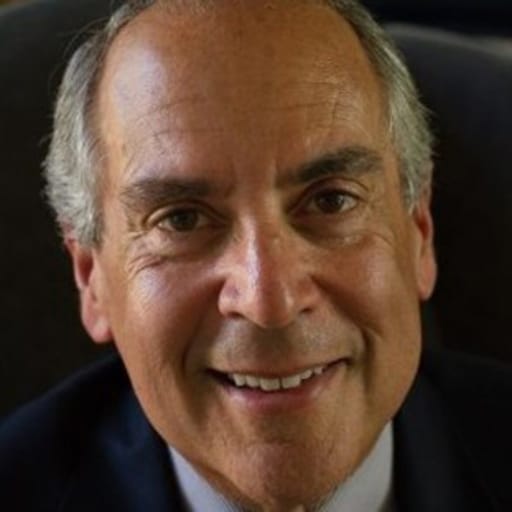
Transcript 0:01 The question on the table is if you invest in the grid or do you more invest in the grid edge? And the answer is clearly both. 0:11 We need to upgrade the grid for weather alone and for all the other challenges it faces, but utilities themselves can't afford to replace all their generations without raising rates to ridiculous levels. 0:25 So it makes sense that some of the load be served by grid edge technology. 0:30 [rock music] Welcome back to The Peggy Smedley Show, your voice for our connected world, with your host, Peggy Smedley. Hello, listeners, and welcome back to The Peggy Smedley Show. 0:48 I'm your host, Peggy Smedley. My next guest is an accomplished and innovative consultant with deep knowledge in industry and regulatory practices. He has spent more than 45 years in the utility industry. 0:59 His primary focus has been on the application of technology and business process design to help utilities and other organizations be more cost-effective while improving reliability and safety. 1:11 He has worked at an electric and gas utility as a management consultant to utilities and municipal governments and in management positions in tech companies that focus on utilities. 1:22 In addition to his roles in the utility industry, he has spent 10 years as a professor in the field of GIS at the University of Delaware. 1:29 Please welcome Andy Zetland, Director of the Center of Excellence at Hitachi Energy. Andy, welcome to the show. Thank you so much. 1:40 So Andy, I'm excited to have you here as, as your introduction that I just did tells you have just a wealth of knowledge in the utility space. 1:48 So I can't wait for you to explain what you and I have talked about prior to the show when you and, and I were discussing 1:55 about the utilities, where it's headed, and why you say that it's really headed for si- this kinda challenging times ahead, because I think it's interesting to hear someone talk about that. Well, thank you, and it is. 2:10 Uh, it's an unusual period of time for utilities. Uh, the, the, the three things utilities worry about all the time is, uh, the reliability of their service, 2:22 the cost of their service, and something called resiliency, meaning how well they can, uh, a- adapt to problems and resolve them quickly so that if the lights go out or the gas stops or the water stops, 2:40 um, how fast they're able to, how quickly they're able to fix that. At the same time, electric utilities are probably the most challenged because 2:51 a lot of the sources of electricity are coal-fired and have been for years and years, decades and decades, and we are now moving away from that to new technologies that aren't gonna look a lot like the old power plants of the past. 3:11 Well, a couple of things there. You've talked about resiliency. We've already seen that the utilities are struggling. 3:17 They haven't been able to keep up with demand, so that's really creating a lot of challenges when we look at that. 3:24 When we talk about the coal-fired, I mean, all of those things are like, I, I don't wanna say the perfect storm, but we're really looking at a lot of different challenges. 3:32 And we've talked about on this very show about, you know, distributed energy response, the pros and cons. I, I'd kinda be curious about what you think about that, and, and there's a lot of things going on. 3:44 People are talking about, you know, grid edge, DER. I mean, uh, I guess I don't know which one I wanna start with. I don't know if I want you to talk- Well, let-... 3:54 about going to the edge, you know, if we should talk about that terminology. What do you think? Let's start with grid edge. Okay. As, as we change our centralized big power plant, 4:06 uh, generation capability, a lot of people want renewable energy. And to move to renewable energy, you can centralize, you could build a huge solar station, but that is not the way things are developing. 4:22 Everything, instead of being centralized on the grid, is being focused at the edge of the grid, where close to where or exactly where the electricity is consumed. What that does 4:35 is it eases losses of transmitting the electricity over a wide area, and it also serves, uh, the local, uh, uh, community in a manner that they might want to be, w- want to be served. 4:51 So what we have is a lot of solar panels on roofs. We have, uh, windmills in certain spots. 4:58 We have batteries, uh, that collect energy and, and support when the sun is not shining, uh, from, uh, uh, solar, solar in, in your home or business. 5:10 And that grid edge is a big transition for utilities as generation moves from these big centralized plants to the edge where the consumer is. So we're, we just talked about that. 5:25 We're moving from this coal-fired, we're moving to renewables, that grid edge, and so we're relying now instead of the big utilities to manage this, or maybe they are, and we're gonna talk about that, to this grid edge. 5:38 So who's gonna be in charge of that then? Are we saying these little communities, you and I and, you know, our, our, ourselves, we're gonna be managing that at the g- grid? 5:47 And now we're getting now to this distributed energy kind of environment that you've just described. Is that what we're talking about? There's this pro and con of that that we're, we're talking about, right? 5:58 Is that what we're having this conversation?Absolutely. 6:02 But inexorably, we are moving a lot of generation resources to the grid edge regardless of what happens, and today it's still the utility's responsibility for the reliability, 6:16 the economics, and the resiliency of the grid. It only changes when people leave the grid, meaning disconnect, and put their own sort of utility in their homes or businesses. 6:32 And those are called microgrids, or even nanogrids, where, where it's very small demand. But today, the term microgrid is widely used. And a microgrid is the ability of 6:47 a, an, an organization, let's say a university or a hospital or some kind of business complex, to be able to generate and manage its own power without- So a sports stadium... interacting with the utility. 7:01 So we're saying something large that wants to manage, a university, someone who wants to manage their own g- energy- Ab- absolutely... is what we're talking about. Okay. So that everyone- 7:12 And what it, what it means is-... understands. Okay... 7:14 what it means is that the o- owner of the stadium would have to pay on their own money, not the utility's, to install all of the assets needed to make sure that they didn't have to rely on the utility, 7:28 and then pay that off over a period of time, um, a- and, uh, but be assured that it's designed for the level of reliability that they need. So we have a lot of different... 7:44 You know, I s- use this on the show a lot, a lot of acronym soup here when we talk about DER and energy storage, and it's changed from what we first described it when it was first coming out and people were trying to understand it locally and distributed. 8:00 I- is it changing to who owns it or what that means as we start to get better at it? 8:05 Because it was, the energy was helping you kind of be better in control of it, but I think it's, it's definition over what's happening is changing. Am, am I incorrect about this? Not quite. Okay. 8:18 Um, if the utilities build it and control it, then it's up to them to schedule when the generation occurs and where it comes from. That is called distributed energy resources, or DER. 8:34 So today you might have one large power plant, but when that closes, you might have 200 different small generators or, uh, batteries that the utility has to determine how to keep reliability up while using those resources instead of the big coal plant. 8:55 Does that make sense? Yes. So hearing you say that, w- if we look at the bigger picture of things, we have this, this giant utility industry that we started our conversation with saying it's in trouble, 9:08 and we're looking at this big picture, and now we've got these microgrids, and we need it. But are we now, taking away the stadiums, 'cause the stadiums are... And I, I know this is a convoluted question. Help me. 9:19 I'm trying to get everyone who understands 'cause I, I'm sure the large, you know, the utility people get this, but I'm trying to get everyone else to understand this. 9:26 If we want to say we want these cohorts in communities who might be involved and say they wanna get these microgrids, or they wanna do it, and they wanna be involved, it sounds like there's a lot of middlemen and middle organizations involved who, who are getting a piece of the pie here. 9:44 Am I wrong about that? No, you're right, but, but let me just go back to your term, uh, the term of, of challenge. As portions of the grid are more and more owned by the end user of the electricity, 9:59 um, what you find is utilities will be losing, um, um, their demand. In other words, if a stadium, which used to be a significant user of the grid's electricity, goes off the grid, the utility is gonna lose that revenue. 10:17 And the more that that happens, the more compromised their balance sheet becomes, because they're stuck with lots of assets, uh, that they, they have to depreciate somehow, and it, it makes it very difficult. 10:30 And at the same time, the weather is- How do you run a c- how do you run a city? Not to interrupt you, but it becomes- Yeah... challenging to run city, 10:38 city items, you know, city things, you know, transit, all the other things, if you don't have, uh, what you just described. Now I see that's where it's compromised. Those kind of things come into play. Am I correct? 10:49 It all comes into play. [clears throat] And imagine, with the weather changing and severe storms and fires adding to the challenge, being the head of a utility these days is not the simplest job. 11:07 So, uh, again, going back then, the US electrical grid we know is failing. We've not put the dollars into it. We're not managing. We're not looking at the data as well as we could. 11:19 So are we saying that these microgrids are going to save it, or is it going to help it? Are we... We're, we're all pushing for EVs, and that's what we're saying is a critical part of we wanna go this... 11:32 And, and we're also talking about autonomous EVs, so that's a whole nother discussion. Maybe we need to get to that on another day. 11:40 But a- are we really talking about when we might get there, but we as the consumer are going to have to then help the, the grid su- supply it back in order to have all of our city services? I don't know. 11:56 Maybe that's- It's very po- Okay. It's very possible. So the question on the table is, if you invest in the grid-Or do you more invest in the grid edge? And the answer is clearly both. 12:10 We need to upgrade the grid for weather alone and for all the other challenges it faces, but utilities themselves can't afford to replace all their generation s- um, without raising rates to ridiculous levels. 12:27 So it makes sense that some of the load be served by grid edge technology that either, um, a, a generator here or there, uh, like, like most, most hospitals have backup generators, they're only used as a backup. 12:42 But perhaps now they'll be used not as just a backup, but to help the utility. And as long as they're generating electricity, they can get some payback for it. 12:53 So it's a, it's a current question being discussed, and the complicating factor is that the United States, uh, based on laws passed in the 1930s, doesn't manage the entire grid as a nation. 13:11 We manage everybody's usage of electricity by state or territory. So for example, there are 51 in the, in the, uh, United States, including Washington, DC, each one has a, a utility commission 13:28 that has been used to just the way it's been for 40, 50, 60 years, and they're not quite ready necessarily to change it. 13:38 And one thing that we've all noticed is our rates are just going up, up, up as things get more difficult to maintain, as they have to expand and replace old technology, including coal, 13:51 and all of that is managed by these state commissions, uh, and the relationship to the customer. There are also rules to safeguard the utilities business where customers can't go completely off the grid. 14:06 They have to pay a fee if they go off the grid to keep the utility's economy whole. So it's a very complex structure of federal, state, and local jurisdictions that oversee all of this. 14:21 So my mind is racing right now- [laughs]... 14:23 and I understand what's going on, but it seems to me in order to keep this y- running effectively, because it's gonna cost so much to upkeep the grid or to fix it or repair it or whatever the term you wanna put at it, is we're gonna have to eventually look at public-private partnerships. 14:40 We're gonna have to do that or something to save the grid because the average consumer is not gonna be able to do it because the costs are going up so, so abundantly. 14:50 I understand that we're trying to go EVs, but we're not gonna be able to go there fast enough before it fails. There's a giant crash headed our way. It's not necessarily going to crash. 15:00 I think people are focused on this. I think it's an important topic and an important debate. 15:06 I would say that there's no full agreement on how to do this, and, uh, the utilities might have one point of view, environmentalists might have another. 15:16 A good example of that is that we as a country walked away from nuclear power over the last 30, 40 years after the event at Three Mile Island. 15:29 But suddenly, uh, with the need to be carbon free, nuclear is of great interest again, and I think you're going to see as a result, the replacement of some coal, uh, fired power plants with smaller, more modern nuclear reactors. 15:45 They're, they're called SMRs, small modular reactors, that can be located, uh, uh, closer to where the demand is and are safer, and there's a whole generation of those coming up. 16:00 So there's nuclear as options are on the table, and several states are looking at that, several companies are looking at that, and it's not, not just nationwide, it's worldwide. 16:11 There is the renewables at the edge of the grid, the windmills, the solar panels, 16:17 um, a- and, and the like, and then there's just the traditional, uh, build up the grid to satisfy the demand, uh, locally for EVs and other electronic devices that today the grid is not capable of supporting. 16:35 So Andy, we are out of time, but you have to come back so we can talk more about- [laughs]... 16:40 the SMRs because I really think there's so much, your knowledge is just amazing on what you have, and I know that you have technology that I want listeners to learn more about. So we're out of time. 16:50 Andy Zetland, Director of the Center of Excellence for Hitachi Energy, thank you for your time. 16:55 Where can our listeners go to just spend more time with you, you know, to learn about the things you've been doing, because your knowledge is just amazing. Well, thank you for that compliment. Um, I'm easy to reach, 17:08 um, um, and, uh, the best way, uh, to, to start at least is LinkedIn. Um, it's Andy Zetland, Z-E-T-L-A-N. Um, I'm also with Hitachi Energy. 17:20 I can be reached, uh, through Hitachi Energy if y- you need to carry on or want to carry on some different conversations. I look forward to it. Okay, listeners. That's all the time we have for the show today. 17:33 Make sure to share and subscribe to our episodes each week. As always, you can share your thoughts with me on Twitter or follow us at Connected World and carry on this conversation. I'm curious about the SMRs. 17:44 Remember, we are broadcast live every Tuesday at 12:00 PM Central. Check out our website at connectedworld.com or our show website at thepeggysmedlyshow.com. 17:52 And don't forget to tune in to Project Sustainability podcast at pspgreen.libsyn.com. This is The Peggy Smedley Show, your voice for our connected world, and remember, with great technology comes great responsibility. 18:04 Have an awesome week. [upbeat music]