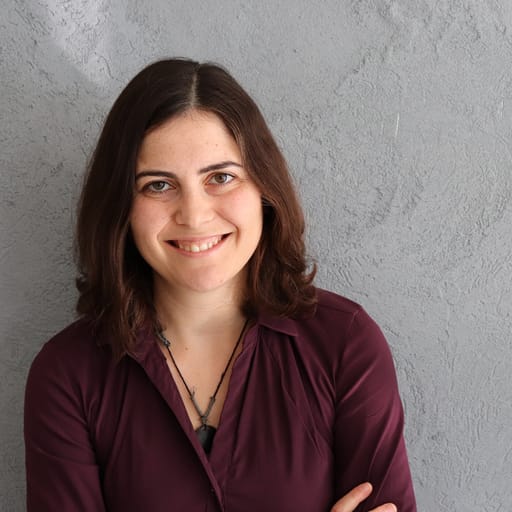
Transcript 0:00 [on-hold music] There is always a vulnerability. There will always be a flaw. So at Sternum, we move the focus from trying to passively and reactively patch vulnerabilities already after they are known into moving to... 0:17 the focus to stopping the exploitation, the attack itself in real time. 0:28 [upbeat music] Welcome back to The Peggy Smedley Show, the podcasting voice of IoT and digital transformation. Hello, listeners, and welcome back to The Peggy Smedley Show. I'm your host, Peggy Smedley. 0:43 My next guest leads her company's strategy and vision, both technologically and commercially. 0:49 Building a company from scratch, she is responsible for business development, technology and product development, client engagement, strategic partnerships, fundraising, innovation, and most importantly, people, while still enjoying inventing new algorithms and technologies. 1:07 She brings extensive offensive and defensive cybersecurity expertise and strong product and innovation capabilities from her experience working from global cybersecurity leaders as well as her time serving in the Israeli Defense Forces' elite technology unit. 1:26 Please welcome Natalie Tshuva, co-founder and CEO of Sternum. Natalie, welcome to the show. Thank you, Peggy. Thanks for having me. So- Great to be here. 1:37 So Natalie, I'm really excited about us talking because, first of all, as two women who understand the importance of cybersecurity and cyberattacks, I think it's great for us to have this conversation. 1:51 Because as women leading businesses today, I think w- first of all, we're encouraging the next generation to constantly focus on, you know, we have to be innovative leaders. 2:02 And I love that you're doing that because one of the things we forget about when we have all these connected devices, the bad guys are always out there. They're always looking to infiltrate them. 2:13 So talk to me about what made you think about protecting all of these connected devices. I think that's an amazing thing to do, and protecting... 'cause we're always thinking about the next thing to connect. 2:25 I love having you talk about that because we're encouraging STEM, you know, younger ladies. You're much younger than me, but I love that you're thinking about how do we protect these devices. Sure. Yeah. 2:38 So let me go a little back to, to my background story. I think it will help understand how the idea of, uh, Sternum and protecting devices, this connected revolution, uh, came to be a, a reality. 2:52 So first, I started with, uh, computer science studies when I was 14. So that was an amazing, uh, introduction to the, to the science world and computer science world. 3:03 Uh, and of course, I think that, uh, investing in educating young women to go to those directions from a young age is, uh, is very important as, as you can see, it builds your career moving forward. 3:16 So once I finished my, my undergraduate degree, I joined the Israeli intelligence unit, uh, 8200, uh, which is the equivalent of the NSA. 3:26 And many of the cybersecurity innovation here in Israel is built from ex-8200 founders and, and talented people. So I think that also was a, a significant step. 3:38 Uh, and in the following years, I actually built a lot with finding vulnerabilities and exploiting those devices. 3:46 So I saw firsthand how they can be vulnerable, how it can affect so many aspects of our lives, uh, critical infrastructure, railway, power grids, connected medical devices even that affect human life. So 4:02 being able to, uh, uh, research them, uh, find vulnerabilities in them, getting to know them, was actually what brought me the, uh, knowledge and experience that I needed to think about this revolution. 4:17 But to be honest, it all started when I was twenty-five. I finished my master's in computer science, and I really wanted to combine the medical industry with my knowledge in cybersecurity and computer science. 4:29 And during this, uh, self-searching, this is where I realized that, uh, we move forward to a connected healthcare, remote care devices, remote treatments, and I saw firsthand how cybersecurity is a barrier to better treatment and to better connectivity, and how it can be scary to have those life-saving devices not protected with no existing security solutions that can actually fit those devices. 4:57 And as you know, the challenge of securing IoT devices is so different from securing servers or laptops that we know how to secure for the past decades, and so many solutions, uh, have been built for those kind of systems. 5:11 The IoT remained, uh, unsecure, and as we, as we move forward, it just becomes so relevant, uh, to our lives. 5:20 So the combination between the medical industry impacting such important, uh, fields with my cybersecurity knowledge and passion to, to create an impact was how we first started, uh, Sternum. 5:33 And of course, we've built, uh, a generic technology, so affecting critical infrastructures and, and mi- mission critical, uh, industries and devices, uh, was, uh, uh, a, a very natural way to grow our, uh, focus too. 5:51 So for what-- When I hear you talk, because one of the things I always say is we have the internet that started out on something on the wrong premise. We didn't realize we were gonna connect so many devices to it. 6:02 So we started with the wrong premise. So you understand the same thing. You can't-Prevent exploitations by just starting with the wrong premise. 6:11 You understand that we have to start not by patching it, we have to prevent it from the very beginning. 6:17 Talk to me a little bit about that because you get- you got to prevent the attack from the beginning, not with a, with a patch. Yes. 6:26 So what we see today is that most solutions are focused at trying to find all the vulnerabilities. 6:32 That's like keep finding all the vulnerable places, uh, that you have in a facility or all the ways to penetrate, uh, something. 6:41 Uh, this is usually impossible, and once you realize that you have a breach, that you have a vulnerability, it means that somebody else also knows about it already, and some damage may have, uh, been done. 6:56 So, uh, patching and trying to find all the vulnerabilities, we call it at Sternum an endless race. [laughs] Because you can only, you can only try to keep up, and eventually you may be, uh- So there's-... 7:09 protected from the known- There's another door. They, they can get in another way. The bad guy knows that, right? For sure. For sure. 7:16 So one of the things I learned, uh, from my experience in, uh, 8200 and the, and the other companies is that there is always a vulnerability. There will always be a flaw. 7:27 So at Sternum, we move the focus from trying to passively and reactively patch vulnerabilities already after they are known or try to, uh, get to this flawless situation, which is impossible, into moving the, the focus to stopping the exploitation, the attack itself in real time. 7:47 In order to do so, you have to be embedded on the device itself. 7:51 You have to be capable of working within the device's limits, resources, platforms, because you don't want to cause any overhead, uh, any configuration or changes. 8:02 But once you are capable of providing that, then you can in real time identify the exploitation itself regardless of what kind of vulnerability the attacker is trying to exploit, which is a much more sustainable approach to secure each and every device individually. 8:20 Current solutions right now, we're not handling threats as well as we could, and you, you get that. Would you say we can do better? Because we've had so many attacks, and there's going to be more. 8:33 Would you, would you agree? Definitely agree. 8:37 I think that, uh, we are heading to the right direction with new regulations, uh, coming in, in different countries, in Europe, in the US, uh, even laws, uh, putting the liability on device manufacturers actually to take care of the, of the security of those devices because honestly, enterprises cannot install security by themselves. 8:57 Unlike your laptop, you can choose to install an antivirus on, on your computer, but you cannot do that for your smart door lock or for your pacemaker, right? 9:08 You, you can't really do anything about that, and this is why the focus moved and shifted to the device makers, and now we only as an industry have the responsibility to provide them with the security controls that are suitable to support their mission and still create, uh, um, the safety net that they need without overflowing the R&D, uh, with countless patching and handling, uh, false alerts. 9:38 So I think that we can definitely do better. 9:40 I think we are headed to new solutions, and I think device makers are adopting these kind of solutions, uh, because as you mentioned, there was so many attacks, so it became clear that cybersecurity is one of the top concerns, uh, as we, uh, continue to grow our connected environment. 9:58 Natalie, we only have about a minute and a half left, so I... and I'd love for you to come back and talk some more with me, but just tell me what's your vision then for IoT security? 10:08 We have so many devices out now that don't have the security that are already in people's homes and, and all over them. When we all scattered because of COVID, we connected so many more things. 10:21 So, you know, I always say the nefarious characters know that they can exploit our vulnerabilities. 10:28 So knowing that, what's your vision for what we have now for what you could see for the future in making us more secure in our businesses, in our homes, in all of these devices that we have? Sure. 10:42 So first, uh, we have to not forget about those legacy devices. I know it's the easiest thing to say they are already out there, they are not secure, we can't do anything about that, but that- that's not the case. 10:54 So there are solutions today, and we are included, that get- can install post-market devices with security and can embed this kind of real time protection onto existing devices. 11:06 We actually did that with Medtronic on a five years old device. Imagine a five years old connected medical device now protected with, with our technology in field. 11:17 So first, we have to take care of those, uh, uh, uh, billions of devices already connected. And of course, for future devices that are, are now in development, we have now the tools. 11:28 We need to, uh, increase the awareness, and my vision is to reach a point where each and every device is protected with security controls and monitoring in real time to make sure that we are safe, uh, including the layer of network security for enterprise, which actually, Peggy, is not very different from the traditional IT security space. 11:48 Each company, each enterprise have network security and have endpoint security, uh, two layers that provide a more holistic approach, uh, to secure, uh, our, our basically devices and, and enterprises. 12:04 So I think the IoT vision for me, uh, goes the same direction. I think this has been an amazing discussion. Natalie Tuval, co-founder and CEO of Sternum, thank you so much. 12:14 I really hope you'll come back and tell us more because I'd really love to know what we're gonna do with all these devices going forward in, in the long term when we think about sustainability and circularity. 12:25 There's so much more for us to talk about, so I hope you'll come back. Tell our listeners where they can go to learn more about what you're doing and how they can work with you. Sure. 12:35 So if you want to learn more, please, uh, go to www.sternumiot.com. Thank you so much. Thank you, Peggy. Thank you. All right, listeners, remember we are broadcast live every Tuesday, 12:00 PM Central. 12:49 You can check out our website at connectedworld.com or our show website, thepeggysmedley show.com. But most importantly, I'd love for you to tweet at us at connectedwmag. 12:58 It's these kind of discussions that we have that can engage and learn so much more and keep all of our devices and all of you safe. All right. 13:05 This is The Peggy Smedley Show, the podcasting voice of IoT and digital transformation, and remember, with great technology comes great responsibility. Stay safe and have an awesome week. [outro music]