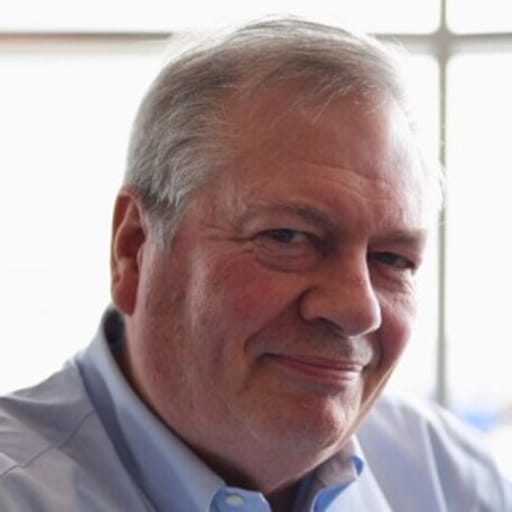
Transcript 0:00 [on hold music] We have, uh, you know, the ability to be able to walk around a, a job site, say, uh, as, uh, our clients often do, uh, and update progress or time for their crew, uh, and not have to open up a tablet or sit down with a laptop and be able to enter that. 0:19 I mean, that is going to become more and more the default. Um, and is it going to be for every application? No, for sure not. There are still times when you want to sit down at a keyboard and type. 0:29 Um, but as voice systems have become, um, you know, more, uh, uh, able to understand what you're saying and to be able to parse that into sentences and words and numbers, um, you know, we're a, we're a huge leap from where that started. 0:43 That's now becoming the default. [upbeat music] Welcome back to The Peggy Smedley Show, the podcasting voice of IoT and digital transformation. 0:59 Hello, listeners, and welcome back to The Peggy Smedley Show. My next guest started his company in nineteen eighty-four as a consulting and distribution firm deploying project systems and creating custom-built add-ons. 1:11 In nineteen ninety-four, he transformed the company into a project management software firm. Please welcome Chris Vandersluis, president co-- and founder of HMS Software. Chris, welcome to the show. Well, thanks, Peggy. 1:26 I really appreciate being on. 1:28 Chris, I'm excited to have you on because we were just talking to Ron Babich about AI voice systems and just in general, and I know you know a lot about it, so I'm excited that we can really delve into it a little bit more. 1:42 I'd love to get your thoughts on your company and the importance that we really talk about how this technology is going to play a critical role in how technology's advancing. 1:55 I'd love to get your quick sense on where you think voice systems, uh, are really at right now and how the enterprise is actually going to use them in applications and, uh, just in general. Well, thanks. 2:10 Uh, I was listening to you, uh, talk with Ron. I've known Ron a long time, actually. 2:14 Uh, we've done work with his firm on, uh, activating our own time control, timesheet system, which is a project, uh, management timesheet system, uh, to be voice-enabled. 2:24 And, uh, and so Ron's, uh, company, Easy Voice, uh, has worked with us on that. We partnered on that because we think it's so important to be at the edge of what technology is. 2:34 You know, if we go back a few years and, and said, "Well, you know, what about, you know, mobile-based, uh, you know, applications for something like project management progress or actuals collection in the field or, uh, or timesheets?" 2:48 People would have nodded and go, "Yeah, that sounds nice," but maybe not so interested. 2:52 We, we came out with one of the very earliest mobile, uh, interfaces for our time control, and the uptake at the very beginning wasn't, wasn't really, uh, very, very, uh, fast. 3:03 Uh, but if you look now, because of that early experience, we were able to leapfrog ahead with, uh, now, you know, mobile apps on the iPhone and on Android devices. 3:13 Everyone would expect that a timesheet would be able to have some kind of interface on their, uh, on their mobile device right now. We think voice is very much like that. 3:22 Uh, voice and video, I think are, are really leading the way in a lot of ways of how applications like ours, enterprise applications function. And so you've got to be at the edge, I think. 3:33 And it's interesting because a company like you that integrates with companies like Oracle's Primavera or, you know, an eight-- you know, which is Hard Dollar. 3:42 You know, those companies that have acquired companies that are leaders in the field who deal with companies. 3:47 And we were just saying with that is it's whether it's a large company or small companies, the integration is so critical, and now to think where the market's going. 3:56 Do you see all of this innovation as we go forward with all of these voice, I, I guess, only interfaces or whatever we wanna call them, you know, without having the touch screen or a keypad or whatever it's going to be, the way we're gonna do this in the, in the field, it's, it's going to really change the way we do things and the way... 4:18 And, and the way I look at it is we have less workers, so we're gonna be able to do things faster, quicker, easier with, with the way things are moving. Well, that's a guarantee. 4:27 I mean, if you've seen a little kid sit down with a, a, a picture book, uh, you know, at a table, uh, they try to, you know, magnify by pushing their fingers apart because it's become natural now to be able to do that, right? 4:39 That's the default. Same thing in business. 4:42 We have, uh, you know, the ability to be able to walk around a, a job site, say, uh, as, uh, our clients often do, uh, and update progress or time for their crew, uh, and not have to open up a tablet or sit down with a laptop and be able to enter that. 4:58 I mean, that is going to become more and more the default. Um, and is it going to be for every application? No, for sure not. There are still times when you want to sit down at a keyboard and type. 5:08 Um, but as voice systems have become, um, you know, more, uh, uh, able to understand what you're saying and to be able to parse that into sentences and words and numbers, um, you know, we're a, we're a huge leap from where that started. 5:22 That's now becoming the default. People expect to be able to talk to their, uh, to their phone, to their, uh, device and ask certain things. 5:31 So, um, so yeah, I think that's-- I think, I think it's coming, and there's not really any way to, uh, to stop it. Uh, so, so let me ask you this kind of interesting question. 5:40 You remember how the phone got really-- it went really small, and now it's getting really big again? And now- [laughs]... you know, our, our, our, our way that we do things changes. 5:51 Is this kinda gonna be a fad that people go, "Yeah, I like to talk," and, "No, I don't wanna talk to it." I mean, everybody's listening to every conversation. 5:59 Everybody hears everything, and they're gonna go, "No, I wanna go back to being able to type," you know? Is it, is it going to change? 6:05 Is this a fad, or will this be something that, no, it's going to be something that's here to stay? You know, the way screens are made, things are changing. 6:15 Well, what's your take on that?Well, I, I mean, the whole, uh, notion of a fad, I think, is, uh, is tough to put into this context. I mean, are mobile phones a fad? Uh, yeah, hard to say, right? 6:27 Have they evolved significantly since the old brick phone and what you can do now? For sure. 6:32 So I think this will evolve, uh, as capabilities are improving, and they're improving almost every day, and as we come to terms with, well, what does privacy mean to me? 6:42 Um, you know, do I want people to hear what I'm saying, or do I want it to be more private? 6:46 And for some things we're saying, "Yeah, I'd like that to be more private," and other things we go, "Eh, maybe not so important." 6:54 You know, you raised an int- Well, as you were saying privacy, it comes to concerns and I, and I rose-- raised this question on the last segment about ethics and privacy and the whole idea of security. 7:06 Are we going to have that? Because people's voices, you know, can they be, you know, do we have to worry about security concerns with that and, you know, uh, you know, we always have the bad guys out there. 7:17 Are we going to have to worry about that just like a fingerprint or something else that we have to be... Facial recognition. Are there security concerns that are-- we're going to have to worry with this as well? 7:28 Well, there's gonna, there's gonna be security considerations, that's for sure. 7:31 Uh, we're doing some work right now with a large, uh, a law enforcement agency and, uh, and so their security concerns are, are very straightforward. 7:40 You know, we have to make sure that this kind of data is not visible to anyone else. 7:45 And, um, and so for them, they may have to look at more of a hybrid environment, less of, uh, something like accessible through voice or through, you know, external APIs and so on. 7:54 Uh, but that being said, they're not considering installing only in-house. 7:58 They're looking at ins- in working on something in the cloud, and so even in those high security environments, I think Ron mentioned something on the health side with HIPAA a few minutes ago, even in those high security environments, we're seeing people move to, uh, more open, uh, you know, more open systems. 8:15 Do you think construction will really embrace this? Do you see construction as saying, will they be faster than other industries, or will they be just as slow as every other industry to finally say, "Yeah, it's time. 8:26 Let's just move along and start integrating this in every part of our business"? [laughs] I-- Uh, construction's kind of funny, right? 8:34 In many ways, they're the early adopter, uh, and then they go, "Well, it's working now. Why break it?" 8:39 But, um, but the, the people who are looking at our new interface with TimeControl and Easy Voice, uh, to be able to do updates are people who are working on heavy construction in the field, so those are the first two kinds of companies that are most interested. 8:53 So, I mean, I'll take that as my guide and say construction can be, uh, as much of an early adopter as anybody else. 9:00 And when you look at technology like this, what-what's the impetus to get them to really say, "We can do this"? It's, it's the ease of use, you know, improving productivity? 9:09 What, what makes them want to say this is right for them? Yeah. We're seeing two, uh, levels of interest on that. 9:17 I mean, one-- the first is for sure ease of use, um, is to say, "Well, if we can, uh, if we can have this be easier for people, then maybe we can get better adoption, we can get better data, we can go a little bit faster," uh, and efficiency is right alongside that. 9:31 Um, if it's going to be less efficient, well, then I'm not at all interested. 9:35 Um, but if somebody can, you know, give, give their, uh, notes as they walk around a job site and are seeing what they're taking notes on, uh, then maybe we're getting better data. 9:46 So, um, the other s- the other side of that conversation is a whole, uh, interest in, uh, in people who may not have had the level of training that we once thought was required for certain things, um, and who are able to ask a question to say, um, you know, "So how do I do the update for this?" 10:04 Or, "What should the update be for this?" Or, "What was last week's progress?" Um, where we once would've thought of an all-seeing, all-knowing- Hey, Chris... project manager walking a construction site. 10:12 Chris, we're out of time. Yeah. Can you quickly give me your URL- Oh, sorry... so we-- our listeners? www.timecontrol.com. [upbeat music] All right. Thanks, Chris. 10:22 Chris Van Der Slooth, president co- and founder of HMS Software, thank you for your time. Appreciate it. All right, listeners, we're out of time. Remember, we're broadcast every Tuesday, twelve PM Central. 10:33 Check out our website, thepeggySmedleyShow.com. This is The Peggy Smedley Show, the podcasting voice of IoT and digital transformation. And remember, with great technology comes great responsibility. 10:43 Have an awesome week.